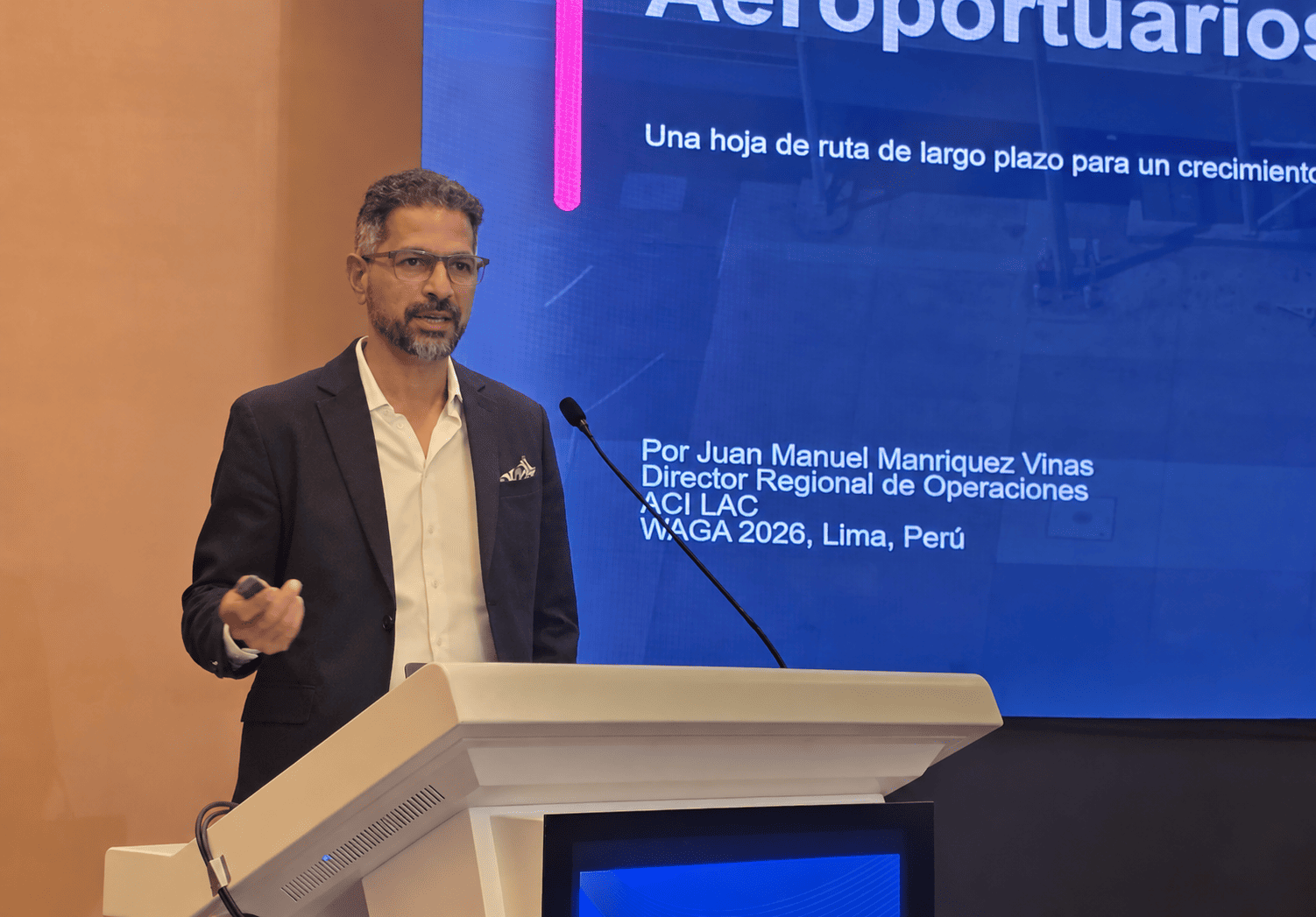
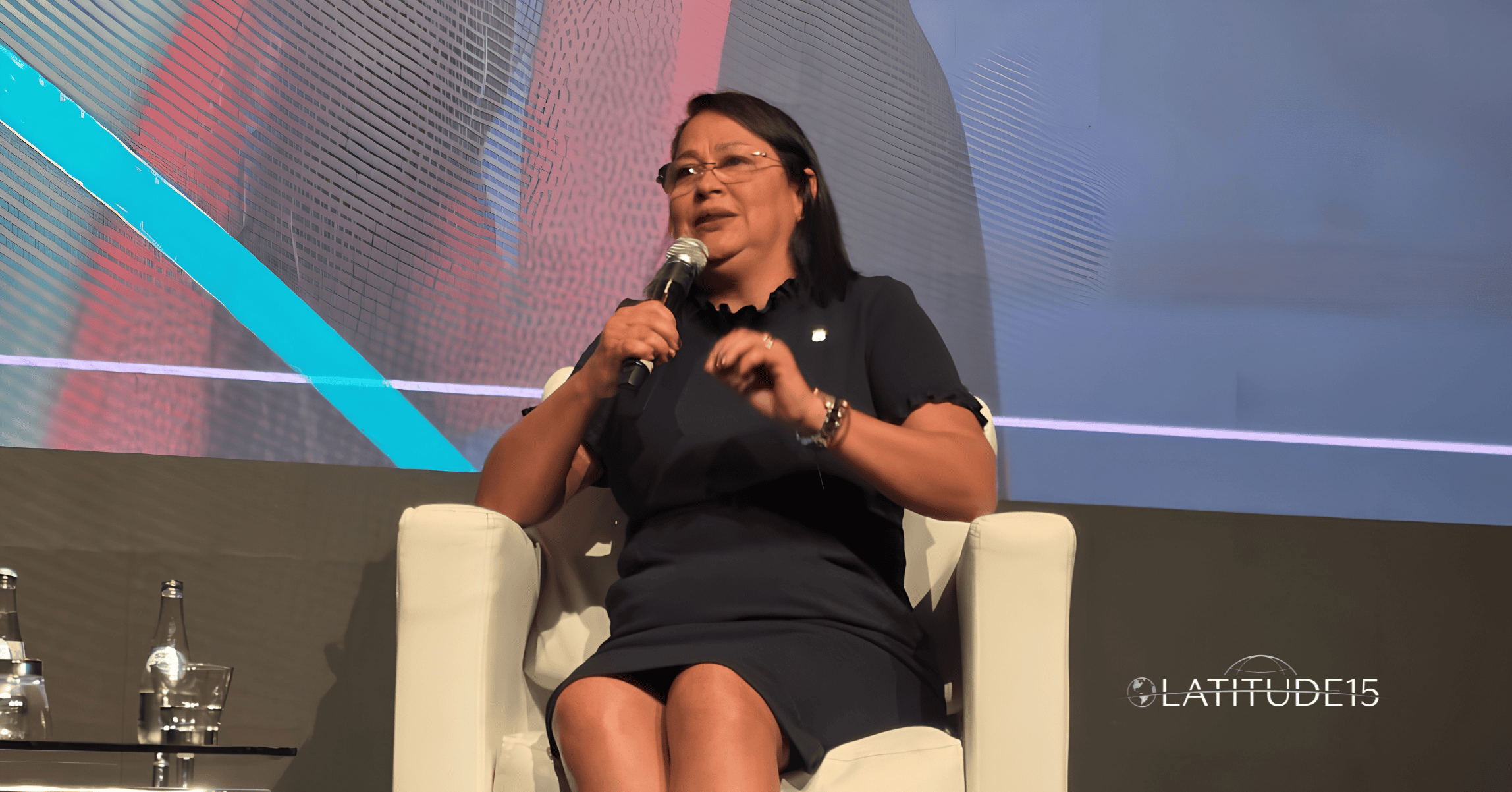
Angeline Flemming speaking at the Women in Airports session during WAGA 2026 in Lima.
At WAGA 2026 in Lima, the Women in Airports discussion shifted the focus from attracting women into aviation to keeping them in the industry. Angeline Flemming of Aruba Airport Authority put career mobility, leadership and representation at the centre of that challenge, while airport leaders highlighted practical issues ranging from parental leave and childcare to recruitment and workplace design.
From recruitment to retention
For Angeline Flemming, increasing the number of women entering aviation addresses only part of the challenge.
Speaking to LATITUDE15 following the Women in Airports session at WAGA 2026, Flemming pointed to a deeper question: whether the industry is creating an environment in which women can remain, progress and ultimately take leadership roles.
“Many women love aviation, but sometimes aviation does not love women back.”
For Angeline Flemming, changing that relationship requires both organisations and women already in leadership to play an active role. The discussion in Lima similarly raised concerns around retention, particularly as women progress through an industry where some levels remain heavily male-dominated.
Career mobility can help keep women in aviation
Retention does not necessarily mean following a single career path.
Angelina Flemming encouraged women to remain open to opportunities across aviation, learn new skills, move into different functions and accept additional responsibilities. In an industry spanning airport operations, safety, sustainability, commercial activities and management, she presented professional mobility as a way to continue developing rather than viewing one difficult role or career stage as the end of an aviation career. Woman in aviation transcript
That message also emerged during the WAGA discussion. Participants encouraged younger professionals to explore different roles within aviation when an existing position no longer offered the progression they were looking for.
Lorie Argus, CEO of Melbourne Airport, brought another perspective through her own career trajectory. She described moving internationally and progressing through aviation while acknowledging that, for much of her career, she had waited for the next promotion rather than setting an early ambition for the CEO role.
Visibility and sponsorship shape career progression
The conversation also moved beyond technical competence.
Lorie Argus stressed the importance of visibility, professional networks and being willing to actively pursue opportunities. Rather than assuming that good performance will automatically lead to advancement, the discussion encouraged women to seek new responsibilities, ask for promotions and build relationships with people able to support their progression.
For Angelina Flemming, that responsibility also extends to people who have already reached senior positions.
“If you get to the position of leadership, make sure that you take others along with you.”
Her point places sponsorship alongside individual career development: leadership is not only about reaching a position, but also about creating space for the next generation to progress. Woman in aviation transcript
Parental leave and childcare remain part of the equation
Career progression cannot be separated entirely from the conditions surrounding work.
During the session, participants discussed children, caring responsibilities and other family commitments as factors that can influence whether women remain in aviation and how quickly their careers progress.
Lorie Argus described the importance of discussing the return to work before an employee begins parental leave and maintaining contact during the absence so that both sides can prepare for what comes next.
Childcare was also raised from the audience as a workforce issue rather than simply a personal one. One airport example described a childcare facility that later required additional capacity, illustrating how services around the workplace can influence employees’ ability to return and remain in their jobs.
Small changes can widen the recruitment pool
Some interventions showed that improving female participation does not always begin with large programmes.
Lorie Argus described a recruitment initiative for airport security positions in which changing the imagery used to represent the role helped more women see themselves in the job. She said the change resulted in 45% more female applications.
The example was presented alongside other practical considerations including workplace facilities, flexibility and the way jobs are communicated to potential candidates.
It is a reminder that the aviation talent pipeline can be influenced before a candidate even submits an application.
Leadership is also about making room for others
The Women in Airports discussion ultimately connected recruitment, retention and leadership as parts of the same workforce challenge.
Angelina Flemming’s message is that aviation already offers women a wide range of opportunities, but careers are strengthened when people remain open to learning, new functions and greater responsibility. She also sees a role for established female leaders in ensuring that those opportunities become visible and accessible to others. Woman in aviation transcript
For airports, the implication extends beyond increasing female recruitment numbers. Recruitment opens the door; retention, mobility and leadership determine whether a sustainable talent pipeline follows.
FAQ
What was the Women in Airports discussion at WAGA 2026 about?
The session examined women’s careers in aviation, including leadership, retention, career mobility, parental responsibilities and practical workplace barriers.
Who is Angeline Flemming?
Angeline Flemming is an executive at Aruba Airport Authority working across sustainability and related airport management responsibilities.
What retention challenges were discussed?
The discussion highlighted career progression, visibility, mentoring, parental leave, childcare, workplace facilities and representation.
What recruitment example was presented at WAGA 2026?
Lorie Argus said a change in the imagery used for airport security recruitment resulted in 45% more female applications.