More than half of flights in Latin America and the Caribbean now operate from or arrive at airports that IATA considers congested or severely constrained. The figure — 54% of regional flights — comes as passenger demand continues to expand, even if the pace of growth has moderated during 2026. Regional demand rose 7.2% in 2025 and was still 1.5% higher year on year in June 2026.
The challenge is therefore increasingly clear: if passengers keep coming, where does the next unit of airport capacity come from?
For some airports, the answer is another terminal or runway. For others — particularly mature urban airports surrounded by development — growth increasingly depends on extracting more performance from the infrastructure already in place.
Capacity is not one number
An airport can run out of capacity in several different places.
Runways determine how many aircraft can arrive or depart within a given period. Aprons and stands limit how many aircraft can be handled simultaneously. Terminals, security, immigration and baggage systems determine how quickly passengers can move through the facility.
Then there are slots.
An airport may technically have unused capacity during parts of the day while offering little or no space during the periods airlines actually value: a morning business peak, an evening departure bank or the arrival window feeding a hub’s connecting wave.
Annual passenger capacity can therefore look adequate on paper while commercially valuable peak hours are already full. Across Latin America, airports are responding to those constraints in very different ways.
Mexico City: extracting capacity from a saturated airport
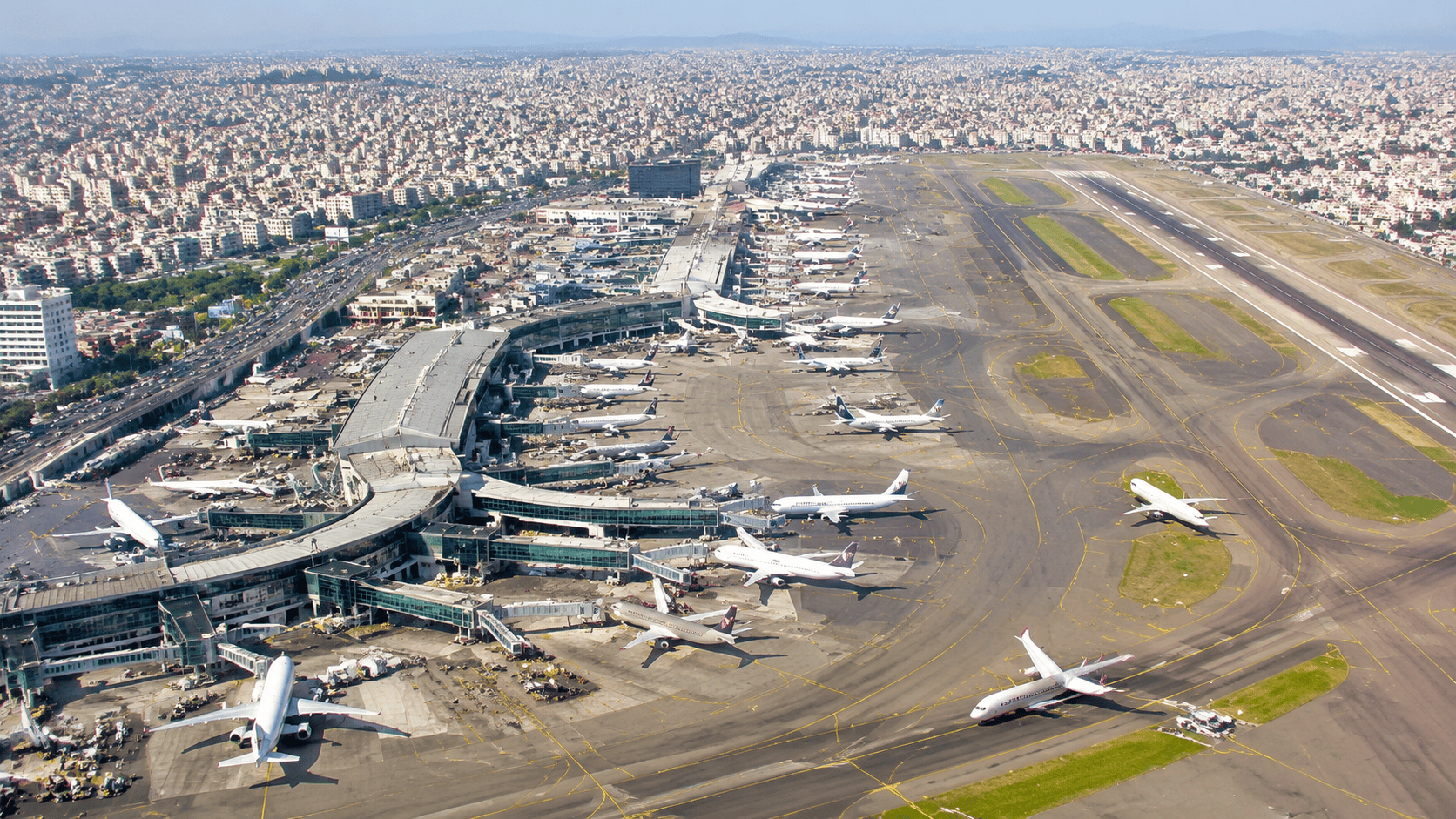
Mexico City’s Benito Juárez International Airport shows how valuable even marginal operational gains can become.
In 2026, Mexican authorities authorised an increase from 44 to 46 aircraft movements per hour, supported by new rapid-exit taxiways intended to reduce runway occupancy time. A broader modernisation programme totals MXN10 billion, with MXN6.5 billion invested in the first phase, including terminal works, new taxiways and an upgraded airport-management system.
But the additional two movements do not mean the capacity problem has disappeared.
The official 2026 resolution maintains saturation at Terminal 1 from 05:00 to 22:59, while Terminal 2 remains saturated across several morning, afternoon and evening periods. That distinction matters.
Operational improvements can make an existing airport more productive and effectively buy time. But at a facility already operating near its physical and scheduling limits, each additional gain becomes harder to extract.
Mexico City illustrates the difference between creating capacity and managing scarcity more efficiently.
Bogotá: when the bottleneck moves inside the terminal
At Bogotá El Dorado, capacity pressure is visible elsewhere.
The number of travellers handled through migration controls increased from approximately 4.5 million in 2022 to more than 6.2 million in 2025, a rise of around 38%.
In response, the airport is expanding its immigration area by 33%, from 1,624 to 2,162 square metres, and adding biometric processing capacity.
The example demonstrates that additional runway movements are not always the most urgent requirement.
If passengers cannot move efficiently through immigration, security or baggage processes, the terminal itself can become the bottleneck. For a hub, that has direct implications for connection times and the number of passengers that can realistically be handled during peak periods.
Bogotá also shows how operational capacity and scheduling capacity interact.
In March 2026, Colombian authorities confirmed that El Dorado would retain slot-allocation rules aligned with the Worldwide Airport Slot Guidelines and move forward with formal slot monitoring. IATA has argued that implementing a wider package of operational measures identified in a previous capacity study could materially increase the airport’s hourly throughput.
In other words, capacity can be created not only by construction, but also by making better use of infrastructure and time that already exist.
Congonhas: producing more airport from the same land
São Paulo Congonhas presents a different challenge: its urban footprint.
Surrounded by one of Latin America’s largest metropolitan areas, the airport has little opportunity for conventional outward expansion. Aena is instead investing more than R$2 billion to increase what the existing site can produce.
By 2028, the terminal is expected to reach around 105,000 square metres, annual capacity approximately 29.5 million passengers, and the commercial apron 215,000 square metres. Aircraft parking positions will increase from 30 to 37, while the number of passenger boarding bridges will rise from 12 to 19, allowing more than 70% of passengers to board directly through bridges.
Those figures illustrate a useful metric for mature urban airports: capacity per hectare.
Congonhas is not creating more land. It is reorganising stands, gates, terminal flows and aircraft circulation so that the same airport footprint can process more activity.
For increasingly land-constrained airports, densification may become as important as expansion.
Lima: building headroom rather than managing scarcity
Lima offers the counterpoint.
The new Jorge Chávez International Airport represents more than US$2.4 billion in investment and includes infrastructure designed to handle around 40 million passengers annually. Instead of continually extracting marginal gains from an airport already at its ceiling, Lima has created physical headroom.
And airlines are beginning to use it.
By June 2026, 23 airlines connected Lima with 68 domestic and international destinations, with new routes or additional frequencies involving markets including Barcelona, Paris, Toronto, New York, Punta Cana and Salt Lake City.
That is an important distinction. New infrastructure is valuable not simply because it raises a theoretical annual capacity figure, but because it gives airlines room to add frequencies, destinations and connecting opportunities when demand materialises. Headroom becomes economically meaningful when networks can grow into it.
The Caribbean faces the same issue at a different scale
The pressure is not limited to Latin America’s largest metropolitan hubs.
IATA’s 2026 assessment also identifies constrained airports across tourism-heavy Caribbean markets, while Juan Santamaría and Daniel Oduber Quirós in Costa Rica are moving to WASG Level 2 coordination in 2026. IATA describes that change as an important precedent for a Caribbean region where tourism growth is putting increasing pressure on airport infrastructure.
For island airports, adding capacity can be even harder. Land is scarce, environmental constraints are significant and seasonal tourism can produce intense peaks that annual passenger totals fail to reveal.
The next phase of aviation growth in Latin America and the Caribbean will therefore depend on more than attracting passengers or opening routes.
Sometimes the answer will be another runway or terminal.
Increasingly, it will also mean extracting more value from every movement, gate, stand, processing point and square metre already available. The region may still have room to grow. Its busiest airports increasingly have to create that room themselves.
Sources: IATA, Mexican aviation authorities, El Dorado International Airport, Aena and Lima Airport Partners.