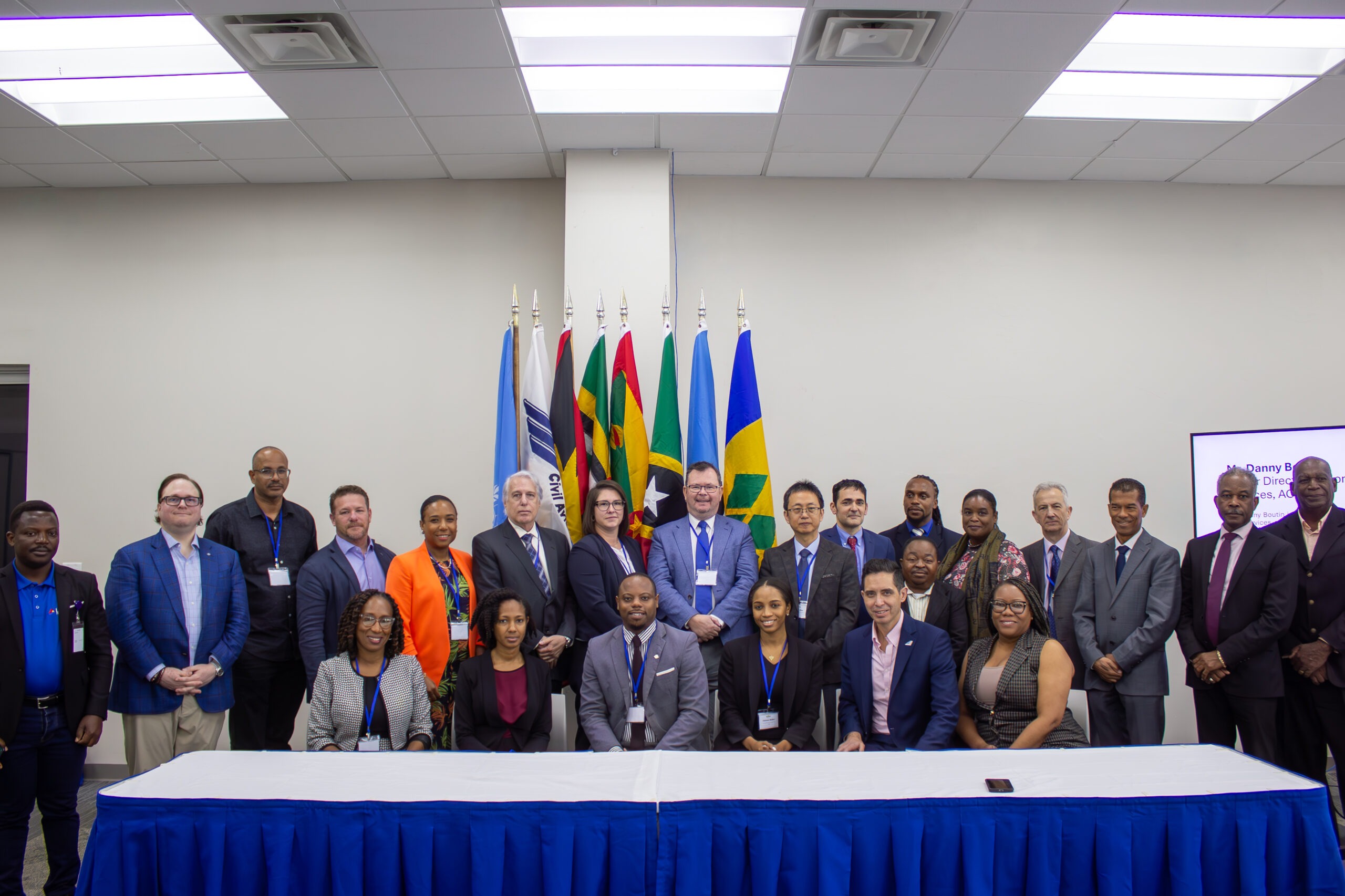
Airport certification and regulatory oversight emerged as key themes during the First Legal Seminar on Emerging Legal Frameworks in Civil Aviation organized by the Eastern Caribbean Civil Aviation Authority (ECCAA) on 13–14 November 2025 in Antigua and Barbuda.
Among the presentations delivered during the seminar was “More Than a Stamp: How Aerodrome Certification Reflects Strong Management,” presented by Danny Boutin, Senior Director of Airport Assessments and Services at Airports Council International. The presentation examined how airport certification frameworks increasingly function as broader systems of operational governance and regulatory accountability.
Certification beyond regulatory approval
According to the presentation, aerodrome certification demonstrates that an airport is capable of safely managing, operating, maintaining and developing its infrastructure within an established regulatory framework.
Rather than functioning solely as an administrative approval, certification reflects an airport’s ability to implement operational procedures, manage risks and maintain compliance with internationally recognized aviation standards.
The presentation also emphasized that certification frameworks support consistency in airport operations while helping regulators monitor safety performance and operational accountability over time.
ICAO standards and airport oversight
Airport certification systems are generally based on national aviation legislation aligned with standards developed by the International Civil Aviation Organization.
The seminar presentation highlighted the importance of ICAO Annex 14, which establishes international standards and recommended practices for aerodrome design and operations.
Certification systems are also linked to broader ICAO Standards and Recommended Practices (SARPs), which provide the international regulatory foundation used by civil aviation authorities to oversee airport infrastructure and operations.
The presentation outlined how airport certification frameworks typically involve several layers of responsibility shared among governments, civil aviation authorities, airport operators and service providers.
The Aerodrome Manual as a core operational document
A central component of the certification process is the Aerodrome Manual, described during the seminar as “the most important piece” of the certification framework.
The document provides a detailed overview of airport infrastructure, operational procedures, safety systems and organizational responsibilities. It also serves as a reference for regulators when assessing whether an airport complies with certification requirements.
The presentation explained that the Aerodrome Manual helps establish standardized operational practices while documenting how safety management procedures are implemented and maintained.
Continuous oversight and operational accountability
The seminar also highlighted that airport certification is not considered a one-time approval process.
Certification systems generally involve continuous oversight mechanisms including inspections, audits, surveillance activities and corrective action processes designed to ensure ongoing compliance with regulatory requirements.
This approach allows aviation authorities to monitor operational performance while ensuring that airport operators continue to maintain safety standards as infrastructure and traffic levels evolve.
The presentation further noted that accountability within certification systems extends beyond airport operators alone, involving multiple actors across the aviation ecosystem.
International programmes supporting airport safety
International airport safety programmes were also referenced during the seminar.
One initiative discussed was APEX in Safety, launched in 2012 by Airports Council International in cooperation with ICAO. The programme provides peer-review safety assessments and technical guidance for airports seeking to strengthen operational performance and align with international standards.
According to figures presented during the seminar, the programme has conducted more than 150 safety reviews worldwide since its launch.
The discussions highlighted how international cooperation and peer-review mechanisms increasingly complement national regulatory oversight systems across the aviation sector.
Certification as part of broader aviation governance
Discussions during the ECCAA seminar illustrated how airport certification has evolved into a broader governance and oversight mechanism within international aviation.
As Caribbean aviation systems continue to modernize, certification frameworks, operational monitoring and alignment with ICAO standards remain central components in maintaining safe and internationally compliant airport infrastructure across the region.