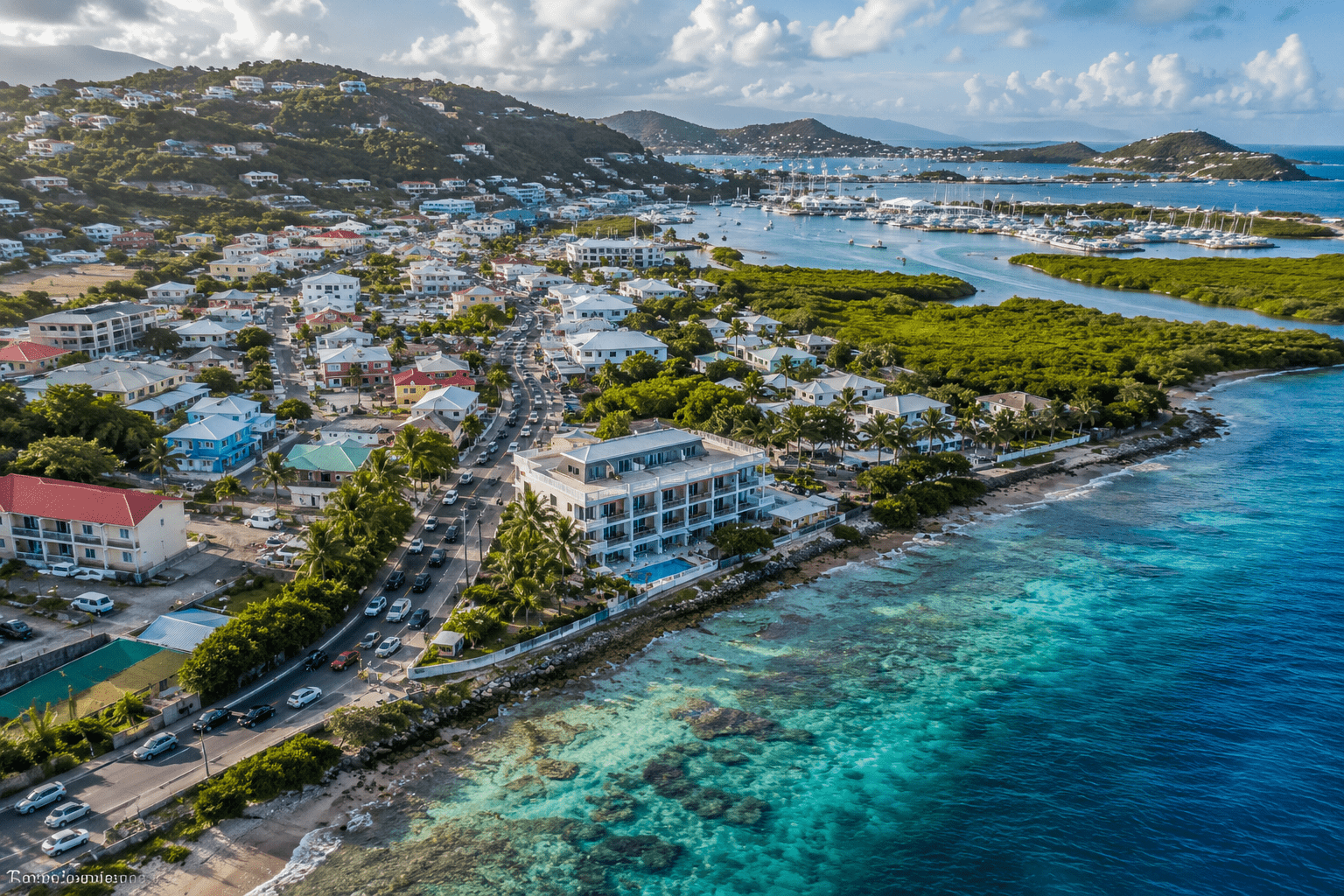
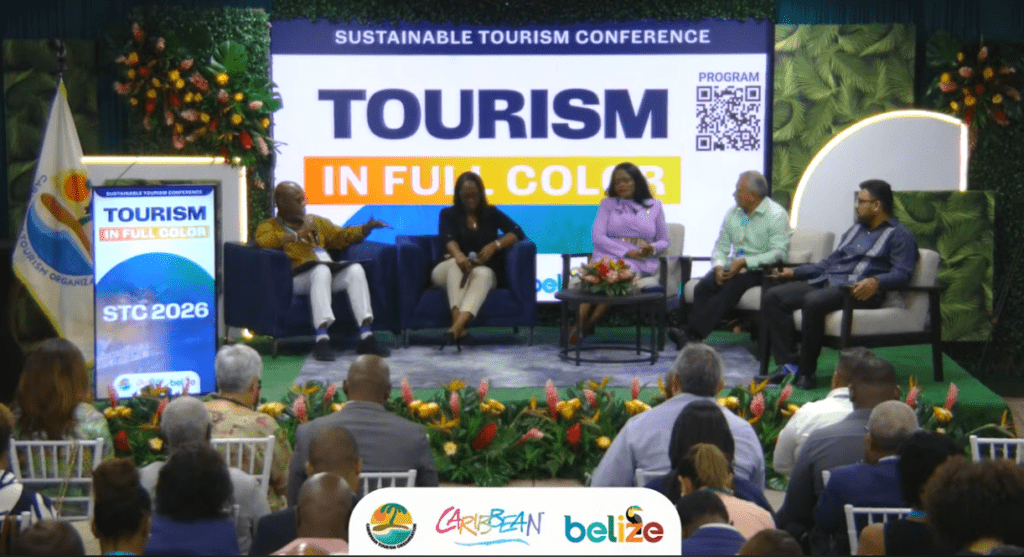
For decades, tourism growth in the Caribbean followed a familiar formula: increase arrivals, expand room capacity, attract more investment and strengthen air connectivity. But during the Caribbean Tourism Organization’s Sustainable Tourism Conference 2026 in Belize, a noticeably different conversation began to emerge.
Across ministerial discussions, tourism leaders repeatedly returned to subjects that were once far less visible in regional tourism forums: carrying capacity, overcrowding, pressure on infrastructure, coastal access, housing strain and the long-term balance between visitor growth and local quality of life.
The shift was subtle, but significant. Rather than questioning tourism itself, several destinations appeared to be questioning the idea that unlimited growth should remain the industry’s primary objective.
From tourism growth to tourism balance
One of the clearest signals came from Saint-Martin.
During the ministerial discussions, the territory’s tourism representative openly acknowledged the tensions many island destinations now face: governments want strong visitor numbers and year-round economic activity, while residents increasingly feel the pressure on beaches, roads and public spaces.
That type of language remains relatively unusual in official tourism conversations across the region.
The discussion became even more striking when Saint-Martin detailed how post-Hurricane Irma reconstruction pushed the territory to rethink its tourism development model. Rather than rebuilding toward larger-scale mass tourism, officials described a more controlled approach centered on resilience, infrastructure adaptation and smaller-scale hospitality.
The territory now intends to maintain an overall ceiling of roughly 3,500 accommodation units on the French side of the island, including boutique hotels, Airbnb properties and other lodging formats.
“We have decided that we want a smaller boutique model hotel industry and not a mass tourism industry,” the Saint-Martin representative said during the panel discussion.
For a region historically focused on increasing tourism inventory, the statement reflected a notable evolution in thinking.
The Caribbean’s carrying-capacity debate is becoming more visible
Several discussions throughout STC 2026 suggested that Caribbean destinations are increasingly confronting the same questions now shaping tourism debates globally:
- how much tourism is too much;
- how should destinations measure capacity;
- and who ultimately benefits from tourism growth?
For island destinations, those questions carry additional weight.
Land availability is limited. Coastal ecosystems are fragile. Infrastructure networks are concentrated. Climate exposure is high. And tourism pressure often becomes visible much faster than in larger continental destinations.
Belize’s minister responsible for sustainable development acknowledged that some visitor sites had already experienced overuse before recovering during the pandemic slowdown.
That experience appeared to reinforce a broader regional concern: tourism growth cannot be separated indefinitely from environmental carrying capacity.
Belize pushes a lower-density tourism model
Throughout the conference, Belize positioned itself as a destination favoring smaller-scale tourism development rooted in local ownership and environmental preservation.
Tourism minister Anthony Mahler highlighted that Belize has approximately 1,200 tourism properties for around 12,000 rooms overall — an average of roughly 10 rooms per property.
“That in itself leads to local ownership. That in itself leads to sustainability,” he said.
The country repeatedly emphasized ecotourism, community engagement and cultural immersion rather than high-density resort expansion. Belize officials also stressed that sustainability policies are only meaningful if destinations are capable of implementing them operationally rather than leaving them “on a shelf.”
The model contrasts with the large-scale resort strategies historically associated with parts of the Caribbean tourism industry.
Tourism pressure is no longer only an environmental issue
Another notable aspect of the discussions was how sustainability was framed not only as an environmental issue, but increasingly as a territorial and social one.
Speakers linked tourism development to:
- housing pressure;
- coastal access;
- infrastructure planning;
- waste management;
- land ownership;
- and community participation.
Toward the end of the ministerial exchange, Belize’s sustainable development minister Orlando Habet raised concerns about coastal gentrification and the distribution of tourism wealth. He described situations where local landowners sold coastal properties to outside investors before eventually losing access to those same shorelines. “So who is it that is benefiting?” he asked.
The question reflected a broader theme quietly running through STC 2026: future tourism models may increasingly be judged not only by visitor numbers, but by how tourism value circulates within local communities.
A more mature phase of Caribbean tourism development?
The discussions in Belize did not suggest that Caribbean destinations want fewer visitors. Tourism remains economically central across much of the region.
What appears to be evolving, however, is the definition of what successful tourism growth actually means.
Rather than focusing exclusively on volume, policymakers increasingly discussed:
- resilience;
- value creation;
- environmental recovery;
- infrastructure capacity;
- local participation;
- and long-term territorial balance.
In that sense, STC 2026 may ultimately be remembered less as a sustainability conference and more as a sign that parts of the Caribbean tourism industry are beginning to acknowledge a more difficult reality: for many island destinations, the future of tourism may depend as much on limits and balance as on continued growth.