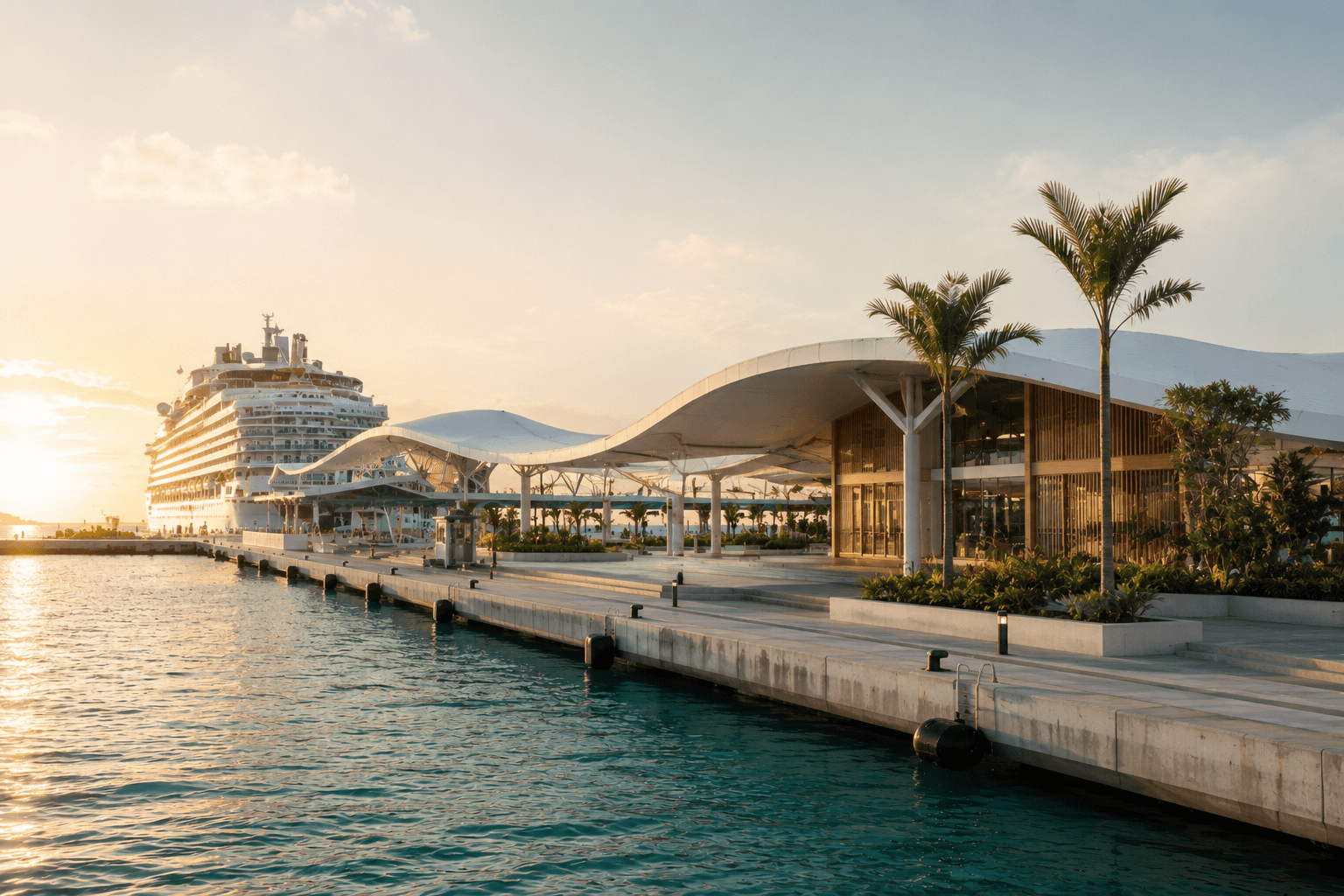
As cruise itineraries expand and vessels continue to increase in scale, infrastructure is becoming far more than a logistical requirement for ports and destinations. Terminals, transport systems and waterfront developments are now increasingly designed not only to accommodate passenger volumes, but also to shape the overall travel experience itself.
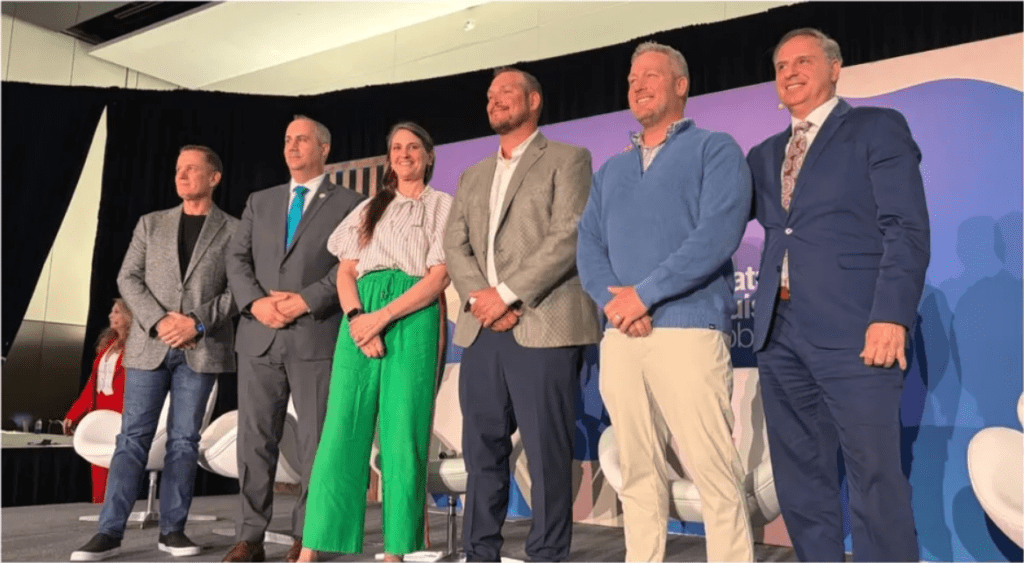
At Seatrade Cruise Global, the session “Building for the Future: Port Infrastructure & Destination Development,” held on April 13 at the Sunset Vista Salon, illustrated how cruise infrastructure is evolving into a broader ecosystem combining mobility, destination strategy, entertainment and community integration.
Across discussions involving cruise operators, ports and technology providers, one message emerged clearly: infrastructure is no longer simply about moving passengers efficiently — it is increasingly becoming part of the product.
Ports are becoming destination platforms
One of the clearest shifts highlighted during the session was the growing convergence between port infrastructure and destination experience.
Projects such as Celebration Key, Royal Beach Club Paradise Island and Perfect Day Mexico illustrate how cruise operators are increasingly developing highly curated destination environments designed to extend the guest experience beyond the ship itself.
For Keith Carr, Vice President of Global Development at Carnival Corporation & plc, this evolution involves integrating elements traditionally associated with the entertainment and theme park industries into cruise destinations. Drawing on his background in the attractions sector, Carr described how Celebration Key incorporates large-scale lagoons, immersive design elements and advanced water management systems intended to shape the arrival experience from the moment guests enter the site.
Similarly, Josh Carroll, Senior Vice President at Royal Caribbean Group, explained how Royal Beach Club Paradise Island is designed around differentiated guest experiences, ranging from family areas to adult-focused spaces and entertainment zones.
These projects suggest that cruise infrastructure is increasingly functioning as an extension of brand identity, where destinations themselves become curated components of the cruise product.
Mobility and passenger flow are becoming strategic priorities
As destinations expand and passenger volumes continue to rise, managing mobility and circulation is becoming a central infrastructure challenge.
Several speakers emphasized that future competitiveness will depend not only on capacity, but also on the ability to move passengers efficiently between ships, terminals, transport systems and surrounding destinations.
At Port Everglades, Joseph Morris, Chief Executive Officer and Port Director, outlined a long-term modernization strategy involving terminal redevelopment, new parking infrastructure and stronger connectivity with nearby airports and convention facilities. The port’s recently approved 20-year master vision plan includes approximately $1.7 billion in cruise-related investments.
Morris described the objective as creating infrastructure that is “memorably forgettable,” where passenger movement becomes seamless enough that travelers barely notice the operational complexity behind it.
A similar logic emerged in Alaska, where Christy Terry, Vice President of Real Estate at Alaska Railroad Corporation, detailed the redevelopment of Seward’s cruise dock and terminal infrastructure. The project integrates cruise operations directly with rail transportation, allowing passengers to transfer almost seamlessly between ships and trains.
These examples illustrate how ports are increasingly being integrated into wider mobility ecosystems rather than operating as isolated maritime facilities.
Infrastructure investment is increasingly tied to destination development
Beyond operational efficiency, the panel also highlighted how infrastructure projects are increasingly framed as long-term economic and community development tools.
At Celebration Key, Carr noted that approximately 90 to 95 percent of the workforce involved in the project was local Bahamian labor, describing the development as an opportunity for residents to return and rebuild economic activity following Hurricane Dorian.
Similarly, Terry emphasized the importance of community support in Seward, where local businesses and residents strongly backed cruise redevelopment efforts after experiencing the economic consequences of two cruise-free seasons during the pandemic.
The discussion suggests that infrastructure projects are now expected to deliver benefits extending well beyond cruise operations themselves, supporting employment, tourism ecosystems and broader destination resilience.
At the same time, these developments also increase pressure on destinations to balance growth with transportation capacity, environmental priorities and local quality of life.
The rise of experiential infrastructure
Perhaps the most revealing aspect of the session was the growing overlap between cruise infrastructure and experiential entertainment.
Through presentations from DOF Robotics, the panel explored how ports and destinations may increasingly integrate immersive attractions, simulation technologies and educational entertainment into future developments.
Sam Rhodes, President North America at DOF Robotics, described how motion simulators, immersive domes and underwater virtual experiences could allow visitors to engage with destinations in new ways, ranging from environmental education to cultural storytelling.
These technologies reflect a broader evolution where infrastructure is no longer limited to physical transport functions. Instead, terminals and destination spaces are beginning to incorporate elements traditionally associated with museums, attractions and themed entertainment environments.
This convergence also highlights the growing influence of the global attractions industry within cruise destination development strategies.
Reading the road ahead
The discussions from this session suggest that cruise infrastructure is entering a new phase of development.
While ports once focused primarily on accommodating ships and processing passenger flows, infrastructure is increasingly being designed as part of an integrated destination experience — one combining transportation, entertainment, branding and economic development.
As destinations compete for passenger attention and cruise lines continue expanding their private and semi-private offerings, infrastructure itself may increasingly become a defining element of destination differentiation.
For ports, cruise operators and destination authorities alike, the challenge now appears less about simply building bigger facilities, and more about designing connected environments capable of balancing scale, experience and long-term sustainability.