Across the Caribbean, cruise infrastructure is increasingly being positioned as more than a maritime necessity. The latest Travel & Cruise Magazine published by the Florida-Caribbean Cruise Association (FCCA) suggests ports, terminals and destination developments are becoming strategic assets shaping competitiveness, deployment decisions and passenger experience across the region.
From integrated terminal projects to cruise line-controlled destinations and digitalized port operations, the publication points toward a cruise industry where infrastructure is increasingly tied to long-term tourism positioning and regional influence.
Ports Are Expanding Beyond Their Traditional Maritime Role
One of the clearest signals emerging from the publication is the growing integration between port infrastructure and wider territorial strategy.
Port St. Maarten illustrates this evolution particularly well. The magazine presents the destination not simply as a cruise port, but as a multi-dimensional maritime hub combining tourism, regional logistics and operational modernization. Its Dr. A.C. Wathey Cruise Facility features two cruise piers, including one measuring 545 meters — among the longest in the Caribbean — with the capacity to accommodate up to 6 ships simultaneously, including next-generation vessels such as Royal Caribbean’s Star of the Seas, which made its inaugural call in September 2025.
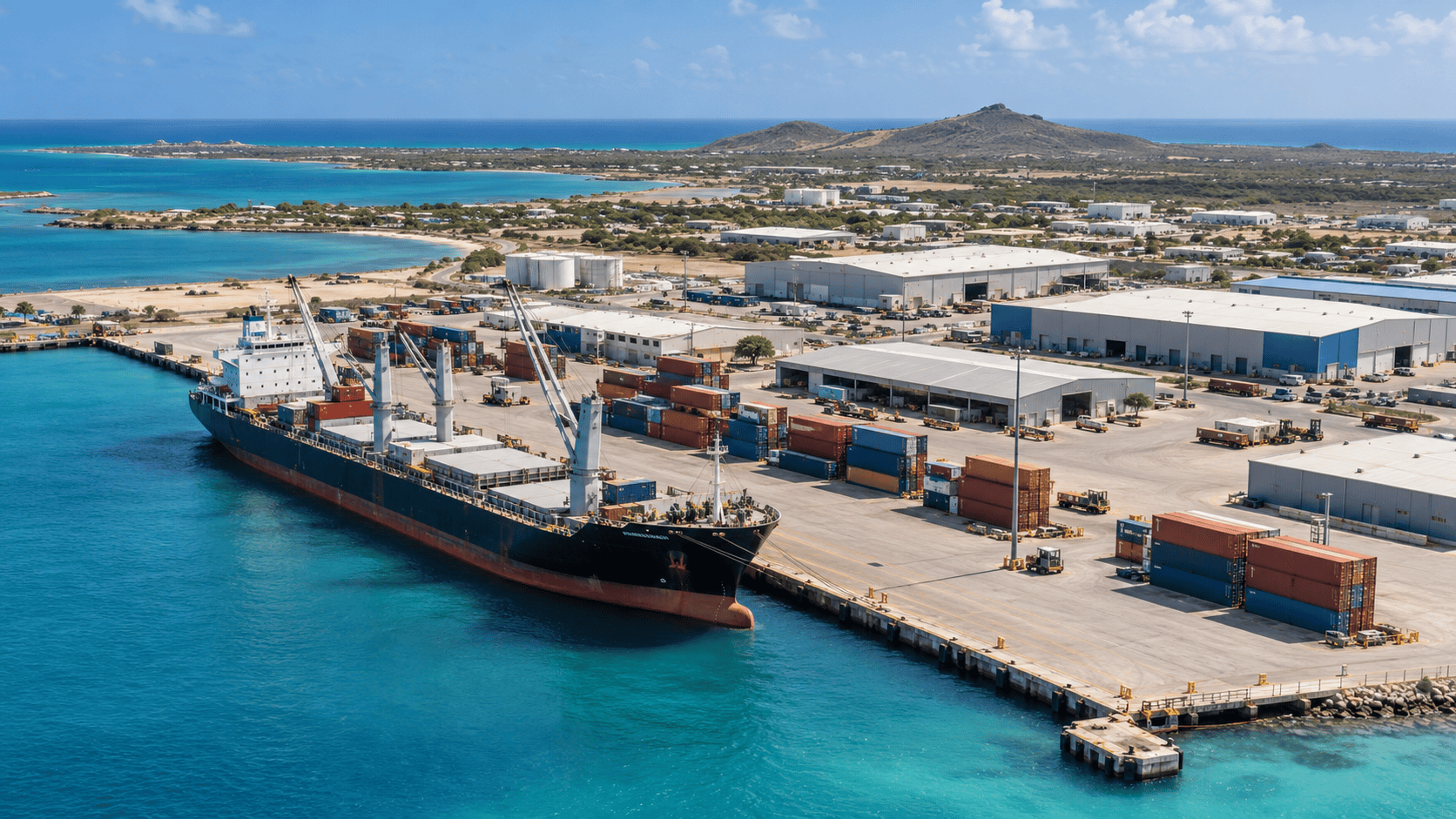
At the same time, the port’s cargo operations are described as a 24/7 multi-purpose terminal equipped with post-Panamax cranes, a three-berth quay and fully digitized clearance systems supporting real-time cargo tracking and processing for neighboring islands including Anguilla, Saba, St. Eustatius and St. Barthélemy.
The way these elements are presented is important. The publication no longer frames infrastructure solely around cruise throughput. Instead, ports increasingly appear positioned as integrated economic platforms expected to combine:
- operational scalability,
- logistics capability,
- tourism readiness,
- and regional connectivity.
This reflects a broader shift in which cruise infrastructure is increasingly linked to wider territorial competitiveness rather than isolated maritime operations.
Passenger Experience Is Now Influencing Infrastructure Strategy
Another recurring theme throughout the publication is the growing overlap between infrastructure planning and passenger experience design.
The magazine’s feature on modern cruise terminals highlights how terminals are increasingly conceived not just as transit points, but as carefully designed environments intended to improve passenger circulation, reduce friction and reinforce destination identity from the moment travelers disembark.
That evolution aligns closely with the wider transformation taking place across the cruise sector, where passenger expectations increasingly extend beyond onboard amenities toward seamless and experience-driven interactions onshore.
Several destination examples throughout the issue reinforce this trend.
Jamaica’s cruise strategy, for instance, is presented through a combination of infrastructure upgrades and tourism development initiatives aimed at improving both operational attractiveness and visitor experience. The publication describes the country’s cruise sector as evolving through renewed investment, upgraded infrastructure and programs designed to elevate experiences for visitors and industry partners alike.
Similarly, Puerto Plata’s positioning as host of the upcoming FCCA PAMAC Destination Summit is framed not only around cruise growth, but around broader destination readiness involving hotels, transportation access, facilities and tourism integration.
This suggests that infrastructure planning across the Caribbean increasingly overlaps with: tourism strategy, urban mobility, visitor management, and destination positioning.
In practice, ports and terminals are no longer being treated simply as maritime infrastructure. They are increasingly becoming part of how destinations present themselves competitively within the cruise market.
Infrastructure Investment Is Becoming a Strategic Signal to Cruise Operators
Throughout the magazine, cruise executives repeatedly emphasize the importance of long-term planning, predictability and investment alignment between destinations and cruise operators.
Infrastructure increasingly appears central to that relationship.
The scale of projects highlighted across the publication illustrates how aggressively both destinations and cruise companies are investing in future cruise capacity and experience ecosystems.
Norwegian Cruise Line Holdings’ investments in Great Stirrup Cay include:
- a two-ship pier,
- expanded welcome facilities,
- a full tram transportation system,
- and a six-acre waterpark scheduled to open in 2026.
MSC Cruises continues upgrading Ocean Cay, while Royal Caribbean is investing in Nuevo Mahahual. Elsewhere in the issue, new cruise terminal developments are highlighted in major gateway markets including PortMiami and Los Angeles.
These projects are not presented as short-term tourism initiatives. Instead, they are framed as long-duration strategic investments tied to future deployment models and evolving passenger expectations.
CLIA’s contribution to the magazine reinforces this long-term perspective by emphasizing the scale of cruise-linked capital flows. According to CLIA’s 2024 Global Economic Impact Study prepared by Tourism Economics, cruise generated:
- $198.8 billion in global economic impact,
- $98.5 billion in contribution to global GDP,
- 1.7 million jobs,
- and $60.1 billion in wages.
The study also notes that cruise-linked spending reached $93.4 billion in 2024, including $45.9 billion in direct cruise line purchases.
Within that environment, infrastructure increasingly functions as a signal of long-term destination readiness. Ports capable of demonstrating operational reliability, scalable facilities and coordinated investment strategies may strengthen their position within future deployment planning.
Exclusive Destinations Are Reshaping the Infrastructure Model
One of the strongest underlying dynamics throughout the publication is the rapid expansion of exclusive cruise destinations and cruise line-controlled environments.
Projects such as Celebration Key, Great Stirrup Cay, Ocean Cay, Amber Cove, and Mahogany Bay
appear repeatedly across the issue as examples of how cruise operators are increasingly investing directly in infrastructure ecosystems designed around operational control and curated passenger experiences.
Carnival Cruise Line’s Celebration Key in Grand Bahama is presented as a large-scale integrated development featuring:
- a mile-long white sand beach,
- the Caribbean’s largest freshwater lagoons,
- and multiple themed “portals” designed around differentiated guest experiences.
At the same time, executives repeatedly stress the importance of maintaining links with surrounding destinations and local economies. Christine Duffy, President of Carnival Cruise Line, notably distinguished Celebration Key from more isolated private island concepts by emphasizing that passengers still have opportunities to leave the development and participate in local excursions.
Even so, the rapid expansion of these controlled environments may be reshaping competitive expectations across the region.
Historically, Caribbean cruise infrastructure largely revolved around publicly managed ports integrated into broader urban and territorial systems. Exclusive destinations introduce a different operational model, allowing cruise companies to exercise much greater influence over:
- passenger movement,
- retail environments,
- transportation systems,
- excursion structures,
- and overall experience consistency.
The publication consistently presents these developments through the language of innovation and guest enhancement. Yet they also suggest that traditional destinations may face increasing pressure to compete not only on natural appeal, but on operational sophistication and experience integration.
Infrastructure Competition May Increasingly Shape Regional Cruise Geography
Taken together, the publication points toward a Caribbean cruise landscape where infrastructure is becoming increasingly central to regional competitiveness.
Cruise executives throughout the issue repeatedly connect future growth to: operational coordination, investment planning, infrastructure readiness, and destination quality.
At the same time, the scale of ongoing investments suggests that competition across the region may increasingly favor destinations capable of combining:
- modern terminals,
- efficient passenger processing,
- integrated tourism ecosystems,
- transportation connectivity,
- and long-term capital planning.
This could deepen disparities between destinations.
Larger ports and destinations with stronger financing capacity may be better positioned to attract:
- next-generation vessels,
- private infrastructure partnerships,
- homeport operations,
- and premium tourism developments.
Meanwhile, smaller destinations may increasingly need to differentiate through: niche positioning, cultural experiences, regional cooperation, or specialized tourism offerings rather than pure infrastructure scale.
The magazine does not suggest that infrastructure alone determines cruise success. However, it increasingly frames ports, terminals and destination developments as strategic assets shaping how destinations position themselves within the future structure of Caribbean cruise tourism.
As cruise deployment models continue evolving and passenger expectations become more experience-driven, infrastructure may no longer function simply as the backdrop to cruise tourism. Increasingly, it appears to be becoming one of the central mechanisms through which destinations compete for relevance within the region’s next phase of growth.