
The Eastern Caribbean Civil Aviation Authority- ECCAA- held its First Legal Seminar on Emerging Legal Frameworks in Civil Aviation on 13–14 November 2025 in Antigua and Barbuda. The two-day event brought together regulators, legal experts, policymakers and aviation industry representatives to discuss developments in aviation law and regulatory governance affecting the Eastern Caribbean.
Presentations delivered during the seminar addressed several themes shaping the region’s aviation sector, including air services agreements, airport certification, international legal developments and the obligations of states in the event of aviation accidents.
Air services agreements remain central to international aviation
One of the key topics discussed concerned the role of Air Services Agreements (ASAs) in structuring international air transport. In a presentation titled “An Introduction to Air Services Agreements,” Ambassador Brian Challenger of Antigua and Barbuda’s Ministry of Civil Aviation explained that ASAs form the legal framework allowing commercial air services between states.
These bilateral agreements determine the conditions under which airlines may operate between countries, including route rights, designated carriers, capacity and operational provisions.
According to the presentation, the modern system of air services agreements emerged following the Chicago Convention of 1944, which established the technical and institutional framework for international civil aviation but did not create a global system for allocating traffic rights. As a result, international air transport continues to be governed largely through bilateral agreements negotiated directly between states.
Negotiations for such agreements typically involve representatives from civil aviation authorities, foreign affairs ministries, airport authorities, national airlines and tourism agencies.
Connectivity challenges across Caribbean aviation markets
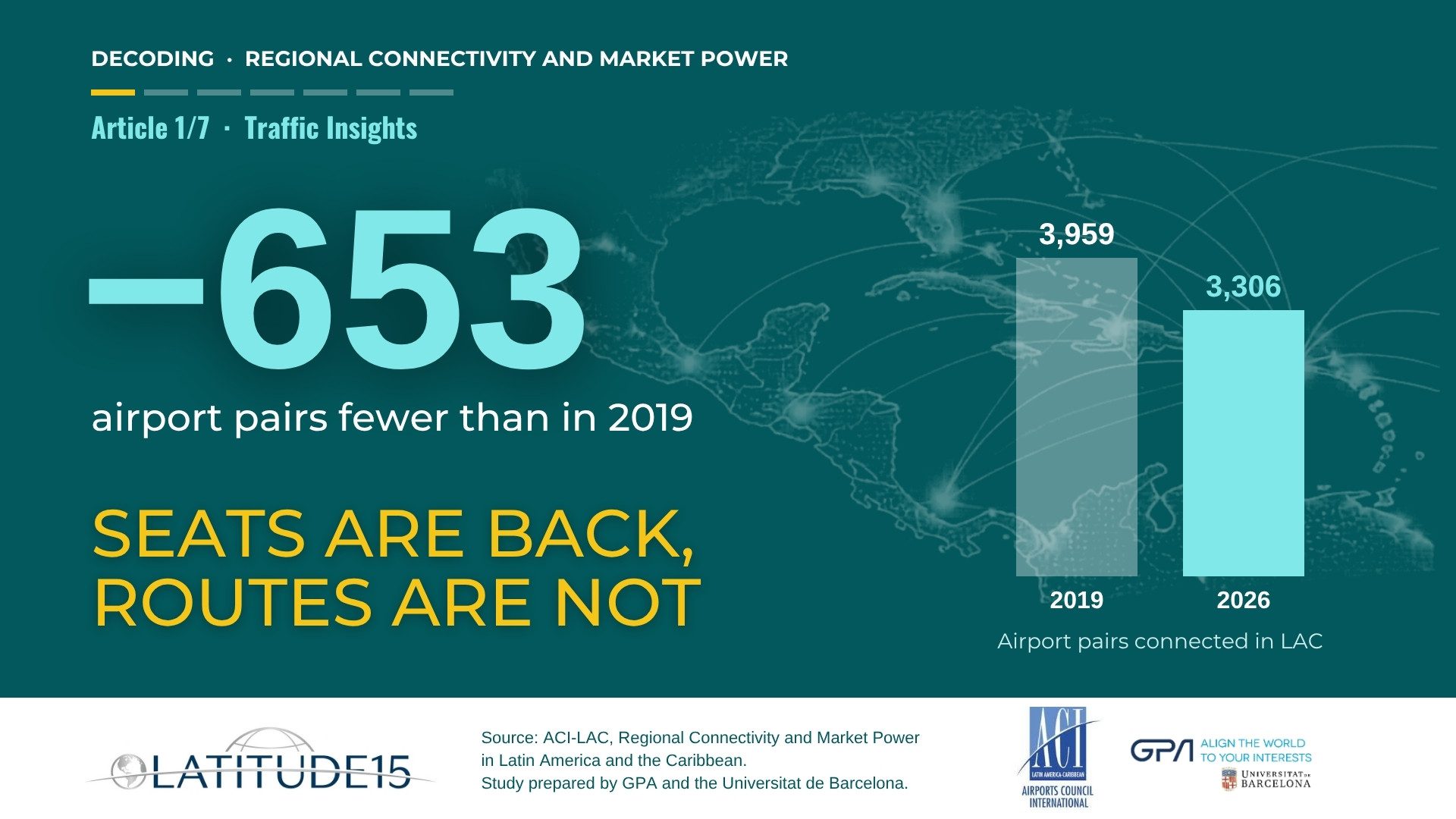
Air connectivity was another theme addressed during the seminar. In a presentation on Caribbean Connectivity Challenges, Rafael Echevarne, Director General of Airports Council International, highlighted the scale of the global airport network supporting international aviation.
Airports Council International represents more than 2,100 airports worldwide, including over 300 airports across Latin America and the Caribbean, according to the presentation.
The presentation also underlined the economic importance of air transport for island economies. In many small island states, aviation supports a significant share of economic activity linked to tourism and trade, reinforcing the importance of reliable regional air connectivity.
International programmes supporting airport safety
The seminar also addressed initiatives aimed at strengthening airport operational standards.
One programme discussed was APEX in Safety, a peer-review safety assessment initiative launched in 2012 by Airports Council International in cooperation with the International Civil Aviation Organization. The programme provides technical support and safety evaluations for airports seeking to improve operational performance.
Danny Boutin, Senior Director of Airport Assessments and Services at ACI, noted in his presentation on aerodrome certification that the initiative has carried out 165 safety reviews worldwide since its launch.
Such programmes aim to assist airports in aligning operational practices with international safety standards and recommended practices developed by ICAO.
Aerodrome certification as a regulatory oversight tool
Airport certification was another topic examined during the seminar. In his presentation “More Than a Stamp: How Aerodrome Certification Reflects Strong Management,” Danny Boutin explained that aerodrome certification demonstrates that an airport can safely manage its infrastructure and operational risks while complying with regulatory requirements.
Certification frameworks are generally built on national aviation legislation aligned with ICAO standards, including those contained in Annex 14, which sets international requirements for aerodrome design and operations.
A central element of the certification process is the Aerodrome Manual, which documents the airport’s operational characteristics, infrastructure and safety procedures. The manual serves as a key reference for regulators when assessing compliance with certification standards.
Legal obligations toward accident victims and families
The seminar also addressed the legal responsibilities of states following aviation accidents. In a presentation on assistance to aircraft accident victims, Fernando Camargo, Regional Officer at ICAO’s North American, Central American and Caribbean office, outlined the obligations placed on states under international aviation law.
These responsibilities include facilitating travel arrangements for families of victims, issuing emergency travel documents for survivors and coordinating the return of personal effects and human remains.
The obligations derive from provisions contained in the Chicago Convention, particularly Article 26, as well as from standards included in ICAO Annex 9 and Annex 13, which address facilitation procedures and accident investigation requirements.
States are also encouraged to establish national systems for family assistance and designate a coordinator responsible for managing support mechanisms in the aftermath of an aviation accident.
Strengthening legal frameworks for regional aviation
Discussions during the ECCAA seminar illustrated the range of legal and regulatory mechanisms that underpin aviation operations in the Eastern Caribbean. From bilateral air services agreements to airport certification frameworks and international safety programmes, these mechanisms form the institutional foundation supporting air transport across the region.
As regional aviation markets continue to evolve, cooperation between governments, regulators and industry stakeholders remains central to maintaining safe and efficient air transport systems in the Caribbean.