The Caribbean Nearshoring Moment: Opportunity or Structural Illusion? The Caribbean sits at the geographic heart of the Americas. For decades, that centrality has positioned the region as a crossroads of maritime trade. Today, amid global supply chain fragmentation and renewed US trade recalibrations, that geography is once again drawing attention.
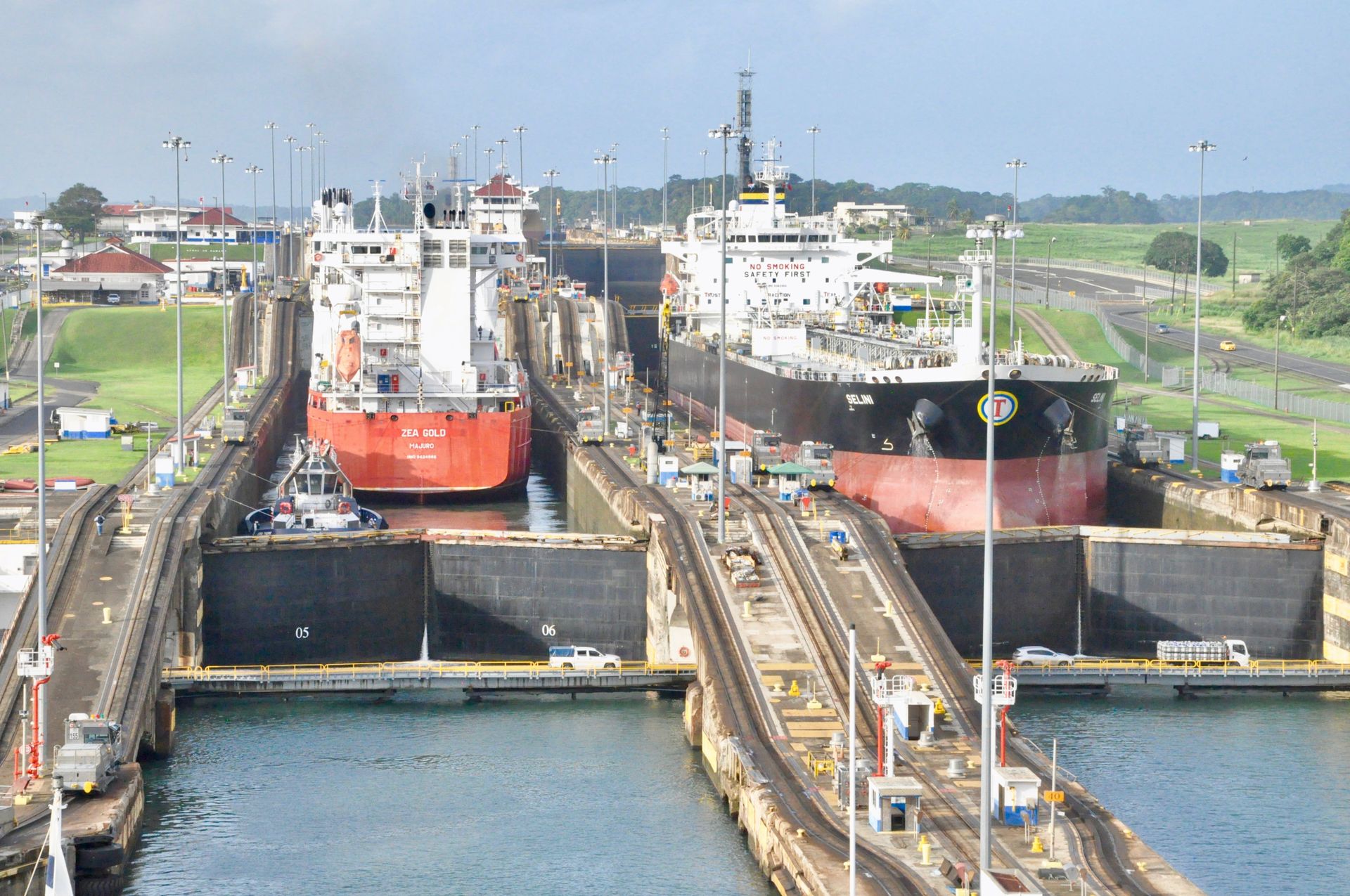
The announcement of new US “reciprocal” tariffs in 2025 jolted global trade dynamics. At the same time, UNCTAD’s Review of Maritime Transport 2024 highlighted how climate disruptions in the Panama Canal — including severe drought in 2023–2024 — increased sailing distances by 31% and reduced transits by around 20%. For many companies, the vulnerability of long-haul, canal-dependent supply chains has become tangible.
Against this backdrop, the Caribbean appears well placed to capture nearshoring flows. Proximity to the United States, preferential trade agreements and expanding port infrastructure all suggest opportunity. But beneath the surface lies a more complex reality.
A High-Cost Logistics Environment
The Caribbean’s structural paradox is stark: it is strategically located but economically expensive.
According to the OECD’s Caribbean Development Dynamics 2025, logistics costs across the region represent between 16% and 25% of GDP — far above the OECD average of 9%. The same report highlights limited competition in transport services and regulatory hurdles as key cost drivers.
UNCTAD’s 2024 maritime review further notes that small island developing states (SIDS) experienced a 9% decline in maritime connectivity over the past decade. Shipping costs reflect this structural weakness. The UN Economic Commission for Latin America and the Caribbean reported that in mid-2024, transporting a 40-foot container from Miami to small Caribbean island states cost four times more than shipping the same container to Argentina, Uruguay or even China.
Port handling charges in several Caribbean jurisdictions are estimated to be two to three times higher than comparable facilities globally, exacerbated by infrastructure bottlenecks and operational inefficiencies.
Nearshoring depends on reliability, cost predictability and scale. On those metrics, the Caribbean remains structurally challenged.
Ports as the Pivot of Transformation
Yet change is underway — and it is port-led.
Data shows that the Dominican Republic captured 20 of the 28 greenfield manufacturing FDI projects tracked across CAIPA countries, between 2020 and 2025. The country’s network of 92 special economic zones has supported industries ranging from life sciences to electronics and apparel. According to statistics, medical device exports reached a record $1.9 billion in 2025, with 75% destined for the United States.
Infrastructure expansion is central to this trajectory. In May 2025, the Dominican Republic signed a memorandum of understanding with DP World for a $760 million expansion of the Port of Caucedo and its adjacent free trade zone. DP World has described the investment as strengthening competitiveness and diversifying the national economy.
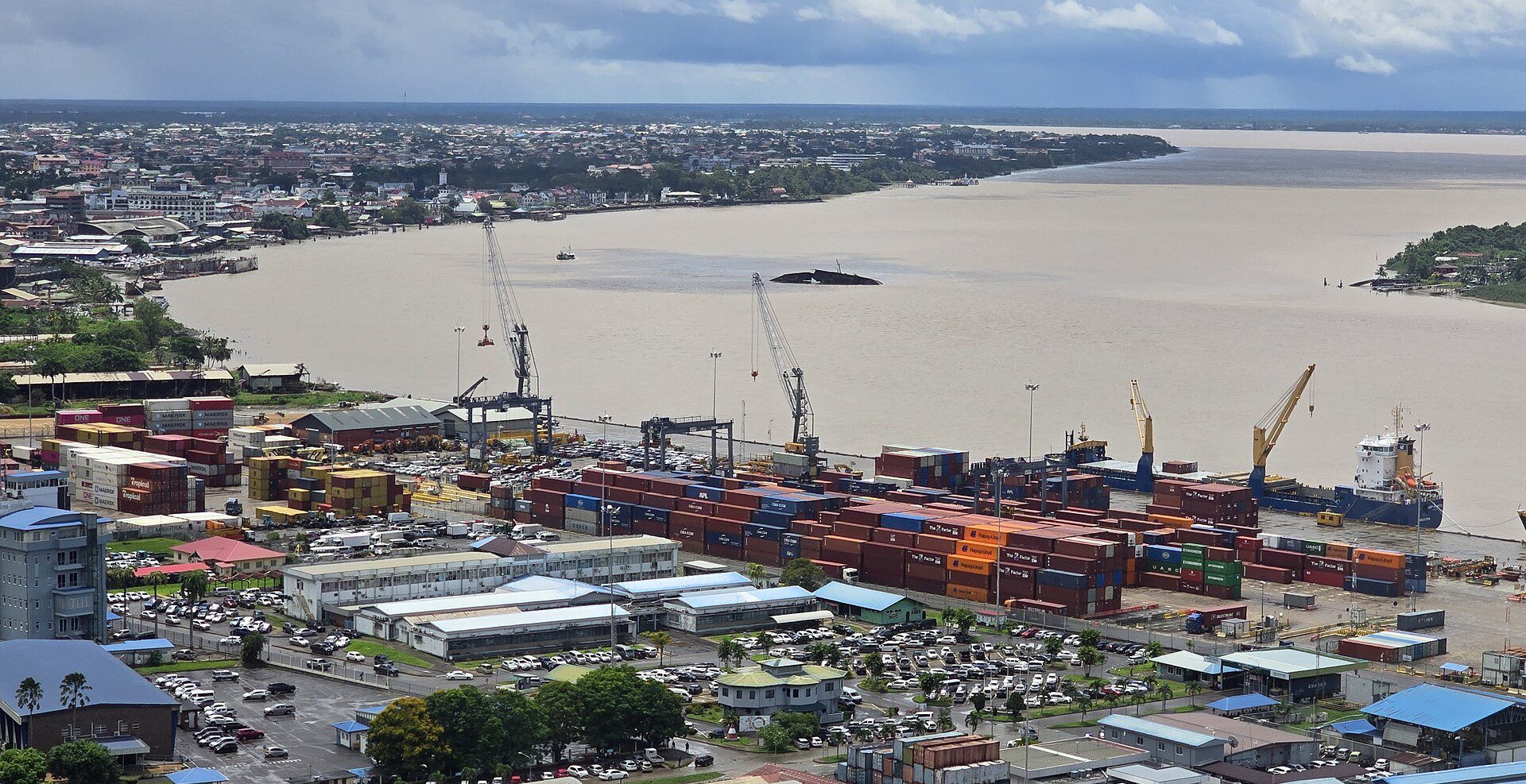
Jamaica is also reinforcing its logistics profile. An $80 million expansion at Kingston Freeport Terminal is increasing storage capacity by more than 25%. Belize is undergoing a $200 million port expansion, while Guyana is advancing the Parika port and the Berbice deep water port to facilitate larger cargo flows and regional trade integration.
These developments reflect what UNCTAD has identified as an urgent need for infrastructure upgrades and private investment to address connectivity gaps and strengthen resilience in Latin America and the Caribbean.
Caribbean ports are no longer positioning themselves merely as maritime gateways. They are evolving into multimodal logistics platforms integrated with free zones, manufacturing clusters and increasingly digitalised operations.
Climate Vulnerability: The Structural Constraint
However, the nearshoring narrative cannot be separated from climate exposure.
UNCTAD’s 2024 review stresses that climate change has become a central risk factor for maritime trade in the region. The Panama Canal drought illustrated how fragile critical maritime infrastructure can be. More broadly, Caribbean Development Dynamics 2025 estimates that climate-related losses in the region average around 2.13% of GDP annually, while the number of climate events increased by 85% between 2001 and 2020.
For small island economies heavily dependent on maritime transport, these vulnerabilities directly affect trade costs, insurance premiums and long-term infrastructure viability.
UNCTAD has called for increased financing for climate-resilient port infrastructure and capacity-building across the region. Without systematic adaptation, the very assets intended to attract nearshoring flows could become structural liabilities.
The Missing Link: Regional Integration
Another structural weakness lies in intra-regional fragmentation.
According to the OECD’s 2025 regional assessment, intra-Caribbean trade accounts for only 6.7% of total trade flows, underscoring limited economic integration between neighbouring markets. Regulatory fragmentation, inconsistent customs procedures and limited competition in the transport sector create friction across short-distance trade corridors.
At UNCTAD’s Global Supply Chain Forum in Barbados in 2024, stakeholders identified cargo consolidation, regulatory coordination and infrastructure investment as critical steps to reduce inefficiencies and deepen regional connectivity.
Without stronger integration, the Caribbean risks remaining a collection of isolated logistics nodes rather than a cohesive supply chain ecosystem.
Window of Opportunity or Structural Ceiling
The Caribbean nearshoring narrative rests on solid foundations: geographic proximity to the United States, expanding port infrastructure, favourable trade agreements such as US–CAFTA and a visible rise in foreign direct investment in manufacturing and logistics.
At the same time, structural constraints remain significant. As both UNCTAD and the OECD underline, high logistics costs, declining maritime connectivity for smaller states, fragmented regulatory systems and pronounced climate vulnerability continue to weigh on competitiveness.
The region stands at a strategic inflection point. Port expansions and logistics upgrades are measurable. Manufacturing ecosystems are growing, particularly in the Dominican Republic. International operators are committing capital.
But nearshoring is not automatic transformation. It is a competitive race — one that demands sustained reform in infrastructure efficiency, regulatory coordination and climate adaptation.
The Caribbean’s geographic advantage is undeniable. Whether it translates into a durable nearshoring frontier will depend less on location and more on structural execution in the years ahead.