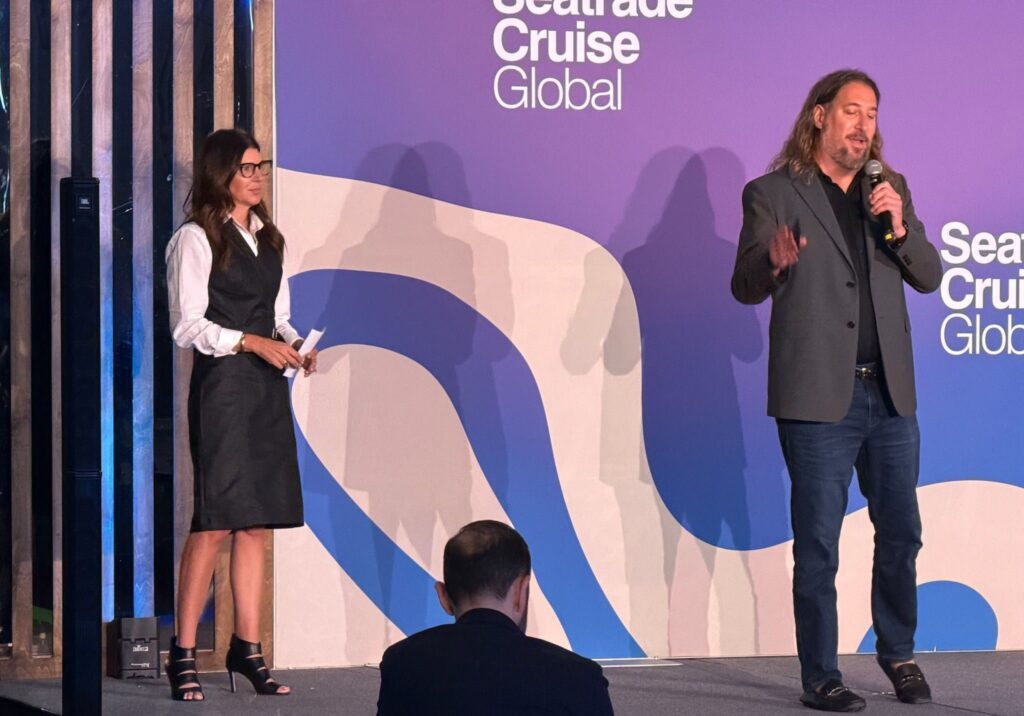
At Seatrade Cruise Global, discussions around growth, infrastructure and destination strategy often dominate the agenda. Yet during the session “Travel Changes Our DNA — and the Lessons for Brands,” held on April 13 at the Sunset Vista Salon, the focus shifted toward a different dimension of the industry: the traveler.
Presenting proprietary research from R&R Partners, Justin Gilbert and Amberlee Engle explored how travel is no longer simply an experience, but a catalyst for behavioral, emotional and even value-based transformation. Their findings suggest that understanding how travel reshapes individuals may become increasingly central to how cruise brands and destinations design, position and communicate their offerings.
From traditional travel to “deep travel”
A central concept introduced during the session is the distinction between what was described as “traditional travel” and a more transformative form of experience referred to as “deep travel.”
According to Justin Gilbert, Executive Vice President Strategy & Intelligence at R&R Partners, traditional travel is often driven by immediate motivations such as relaxation, escape or entertainment. In contrast, “deep travel” is defined by its long-term impact on individuals — shaping how they see themselves, others and the world around them.
The research suggests that this type of experience is far from marginal. Approximately 54% of surveyed travelers reported having experienced a trip with lasting personal impact, challenging the assumption that transformative travel is limited to niche segments.
This distinction indicates a shift in how travel is perceived — from a temporary escape to an experience with enduring personal significance.
Behavioral shifts beyond the journey
The session highlighted how these deeper travel experiences extend well beyond the duration of a trip.
Travelers who reported experiencing “deep travel” were more likely to adopt new behaviors in their daily lives, including seeking new experiences, prioritizing personal growth and focusing on self-care.
They were also more inclined to explore unfamiliar environments independently and to integrate elements of their travel experiences into their everyday routines — from purchasing decisions to lifestyle choices.
These findings suggest that travel can influence long-term behavioral patterns, positioning it as a driver of change rather than a standalone experience.
Redefining priorities and expectations
Beyond behavior, the research points to a broader shift in what travelers prioritize.
While traditional motivations such as relaxation and escape remain relevant, deeper travel experiences appear to elevate the importance of factors such as cultural discovery, personal milestones and meaningful connections.
Justin Gilbert noted that these experiences often lead individuals to reassess what matters most, placing greater emphasis on relationships, personal development and purpose-driven activities.
This evolution suggests that traveler expectations are becoming more complex, with increasing demand for experiences that go beyond entertainment to deliver personal meaning.
Emerging patterns in cruise behavior
Several trends discussed during the session highlight how these behavioral shifts are already influencing the cruise sector.
Amberlee Engle, Chief Client Officer at R&R Partners, pointed to the growth of solo travel within cruising, with this segment representing around 12% of passengers and continuing to expand.
She noted that solo travelers are often motivated by self-discovery and personal reinvention, seeking experiences that allow for deeper immersion and autonomy.
The discussion also highlighted the rising interest in themed cruises, where travelers engage with specific passions such as culture, food or music. While approximately 40% of travelers expressed interest, a lower conversion rate suggests that brands may need to better communicate the value of these experiences.
Another notable dynamic is what was described as the “shipboard stranger effect.” Around 55% of travelers reported forming new connections during their journeys, with 80% maintaining those relationships afterward, illustrating the role of cruise environments as facilitators of social interaction and shared experiences.
Finally, the research points to a growing preference for less familiar destinations, as travelers seek experiences that push them beyond their comfort zones and contribute to personal growth.
Implications for cruise brands and destinations
These shifts carry important implications for how cruise brands and destinations approach engagement.
The findings suggest that focusing solely on the physical attributes of a destination or the features of a ship may no longer be sufficient. Instead, brands may need to articulate the broader impact of travel — how it influences identity, relationships and long-term well-being.
Justin Gilbert emphasized the importance of identifying the underlying motivations that drive travelers, including subconscious triggers linked to personal growth and transformation.
This perspective points to a potential evolution in marketing and storytelling, where highlighting the emotional and transformative outcomes of travel becomes as important as showcasing the experience itself.
At the same time, the cruise sector may benefit from leveraging its unique characteristics — including immersive itineraries and onboard social dynamics — to create environments that support these deeper forms of engagement.
Reading the road ahead
The discussions from this session suggest that the role of travel is expanding beyond leisure into a broader space of personal development and social connection.
As traveler expectations continue to evolve, cruise brands and destinations may need to adapt their strategies to reflect these changes — not only by enhancing experiences, but by aligning with the deeper motivations that drive travel decisions.
These insights indicate that understanding how travel reshapes individuals could become a key factor in how the industry positions itself in the years ahead.