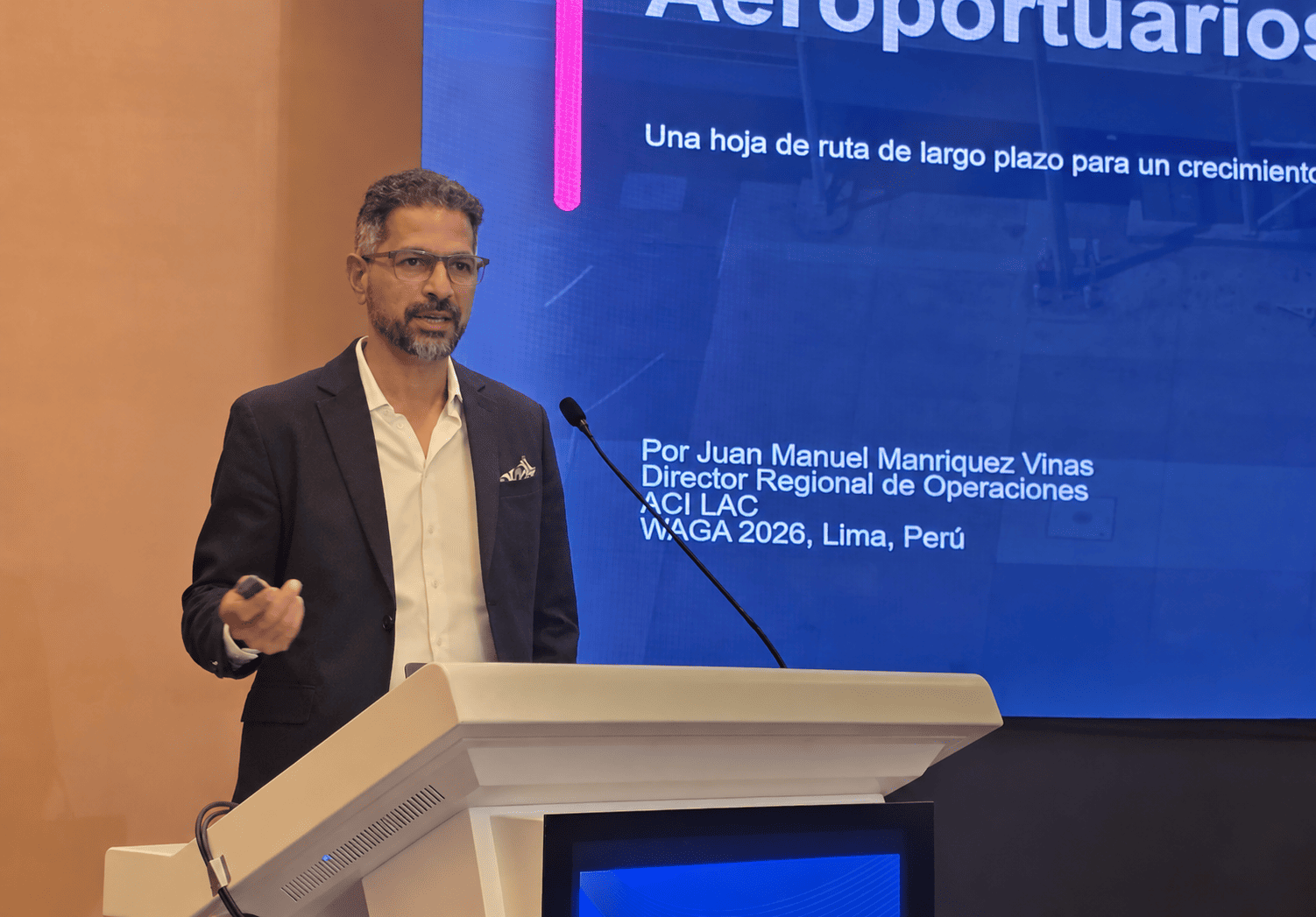
At WAGA 2026 in Lima on September 28, SITA outlined a vision of airport digitalisation built less around adding isolated technologies and more around connecting the data already generated throughout the passenger journey. The company sees data orchestration, biometrics, digital identity and AI-assisted decision-making as key tools for making airport processes more responsive while keeping people at the center of operations.
SITA used its WAGA 2026 press conference to frame the next stage of airport transformation around one central challenge: airports already generate large volumes of information, but much of that data still sits in separate systems.
The session, introduced around the theme of “reimagining the airport” and orchestrating the passenger experience, linked changing passenger expectations with the need for airports, airlines and technology systems to exchange information more effectively.
Passenger expectations are becoming more digital
Figures presented by SITA highlighted how quickly passenger behaviour is changing.
According to the presentation, 95% of passengers are willing to use or share digital travel information, including boarding passes, baggage information and credentials through mobile devices or digital wallets.
SITA also said 67% of passengers are travelling with less baggage or without baggage, while 42% want real-time information about their luggage, flights and other elements of the journey.
Those expectations are developing alongside technologies already present across airports, including self-service systems, automation, biometrics and digital identity.
The issue, according to SITA, is that these systems do not necessarily operate as one connected environment.
The challenge is fragmented airport data
Passenger information may sit in one system, biometric data in another and airport operational information somewhere else. Airlines and other stakeholders also generate their own datasets.
SITA argued that simply producing more information is therefore not enough.
“Data by itself does not generate anything,” the company said during the presentation, explaining that isolated information cannot support the best operational decisions.
The proposed shift is toward data orchestration: connecting information from multiple airport systems so that it can be analysed together and made available more quickly to operational teams.
As the number of connected systems increases, SITA said decision-makers can gain a broader and more current picture of airport activity, allowing them to respond faster to changing conditions.
AI as a decision-support tool
Artificial intelligence forms part of that model, but SITA drew a clear distinction between using AI to support decisions and handing decisions over to machines.
Real-time information can change minute by minute during airport operations. The company’s argument is that AI can help process that information and provide operators with better visibility when disruptions or operational changes occur.
But the human role remains central.
In remarks translated from Spanish, SITA said that data can feed artificial intelligence but “never replaces the human element” required for efficient airport operations.
The objective is therefore not automation for its own sake. It is to connect information sufficiently well that airport teams can predict situations earlier and make better-informed decisions.
Toward a more seamless passenger journey
The approach also extends beyond internal airport operations.
During the discussion, SITA pointed to airports in the region that are already advancing different elements of the model. Aruba was cited for cross-border passenger processes using digital credentials, with systems designed to simplify the journey from before boarding through arrival.
SITA also stressed that no single airport in Latin America and the Caribbean currently represents the complete model. Different airports are progressing at different levels of maturity across biometrics, artificial intelligence, border processing and operational integration.
The vision presented in Lima therefore depends less on one breakthrough technology than on making existing systems work together. For SITA, the next step in airport digitalisation is turning fragmented information into a connected operational environment that can improve decisions, reduce friction and make the passenger journey more responsive.
Editor’s note: Article 1/2 WAGA 2026 series examining SITA’s vision for the future of airport operations and passenger experience.
FAQ
What does SITA mean by airport data orchestration?
It refers to connecting information generated across different airport, airline, biometric and passenger systems so it can be analysed and used together.
What passenger trends did SITA highlight at WAGA 2026?
SITA presented figures indicating that 95% of passengers are willing to use or share digital travel information, while 42% want more real-time information during their journey.
How does SITA see AI being used at airports?
As a tool to process real-time information and support human decision-making rather than replace airport personnel.
Which technologies are already part of this model?
The presentation referenced self-service systems, automation, biometrics, digital identity and interconnected operational data.