As artificial intelligence, automation and data become more deeply embedded in aviation operations, IATA says new technology should improve situational awareness and decision-making without creating a new point of dependency. Its latest safety framework puts resilience — including the ability to operate safely when technology fails or becomes unreliable — at the center of adoption.
The International Air Transport Association (IATA) has outlined three tests for assessing new aviation technologies, including artificial intelligence, as the industry looks for the next advances in safety.
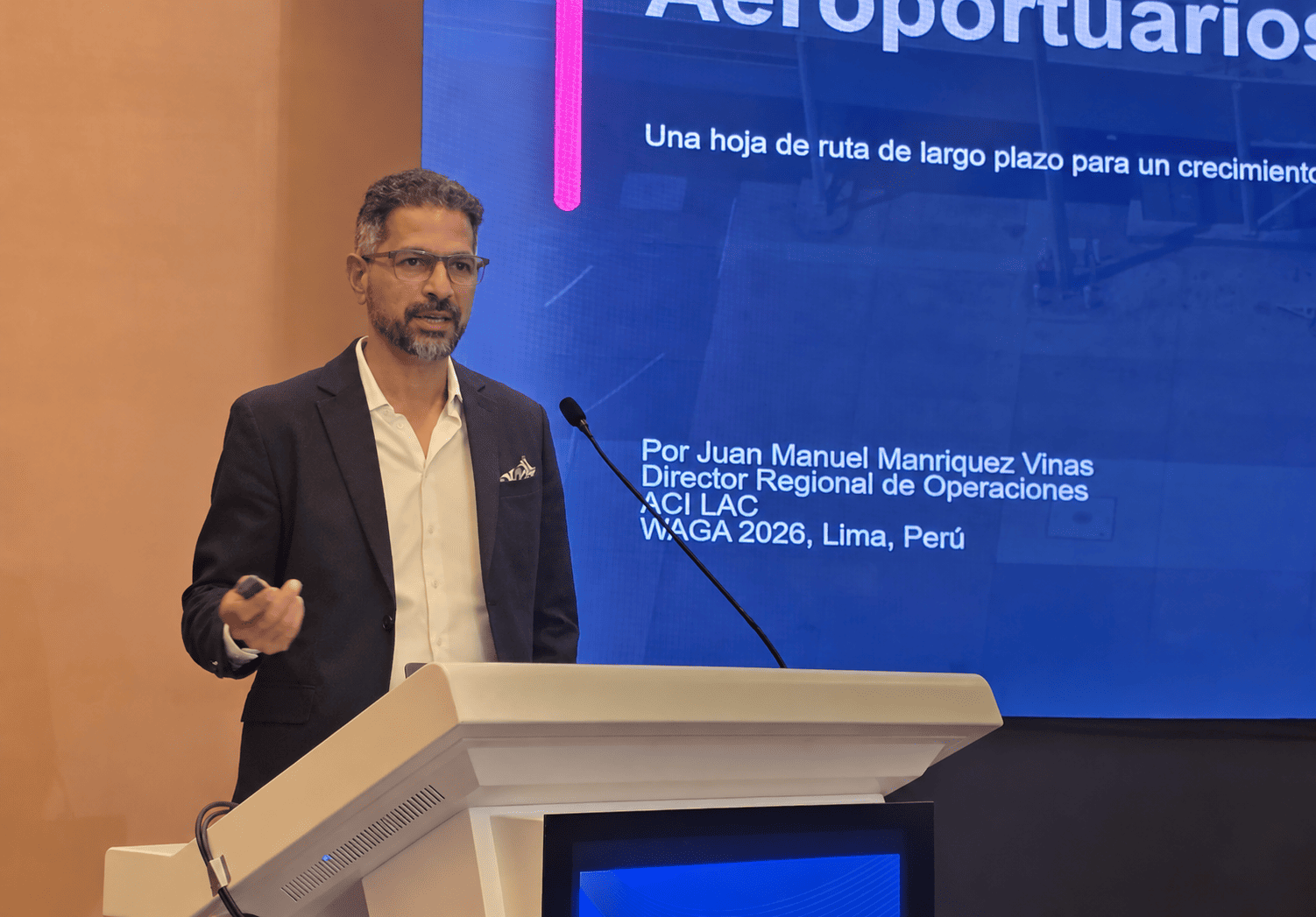
Speaking at the opening of the IATA World Safety and Operations Conference 2026, Director of Safety Mark Searle argued that future improvements will increasingly depend on the interaction between people, technology and global standards, rather than any one of those elements working in isolation.
The context is an aviation system that has become considerably safer. A decade ago, the industry recorded one fatal accident for every 3.5 million flights. In 2025, that figure improved to one for every 5.6 million flights. Yet 394 onboard fatalities were still recorded during the year.
Three questions for every new technology
IATA’s approach starts with three relatively simple questions.
Does the technology help safety professionals better understand what is happening around them? Does it support better decision-making? And can operations remain safe if the technology becomes unavailable or compromised?
The first two tests reflect the potential of AI and data-driven systems to process information at a scale that humans cannot easily replicate. Earlier identification of unusual patterns can help safety teams detect emerging risks and intervene before they develop into incidents.
The third question introduces a different requirement: resilience.
A system may improve operations under normal conditions, but aviation cannot become dependent on it to the point where its failure, degradation or manipulation undermines safety.
As Searle put it, “Technology alone is never enough.”
GNSS interference shows why resilience matters
IATA points to growing interference with Global Navigation Satellite Systems as a practical example.
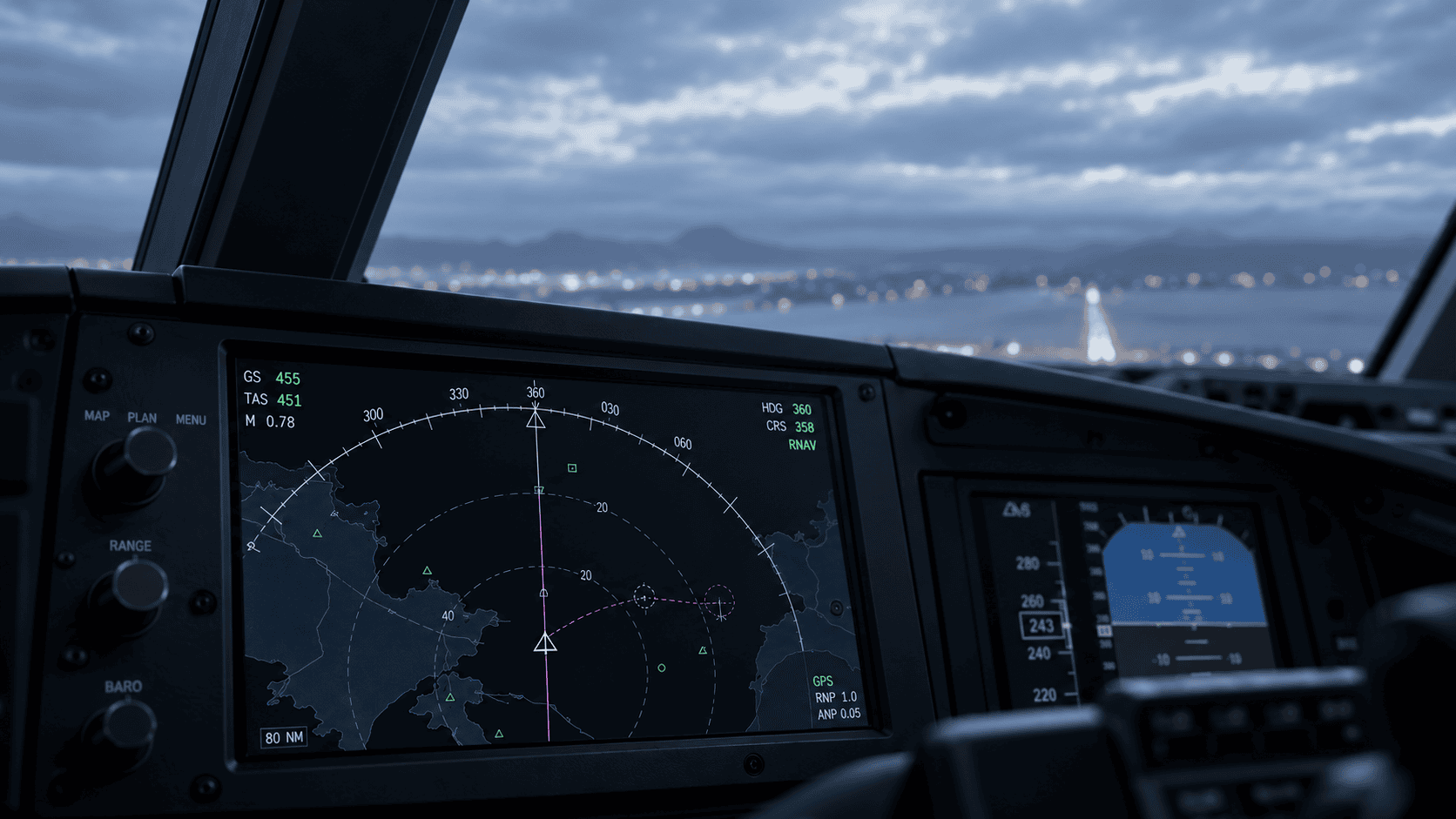
Compared with 2023, reported GNSS jamming events increased by 67% in 2025, while reported GPS spoofing incidents rose by 193%. During spoofing, an aircraft can receive positioning information that appears credible even though it is false.
The issue is already operationally relevant across Latin America and the Caribbean. In a working paper submitted by IATA and ALTA to ICAO in 2026, the organizations reported a significant increase in GNSS signal interference across the LATAM-CAR region since September 2025, particularly in airspace covering Mexico, Panama, Colombia, Venezuela and the Caribbean. The events have affected aircraft GPS navigation systems during all phases of flight, requiring crews to revert to conventional navigation procedures as a contingency measure.
For regional operators, the resilience question raised by IATA is therefore not theoretical. The ability to continue operating safely when satellite-based navigation becomes unreliable is already being tested in day-to-day operations across parts of the region.
The lesson, according to IATA, is not that satellite navigation has failed. GNSS has delivered major gains in both aviation safety and operational efficiency.
Instead, interference demonstrates why technology needs additional layers of protection. When positioning data becomes unavailable or unreliable, safe operations may depend on redundancy, procedures, training and crew judgment.
IATA and the European Union Aviation Safety Agency have already developed a GNSS Resilience Plan covering areas including monitoring, prevention, backup infrastructure and civil-military coordination. ICAO has subsequently taken the issue forward at the international level.
More data could help identify risks earlier
The expanding role of technology in aviation safety is also closely tied to the amount of operational data available.
IATA says its Turbulence Aware program has received more than 65 million turbulence reports from aircraft in 2026. Its SafetyIS platform draws operational safety data from 248 airline contributors, while IATA Connect brings together around 5,600 users from more than 600 organizations to exchange information and safety experience.
For AI-based tools, the relevance is significant. Their ability to support risk detection depends not only on the sophistication of the model but also on the quality, scale and reliability of the information feeding it.
That shifts part of the aviation AI discussion away from automation itself and toward data sharing, validation and interpretation.
AI is not intended to replace human judgment
IATA’s message is also explicitly human-centered.
Searle argued that aviation has historically improved safety not by removing people from operations, but by providing them with better information and tools.
That principle becomes increasingly important as a new generation of aviation professionals enters the workforce with stronger digital and AI skills, while experienced safety specialists begin to retire.
IATA identifies structured knowledge transfer and the combination of operational experience with new digital capabilities as priorities. At the same time, Searle warned against “the erosion of skills through overreliance on technology.”
The challenge is therefore not to choose between human expertise and AI, but to determine how the two can work together while preserving the ability of professionals to question an automated output when operational conditions require it.
Technology cannot compensate for weak standards
The third pillar of IATA’s approach is consistent implementation of global standards.
In 2025, airlines on the IATA Operational Safety Audit (IOSA) registry recorded one accident for every 1.09 million flights, compared with one accident per 0.39 million flights among non-IOSA operators — an accident rate around 2.79 times higher.
IATA cautions that an audit alone does not explain the difference, but uses the gap to illustrate the role common standards and effective oversight can play.
Implementation gaps also remain at State level. Only 52% of accident reports covering 2020–2024 were completed in line with States’ obligations under ICAO Annex 13, according to IATA. Delayed reporting also delays the safety lessons and data that could feed future prevention systems.
That connection becomes increasingly relevant as AI enters safety management. Better algorithms cannot compensate for missing, late or unreliable information.
IATA’s three tests therefore establish a relatively clear threshold for future aviation technologies: better awareness, better decisions and a safe fallback when the technology cannot be trusted.
Rather than slowing AI adoption, the framework places it inside the broader safety architecture that aviation has spent decades building — one in which technology supports human judgment and resilience remains essential when systems do not behave as expected. For Latin American and Caribbean operators already facing increased GNSS interference, that resilience requirement is becoming an operational concern rather than a theoretical one.
FAQ
What are IATA’s three tests for new aviation technology?
IATA asks whether a technology improves situational awareness, supports better decisions and allows operations to remain safe if the technology becomes unavailable or compromised.
Do the tests apply only to artificial intelligence?
No. IATA presents them as tests for any new technology, including AI.
Why is GNSS interference relevant to AI and automation?
GNSS interference demonstrates the wider risk of depending heavily on technology. A system must remain safe when digital information becomes unavailable, degraded or misleading.
How much did GPS spoofing increase?
IATA says reported GPS spoofing incidents increased 193% in 2025 compared with 2023, while reported GNSS jamming events rose 67%.
What role does IATA see for humans as AI adoption grows?
IATA argues that technology should support — rather than replace — human judgment, while the industry preserves operational expertise, safety culture and the ability to challenge automated outputs.