For Caribbean ports pursuing decarbonisation, reducing emissions is only part of the equation. Across the region’s Small Island Developing States (SIDS), renewable energy infrastructure must also confront another operational reality: hurricanes, extreme weather exposure and fragile island energy systems.
That challenge is increasingly shaping the types of technologies being considered for maritime energy transition projects throughout the Caribbean. During the “Progressing Maritime Decarbonisation in St. Kitts and Nevis” workshop organised under the IMO–EU Global MTCC Network (GMN) Phase II programme, resilience emerged as a recurring theme alongside emissions reduction and renewable integration.
The discussions highlighted how Caribbean ports may require a different decarbonisation pathway from larger international hubs — one centred on modular infrastructure, adaptive engineering and technologies capable of operating within hurricane-prone environments.
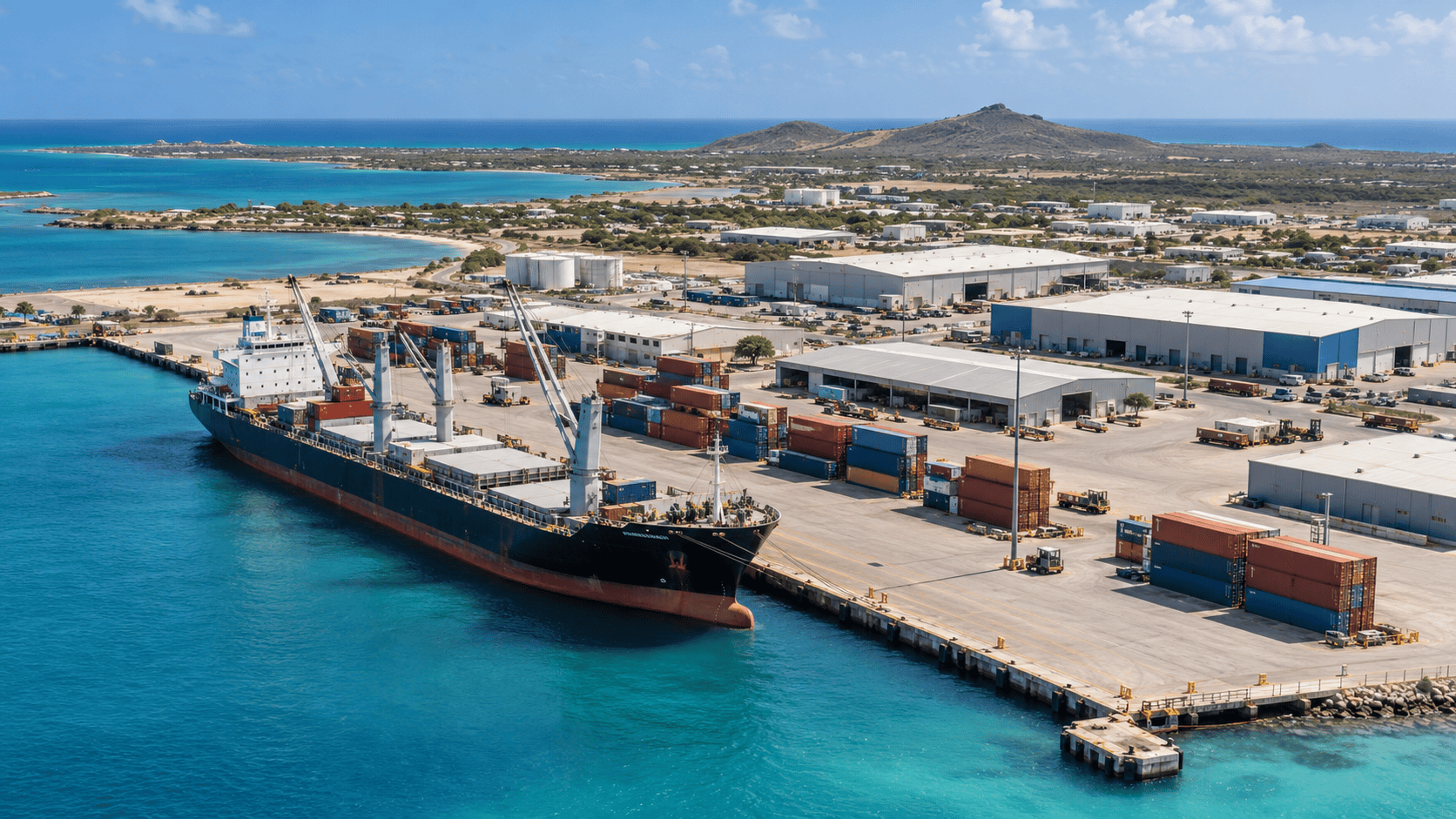
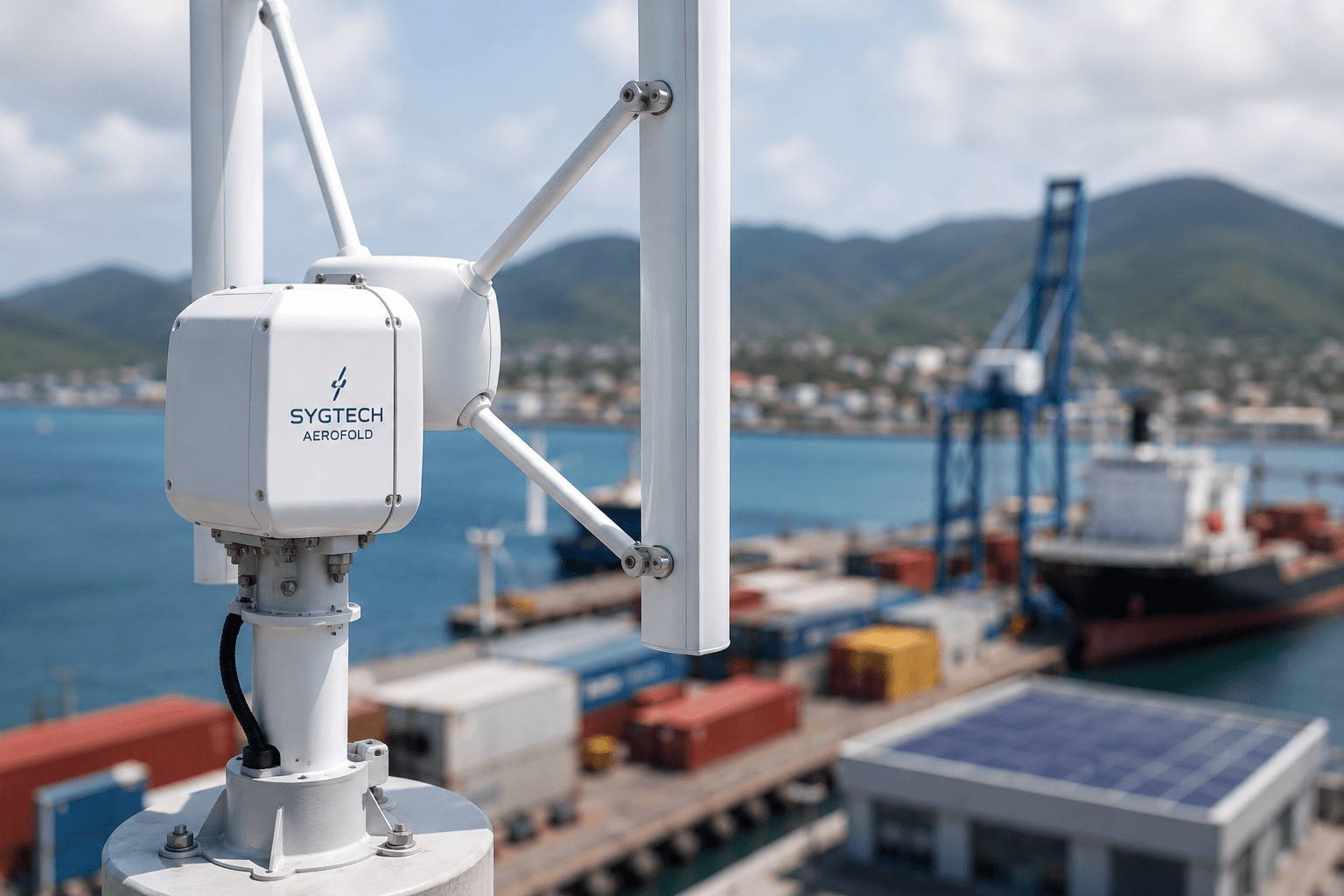
At the centre of these discussions stood the AeroFOLD wind turbine system proposed for the Basseterre Deep Water Port pilot project in St. Kitts and Nevis.
Caribbean ports face a dual infrastructure challenge
For most global ports, maritime decarbonisation is largely framed around emissions reduction targets, electrification strategies and alternative fuels. Caribbean SIDS, however, operate under additional layers of infrastructure vulnerability.
Ports throughout the region frequently face:
- hurricane exposure;
- storm surge risks;
- constrained land availability;
- limited grid capacity;
- and high dependence on imported fuels.
At the same time, ports remain critical national infrastructure supporting tourism, cargo supply chains, fuel imports and inter-island mobility. Operational disruptions can therefore have immediate economic and logistical consequences for island economies.
That reality complicates renewable energy deployment.
Unlike larger continental systems capable of absorbing infrastructure losses or large-scale outages, many island grids operate with limited redundancy. As a result, energy transition technologies deployed within port environments must balance decarbonisation objectives with operational resilience and infrastructure survivability.
The St. Kitts and Nevis workshop repeatedly reflected this concern, particularly during discussions surrounding the Basseterre Port renewable energy-powered microgrid project.
The Basseterre project is testing a different infrastructure model
The pilot project being developed under the GMN Phase II programme aims to integrate renewable energy generation directly into Basseterre Port operations through a distributed microgrid system.
According to the workshop report, the system is expected to combine:
- wind-powered generation;
- smart meters;
- real-time monitoring systems;
- smart energy management;
- and potential future integration with storage technologies and the national grid.
Although the project remains in a pilot and assessment phase, its broader significance lies in the type of infrastructure model being explored.
Rather than relying on large, centralised renewable systems, the Basseterre initiative reflects a more modular and site-adapted approach designed for constrained island environments.
That distinction is important for Caribbean ports, where:
- available land is limited;
- infrastructure footprints are compact;
- and operational continuity is essential.
The workshop also highlighted that final system sizing and projected energy yields remain dependent on ongoing wind resource assessments and site-specific feasibility studies.
AeroFOLD was designed with hurricane exposure in mind
One of the project’s most closely watched components is the AeroFOLD wind turbine system developed by SYGTECH.
During the workshop, Professor Tarik Ozkul, CEO of SYGTECH, presented the technology as a lightweight and modular wind solution specifically adapted to extreme weather conditions common across SIDS.
According to the report, the system incorporates:
- a foldable structure;
- a tilt-down mechanism;
- omnidirectional operational capability;
- and simplified foundation requirements.
The foldable design is particularly notable within the Caribbean context. By allowing turbines to be lowered during severe weather events, the system attempts to address one of the region’s most significant renewable infrastructure concerns: hurricane survivability.
That engineering philosophy differs from many conventional utility-scale wind systems designed primarily for large continental markets with different climatic conditions and larger infrastructure redundancy.
For Caribbean islands, however, infrastructure resilience often becomes as important as generation capacity itself.
The modular nature of the system may also prove operationally relevant for ports with constrained installation environments, where space availability and construction complexity can significantly affect project feasibility.
Data collection is now shaping the project’s feasibility phase
To support the pilot programme, MTCC Caribbean installed two wind monitoring systems in St. Kitts and Nevis as part of the project’s assessment phase.
One monitoring system was deployed directly at Basseterre Port, while another was positioned at an elevated hilltop location to collect comparative wind data.
The monitoring campaign is expected to run over five months and will support:
- wind speed analysis;
- site selection;
- feasibility assessment;
- and future system optimisation.
The report also notes that project planning extends beyond wind availability alone. Several operational and infrastructure factors are being assessed simultaneously, including grid connectivity; installation logistics; accessibility; regulatory approvals and construction constraints.
That multidimensional planning process reflects the growing complexity of renewable integration within maritime infrastructure environments.
Caribbean decarbonisation may increasingly depend on adaptive technologies
The Basseterre project ultimately illustrates a broader shift emerging across Caribbean maritime infrastructure planning.
For many SIDS, decarbonisation strategies may increasingly depend not on replicating large international energy transition models, but on developing technologies capable of adapting to:
- climate exposure;
- limited infrastructure capacity;
- compact port environments;
- and small-scale operational realities.
That shift could influence how future renewable technologies are evaluated throughout the Caribbean maritime sector.
As regional ports move toward electrification, emissions reduction and renewable integration, resilience engineering is becoming inseparable from decarbonisation itself.
In the Caribbean, the success of maritime energy transition projects may ultimately depend not only on how much carbon infrastructure can eliminate, but also on how effectively that infrastructure can withstand the region’s environmental realities.