
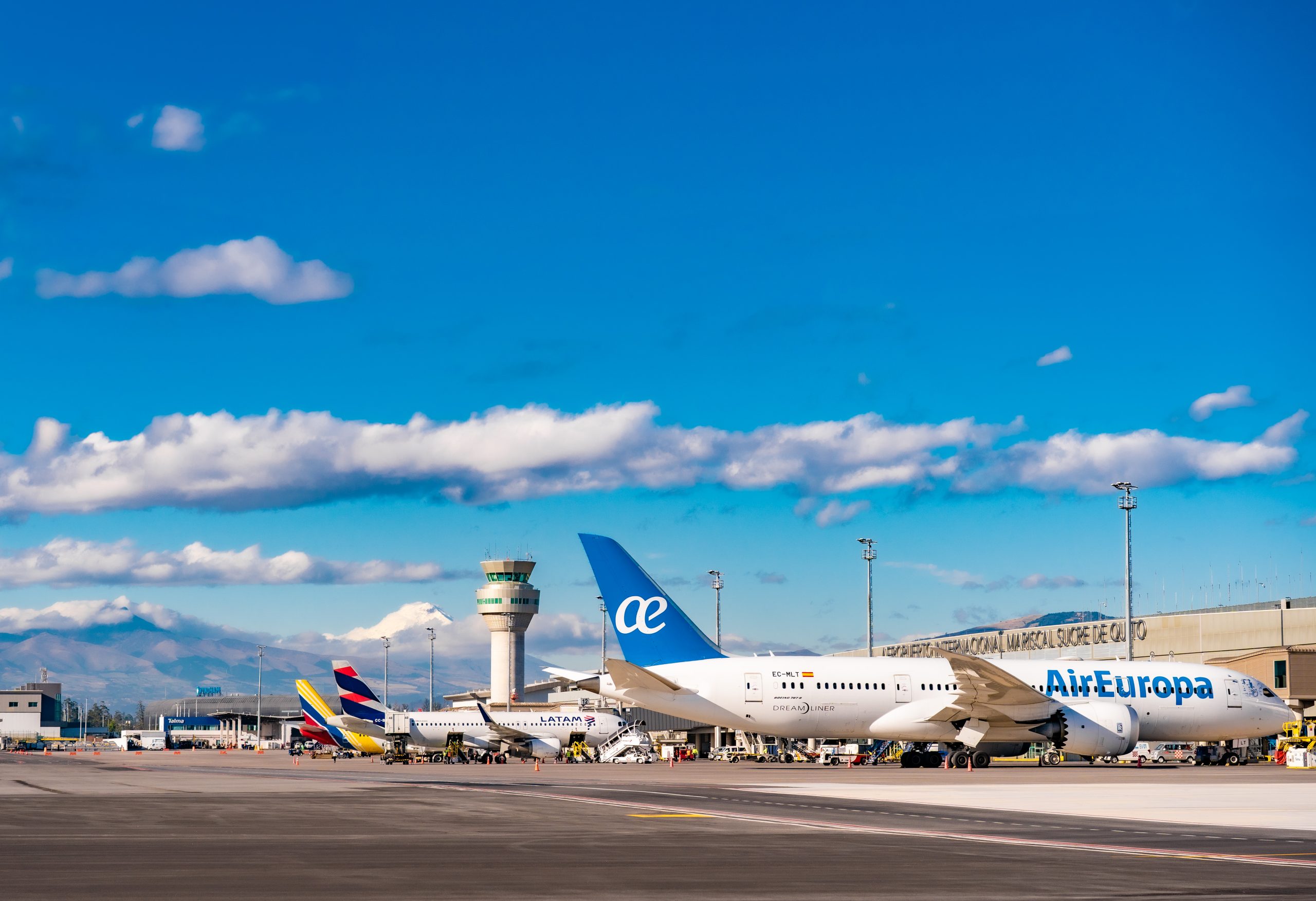
Mariscal Sucre International Airport in Quito has once again been recognized as the Best Regional Airport in South America, marking the 11th consecutive year the Ecuadorian gateway has secured the top position in its category. The distinction, awarded at the Skytrax World Airport Awards, reinforces the airport’s reputation as one of the region’s most consistent performers in terms of passenger experience, operational efficiency, and service quality.
Based on the direct evaluation of millions of travelers worldwide, the Skytrax awards are widely regarded as the most prestigious recognition in the global airport industry. For Quito Airport, maintaining this leadership for more than a decade highlights the long-term strategy implemented by Corporación Quiport, the private operator responsible for managing the airport.
In the 2026 edition of the awards, the airport also received the title of Cleanest Airport in South America, reflecting the emphasis placed on operational standards and passenger comfort. In addition, Quito ranked third in the Best Airport Staff in South America category and placed fourth worldwide among airports handling between five and ten million passengers annually. Complementing the airport’s recognition, the Wyndham Quito Airport Hotel was also named Best Airport Hotel in South America, strengthening the overall quality perception of the airport ecosystem.
According to Ramón Miró, President and CEO of Quiport, the recognition reflects the collective effort of the entire airport community. “This achievement is the result of the collaborative work of the entire airport community. Every operation, every service, and every passenger interaction counts,” he stated, emphasizing that the award confirms Quiport’s long-term commitment to maintaining high operational and service standards at Ecuador’s primary international gateway.
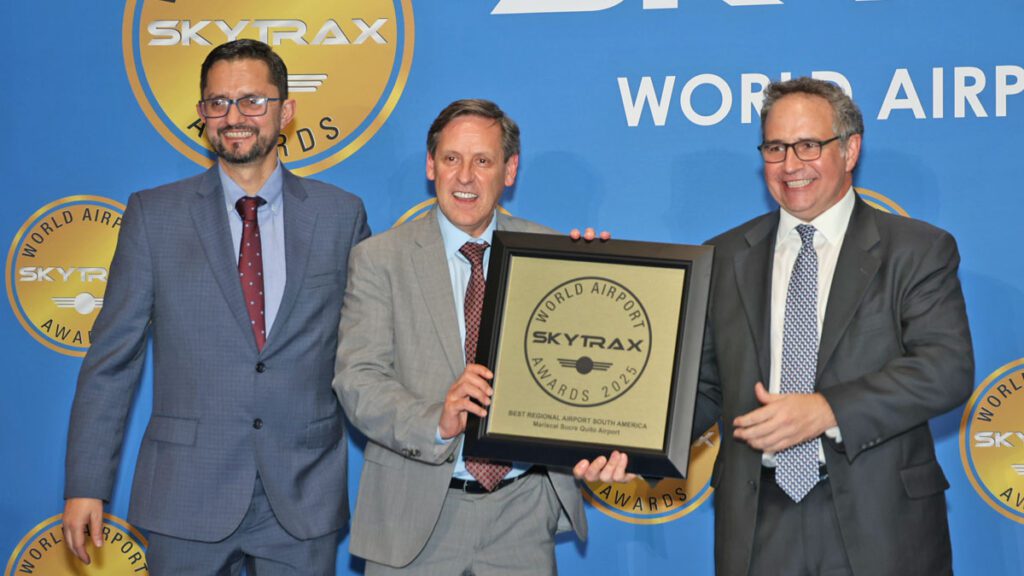
11 years of regional leadership
Maintaining the top regional ranking for more than a decade is a notable achievement in an increasingly competitive South American aviation landscape. The Skytrax World Airport Awards, often described as the industry’s global benchmark for airport quality, are based on comprehensive passenger surveys evaluating the entire airport journey—from check-in and security to cleanliness, staff service and overall travel experience.
For Quito Airport, the eleventh consecutive award confirms a sustained focus on service excellence and operational reliability. Beyond the headline recognition, the airport’s strong rankings across multiple categories illustrate its ability to compete with larger hubs across the region despite operating within the five-to-ten-million-passenger segment.
Infrastructure expansion supporting future growth
Behind these recognitions lies a broader strategy centered on infrastructure investment and operational modernization. In 2025, Quito Airport completed a major expansion project representing an investment of US$74.2 million, fully financed through Quiport’s own resources.
The expansion added 17,647 square meters to the passenger terminal and 35,000 square meters to the apron, significantly increasing the airport’s capacity to handle growing traffic. The project also introduced larger areas dedicated to international arrivals and departures, improvements to the baggage handling system, and a reconfigured Customs area designed to streamline passenger flows.
Additional facilities were also developed within the terminal, including new commercial spaces, 20 additional airline check-in counters, and 12 self-service check-in kiosks. Passenger comfort was enhanced with the creation of a pre-boarding lounge capable of accommodating 350 travelers, while the expansion of the international VIP lounge—scheduled for completion in 2026—will further strengthen premium services.
Overall, the expansion has increased the airport’s annual passenger capacity from five million to seven million travelers, positioning the facility to support future growth in Ecuador’s aviation sector.
Operational efficiency and passenger experience
Alongside infrastructure improvements, the airport has introduced new technologies designed to enhance operational efficiency and passenger experience. One of the most significant innovations has been the deployment of biometric gates in the international departure area, allowing Ecuadorian travelers over the age of 18 to pass through immigration controls more rapidly when traveling to visa-free destinations within South America.
These technological upgrades reflect the airport’s broader strategy to align its operations with international standards while reducing processing times and improving the overall passenger journey.
Traffic growth and expanding air connectivity
Operational results in 2025 confirm the airport’s steady recovery and growth trajectory. During the year, 5.4 million passengers traveled through Quito Airport, slightly exceeding the 5.3 million recorded in 2024.
Although the first months of the year were affected by uncertainty linked to Ecuador’s electoral cycle, traffic levels began to recover from May onward, resulting in a positive overall performance by the end of the year.
Connectivity also expanded during the period. In 2025, 12 commercial airlines operated flights connecting Quito to eight domestic destinations and fourteen international routes, reinforcing the airport’s role as Ecuador’s main international aviation gateway.
Among the most notable developments was the launch of the Quito–Madrid route operated by Air Europa, strengthening direct connectivity with Europe. In parallel, Aeroméxico announced the resumption of flights between Quito and Mexico City, with services scheduled to begin in March 2026, expanding travel options between Ecuador and North America.
Additional frequency increases were introduced on key routes including New York, Panama City, Bogotá, Lima, and Houston, increasing seat availability and improving connectivity for both business and leisure travel.
Quito strengthens its role as a regional air cargo hub
Beyond passenger operations, Quito Airport has also consolidated its position as a strategic logistics platform for Ecuador’s export economy. Cargo volumes increased significantly, rising from 364,000 metric tons in 2024 to 407,000 metric tons in 2025.
A total of 16 cargo airlines now operate at the airport, supporting a logistics ecosystem largely driven by Ecuador’s globally competitive floriculture sector. In fact, 93% of cargo exports handled at Quito Airport consist of flower shipments, making the airport a critical gateway for one of the country’s most important export industries.
This strong performance has positioned Quito Airport as the fifth largest cargo hub in Latin America and the Caribbean, according to rankings published by ACI-LAC.
Strengthening Ecuador’s aviation profile
Taken together, these developments illustrate the transformation of Quito’s Mariscal Sucre International Airport into a modern and competitive aviation gateway. With sustained investment in infrastructure, improved passenger experience, expanding connectivity and growing cargo volumes, the airport continues to reinforce its strategic role within the regional air transport network.
Beyond the airport itself, these achievements also contribute to strengthening Ecuador’s international aviation profile, supporting tourism growth, facilitating export logistics and enhancing the country’s connectivity with global markets.