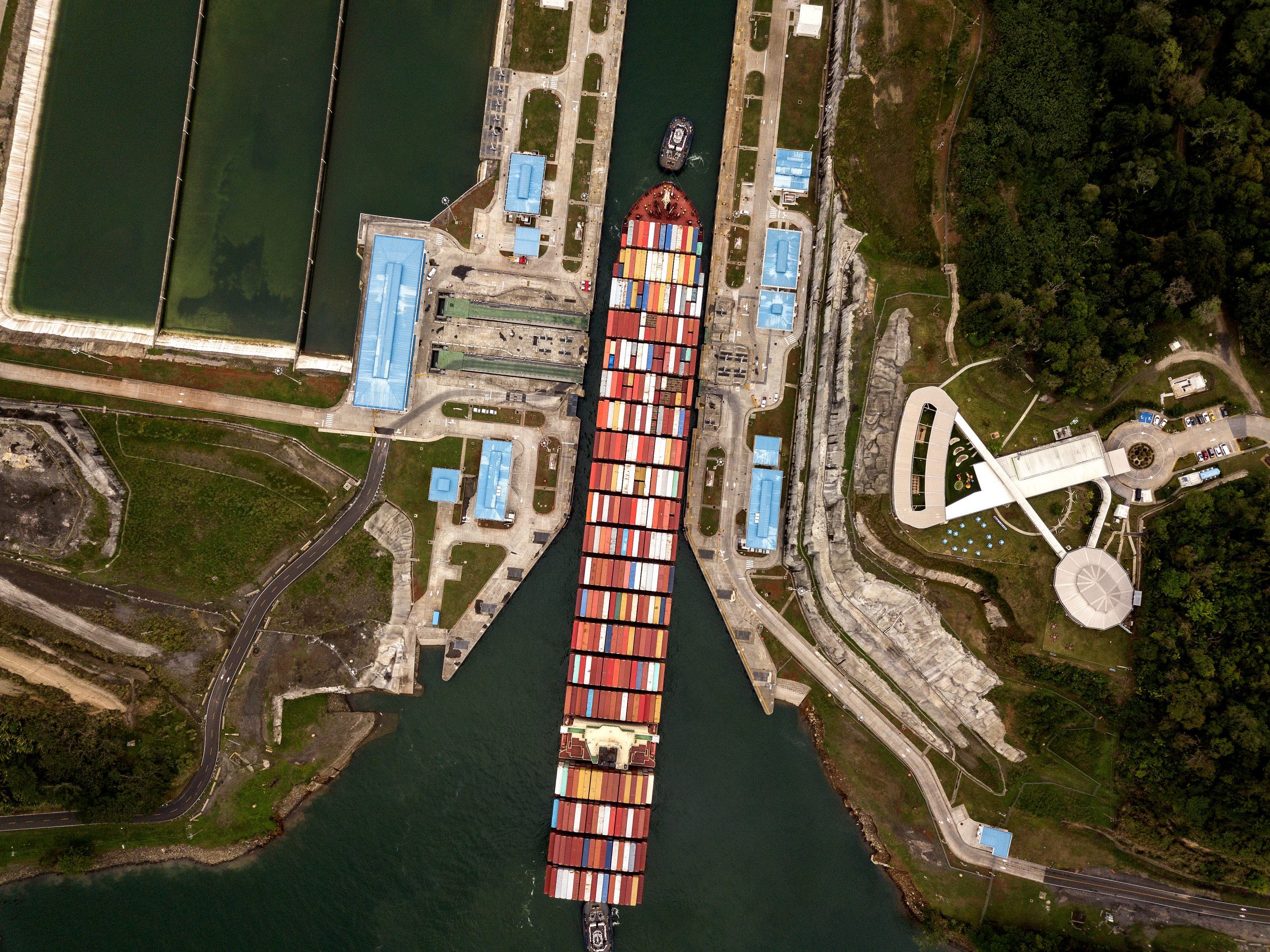
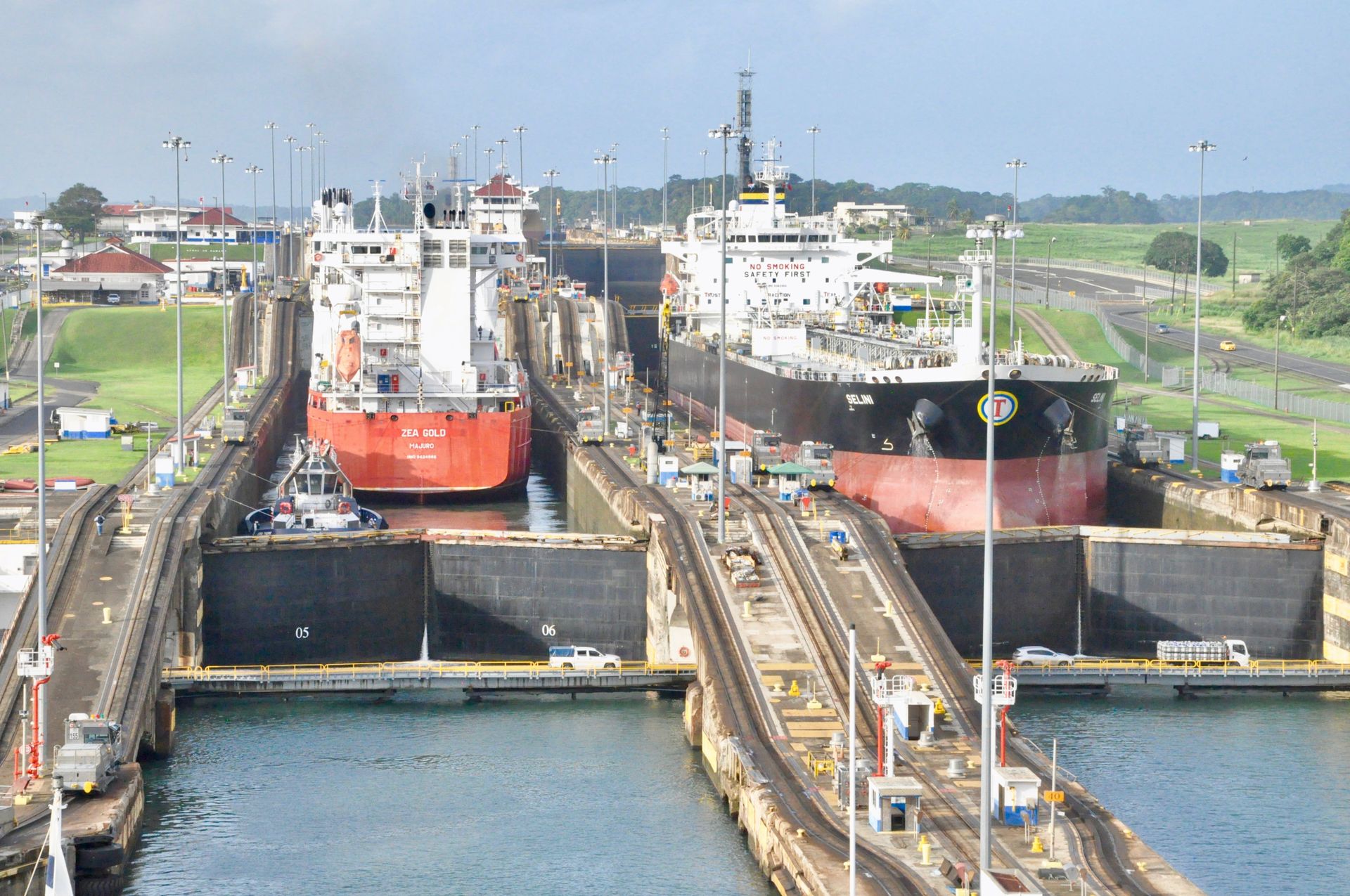
The Panama Canal has reduced booking availability as below-expected rainfall puts renewed pressure on water resources in Panama. The September 2026 measures are changing how scarce transit capacity is allocated across shipping segments, while the Río Indio project that could provide water equivalent to 11–15 daily Canal transits remains several years from completion.
New capacity restrictions took effect at the Panama Canal on September 3, 2026, after rainfall in the Canal watershed fell below expectations during Panama’s rainy season. The measures reduce available booking slots, modify daily auction rules and increase the importance of securing a confirmed transit date for vessels using the interoceanic route.
The September 2026 restrictions do not reflect a collapse in shipping demand. Every Panama Canal transit depends on freshwater stored primarily in Gatun Lake, making water availability a direct constraint on the amount of reliable capacity that can be offered to shipping companies.
Lower rainfall is tightening booking capacity
From September 3, 2026, nine daily booking slots became available at the Panama Canal’s Neopanamax Locks, while the Panamax Locks were allocated 25 daily slots. Panamax availability is scheduled to fall further to 23 slots per day from September 15, 2026.
The September figures refer specifically to available booking slots, rather than a fixed ceiling on the total number of vessels physically capable of transiting the Panama Canal in one day. The distinction matters because booked and non-booked vessels can face very different levels of schedule certainty.
Reduced booking availability may lead to longer waiting times for vessels arriving in Panama without a reservation. The Panama Canal Authority (ACP) states that a confirmed reservation through the Transit Reservation System remains the only mechanism that guarantees a specific transit date.
The maximum authorized Neopanamax draft remains at 48.0 feet, or 14.63 metres Tropical Fresh Water, following a review of Gatun Lake levels and weather projections on September 4, 2026. A previously announced reduction to 47.5 feet was postponed, providing additional continuity for cargo planning and vessel deployment.
Scarce capacity is changing who gets priority
The Panama Canal also changed its daily auction system from September 3, 2026 as part of its response to reduced rainfall. Auction participants are now divided into groups covering LNG and LPG carriers; dry bulk and general cargo vessels; containerships, vehicle carriers, RoRo and refrigerated vessels; and chemical, crude and product tankers.
The revised allocation system has direct implications for container shipping. At the Neopanamax Locks, fully laden containerships with the highest TEU capacity receive priority during the allocation process, with customer ranking used as a tiebreaker under the applicable rules.
Water scarcity is therefore affecting more than the number of passages available through the Panama Canal. The September 2026 measures also influence how scarce transit capacity is distributed between vessel types, customers and cargo segments.
For shipping lines and cargo owners, the practical issue is predictability. A vessel without a confirmed reservation faces greater exposure to waiting times when capacity tightens, while draft restrictions can affect how deeply a ship can be loaded before reaching Panama.
A confirmed Panama Canal booking therefore has value beyond the transit itself. Reliable passage can influence vessel scheduling, port calls, cargo delivery windows and the wider planning of a service rotation.
The Canal is also introducing greater flexibility for Neopanamax customers for booking dates beginning September 13, 2026. The temporary system provides 63 Neopanamax reservation slots per week, including allocations through Long-Term Slot Allocation and NetZero programs, while allowing additional flexibility for consecutive bookings and certain vessel substitutions.
Strong demand leaves little room for disruption
Demand remained strong before the September 2026 restrictions. Between October 2025 and June 2026, the Panama Canal averaged 35 transits per day and registered 10,726 transits, up 5.2% from the same period of fiscal year 2025.
Traffic reached 389.96 million PC/UMS tons during the first nine months of fiscal year 2026, an increase of 7.2%. Containerships and LPG carriers were among the segments supporting the rise in activity.
Strong traffic makes operational reliability particularly important. Restrictions introduced during periods of water stress must protect freshwater resources without unnecessarily disrupting shipping demand that remains commercially significant.
The Panama Canal’s proposed FY2027 budget, presented to Panama’s Cabinet Council on September 1, 2026, projects B/.5.555 billion in revenue, based on 10,750 deep-draft vessel transits and 457.3 million PC/UMS tons.
The FY2027 financial projections already take into account challenging water conditions and the possibility of a strong El Niño event. The revenue target therefore provides context for the operational challenge rather than changing the central issue: the Canal must maintain commercially valuable capacity while preserving its water supply.
Río Indio could add water equivalent to 11–15 daily transits
The Río Indio Lake project in Panama is intended to provide a structural response to the Canal’s long-term water-security challenge. The project includes a reservoir covering approximately 4,600 hectares and a nine-kilometre tunnel designed to transfer water by gravity into Gatun Lake.
The Río Indio project represents an estimated investment of around B/.1.5 billion. Part of the investment is also dedicated to social measures associated with communities affected by the future reservoir and related infrastructure.
The maritime value of Río Indio becomes clearer when the additional water is translated into Canal capacity. The ACP estimates that the project could provide a volume of water equivalent to approximately 11 to 15 additional daily transits.
Drinking-water production from the Panama Canal lake system currently consumes an amount equivalent to roughly seven to eight Canal transits per day. Río Indio is therefore designed to address both shipping requirements and Panama’s growing demand for potable water.
Construction of the Río Indio project is currently planned to begin in 2027, with work expected to continue into the early 2030s following final design and procurement. Engineering, environmental studies and tender preparations were still advancing during 2026.
The construction schedule creates the central operational challenge facing the Panama Canal: additional water capacity is planned, but shipping customers still face several years in which transit availability must be managed with the existing lake system and shorter-term conservation measures.
The difficult years come before Río Indio
The September 2026 restrictions demonstrate how quickly rainfall conditions in Panama can affect shipping operations. Water management can translate directly into fewer booking opportunities, tighter draft limits, modified auction rules and longer potential waiting times.
The decision on September 4, 2026 to maintain the Neopanamax draft at 48 feet also shows that Panama Canal restrictions are not necessarily permanent or linear. Rainfall, watershed inflows and lake levels are continuously reassessed before further operating adjustments are made.
For shipping companies, the critical question is therefore not simply whether the Panama Canal has enough water to remain open. The more useful question is how much predictable capacity can be offered during periods of water stress and how that capacity will be allocated among competing vessels.
The Río Indio project could eventually provide the water equivalent of 11–15 additional daily transits, but the planned construction period leaves a multi-year gap. Until the new water resource becomes available, booking strategy, vessel deployment and schedule reliability will remain closely connected to conditions in the Panama Canal watershed.
Sources: Panama Canal Authority — Additional measures to address reduced precipitation in the Canal watershed, August 20, 2026 ACP · Panama Canal Authority — Neopanamax draft adjustment postponed, September 4, 2026 ACP
Why is the Panama Canal reducing booking capacity in September 2026?
Below-expected rainfall in the Panama Canal watershed has increased pressure on the freshwater reserves used for vessel transits.
How many Panama Canal booking slots are available?
From September 3, 2026, nine daily Neopanamax slots and 25 Panamax slots are available. Panamax availability is scheduled to decrease to 23 slots per day on September 15, 2026.
What is the current maximum draft for Neopanamax vessels?
The maximum authorized Neopanamax draft is currently 48.0 feet, or 14.63 metres TFW. A planned reduction to 47.5 feet was postponed on September 4, 2026.
How much revenue does the Panama Canal expect in FY2027?
The proposed FY2027 budget projects B/.5.555 billion in revenue, based on 10,750 deep-draft vessel transits and 457.3 million PC/UMS tons.
How could Río Indio help the Panama Canal?
The Río Indio Lake project could provide additional water equivalent to approximately 11–15 Panama Canal transits per day, strengthening long-term capacity and water security.