For Caribbean ports, shore power is often framed as an infrastructure challenge: install the connection, bring electricity to the berth and allow ships to switch off their auxiliary engines while alongside.
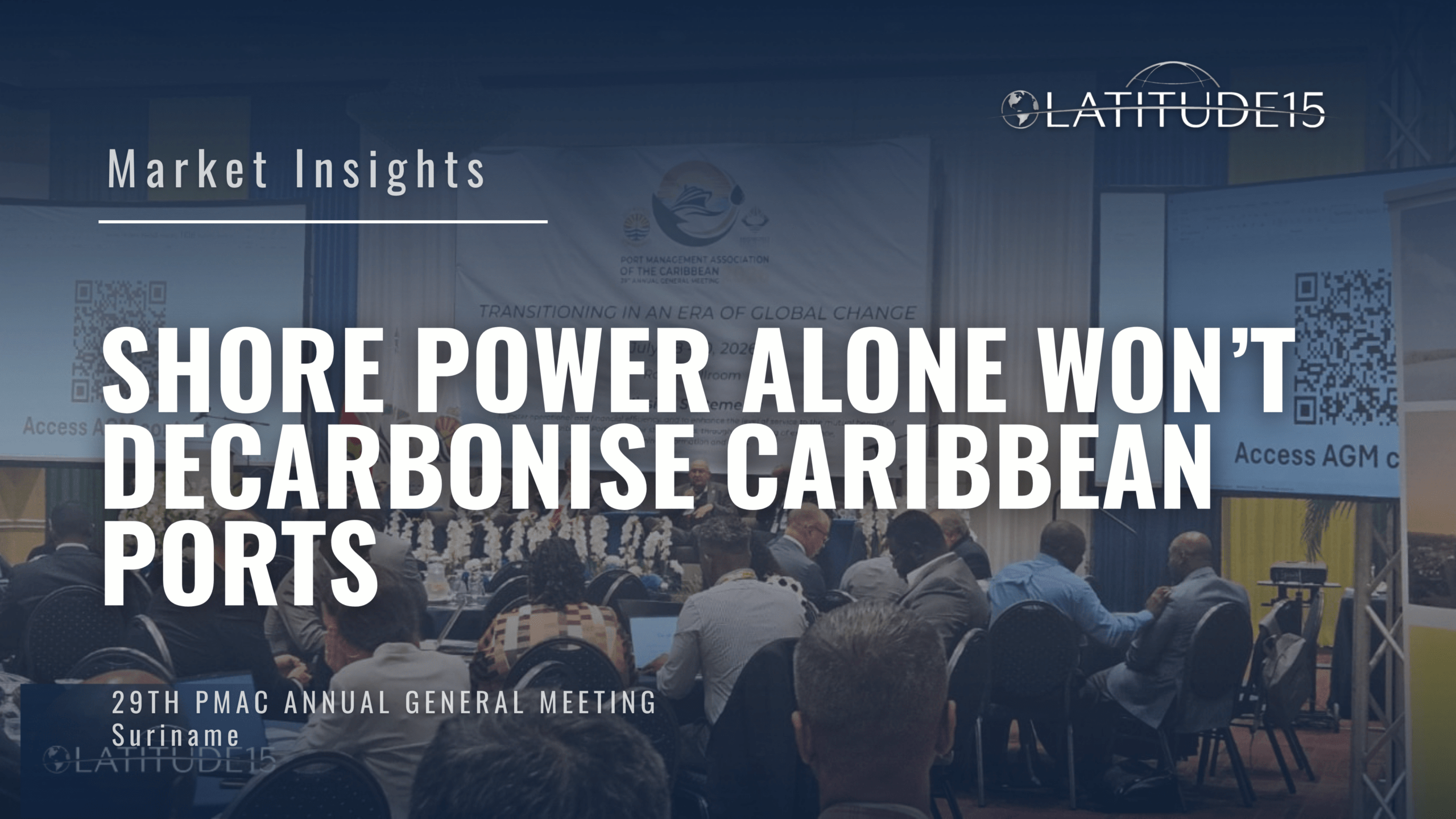
A discussion at the 29th Annual General Meeting of the Port Management Association of the Caribbean (PMAC) in Paramaribo suggested a more difficult reality.
The plug may be the most visible part of the project. It is not necessarily the hardest. During a focal session on port electrification and green shore power, port executives and energy specialists repeatedly returned to what sits behind the connection: grid capacity, generation mix, storage, energy management, demand visibility and the commercial structure required to make investment viable. For island systems, that distinction is critical.
A connection is not automatically decarbonisation
The session opened with a direct challenge to one of the simplest assumptions surrounding shore power.
“Plugging a ship into a diesel-heavy fuel oil grid is not decarbonisation,” moderator T. Valerie Onu told the audience, setting the tone for a discussion that quickly moved beyond connection hardware.
Connecting a vessel to an electricity grid does not automatically make the port call cleaner. If the grid supplying the berth remains heavily dependent on fossil fuels, the emissions benefit can be weakened. The point shifted the discussion away from hardware alone and towards the energy system supporting it.
For Caribbean ports, the question is not simply whether a ship can plug in. It is where the electricity comes from, whether the grid can deliver it when required and how the wider energy system responds to a large new load.
That challenge becomes particularly visible in cruise operations.
Carlos Orban, Regional Sales Manager for the Caribbean and Latin America within Cavotec’s Ports and Maritime division in the Americas, pointed to the scale of cruise-ship electricity demand.
“The main barrier is always in the energy supply,” he said, adding that “the grid must be prepared to deliver that amount of power.”
He also suggested that ferries may offer a more accessible starting point in some markets. Short routes and predictable turnaround patterns can allow vessels to recharge while passengers and cargo are being handled, an operating model already seen in North America and Europe.
The implication is important. Caribbean port electrification does not have to follow a single pathway, nor does every port need to begin with the largest cruise load.
The infrastructure must be built around real demand
Once the discussion moved beyond the connection itself, another issue emerged: utilisation.
A shore-power system must be dimensioned against the ships that actually call, the duration of their stays, their power requirements and the frequency with which the infrastructure will be used.
This is particularly relevant in markets shaped by seasonal cruise activity.
Large electrical assets cannot be assessed only against the hours when a ship is connected. The wider question is how energy infrastructure can support other demand around the port and, potentially, beyond it.
During the panel, battery systems were discussed not only as a means of storing electricity but also as tools that can help stabilise grids and manage the interaction between supply and demand. The conversation also pointed towards other possible consumers around port areas, reinforcing the need to think beyond a single berth.
This is where the economics become more complex. A technically feasible project can still struggle if demand is intermittent, poorly measured or concentrated around too few customers. Conversely, an energy system serving a broader portfolio of uses may offer a stronger basis for investment.
Martinique puts energy management before the plug
The intervention of Bruno Mence, CEO of the Grand Port Maritime de la Martinique, added a concrete port perspective to that debate.
His focus was not limited to shore connection equipment. He emphasised renewable-energy consumption, resilience and the importance of managing electricity flows through an effective Energy Management System.
The distinction between projected and realised savings matters. An optimisation model may promise substantial gains on paper, but actual performance depends on how the system operates once commissioned.
Mence captured the challenge in operational terms: “Each electron has to be delivered in the right place at the right moment.”
His point went to the heart of the port’s energy-management challenge. Projected savings matter less than the system’s ability to optimise real flows once infrastructure is operating.
For ports, this suggests that the shore-power journey may begin before the plug is installed.
Understanding existing consumption, controlling loads, integrating renewable generation and improving the way energy is dispatched can shape the scale and economics of later electrification investments. Better management of available renewable power can also reduce the storage requirement that would otherwise be needed to balance the system.
In this reading, the port is not simply preparing to buy more electricity. It is learning to manage energy as a strategic resource.
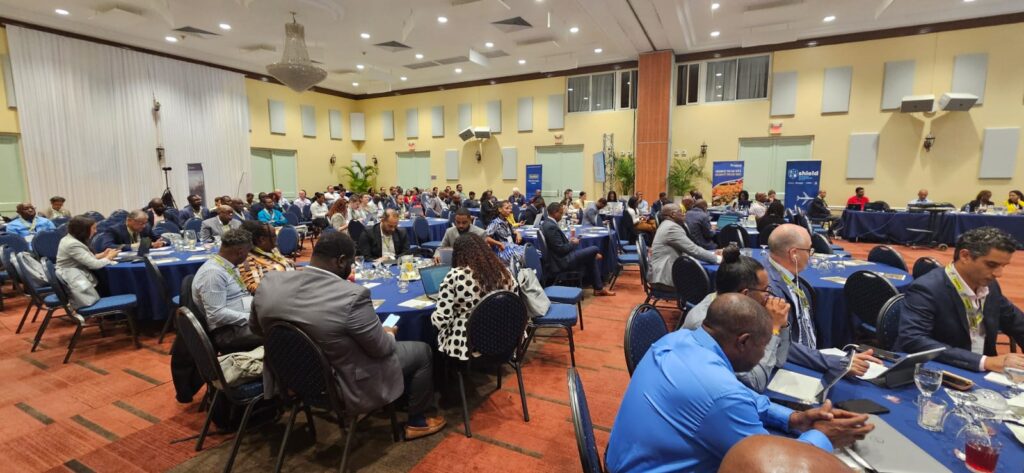
Dominica brings the generation question into the port debate
The discussion also highlighted how different Caribbean territories may approach the same challenge from very different starting points.
Speaking from a Dominica perspective, Blaize Jones, Chairman of the Dominica Air and Sea Ports Authority, referred during the session to geothermal and hydropower resources and linked the development of cleaner domestic generation with the future resilience of port operations.
The significance goes beyond one project.
For an island developing indigenous renewable generation, port electrification can become part of a wider energy transition rather than a standalone maritime investment. The question is no longer only how to supply electricity to a ship. It is how domestic clean-energy capacity can support transport infrastructure, economic activity and resilience.
That creates a different pathway from a port whose immediate priority is to optimise existing consumption or work within a more constrained electricity mix. The Caribbean, in other words, is unlikely to have one shore-power model.
Bankability starts with visibility
The second half of the discussion moved increasingly towards finance and commercial structure. Here, the panel’s message was clear: mature technology does not automatically produce a bankable project.
Before committing capital, ports need visibility over demand. How many ships will connect? For how long? At what power level? How seasonal is the traffic? What other users can absorb energy when marine demand falls? What commitments can be secured from major customers?
These are not secondary questions. They determine whether infrastructure can generate sufficient and predictable utilisation to support investment.
The discussion repeatedly returned to project structure. As one panellist put it: “You need to build the right structure. You need to find the right way to make your project bankable.”
The discussion also exposed a tension familiar across large infrastructure projects. Ports may face pressure to build first, while customers seek lower tariffs and flexibility. Yet investing without sufficient demand certainty can leave the port carrying a disproportionate share of the risk.
That is why project structure matters as much as equipment.
Long-term agreements, credible demand forecasts, tariff design and the allocation of investment risk can determine whether a technically sound project reaches financial close.
The problem, as the discussion suggested, is not always a lack of capital. A project with weak demand visibility and an uncertain revenue model may remain unfinanceable even when funding sources exist.
Who controls the system behind the plug?
This may be the most strategic question raised in Paramaribo.
As ports consider shore power, batteries, renewable generation, energy management systems and long-term power arrangements, their role can begin to change.
They can remain infrastructure operators that purchase electricity and provide a connection to ships. Or they can take a more active position in shaping the energy system that supports port activity.
That choice has implications for resilience, tariffs, investment leverage and future revenue models. It also matters in a region where ports sit at the intersection of shipping, tourism, industry and increasingly urgent energy-transition objectives.
The technology to connect vessels is no longer the only issue. In many cases, it may not even be the defining one.
For Caribbean ports, the harder task is building a system behind the plug that is clean enough to justify the environmental claim, strong enough to serve marine demand and commercially structured well enough to attract investment. That is where the real economics of shore power begin.
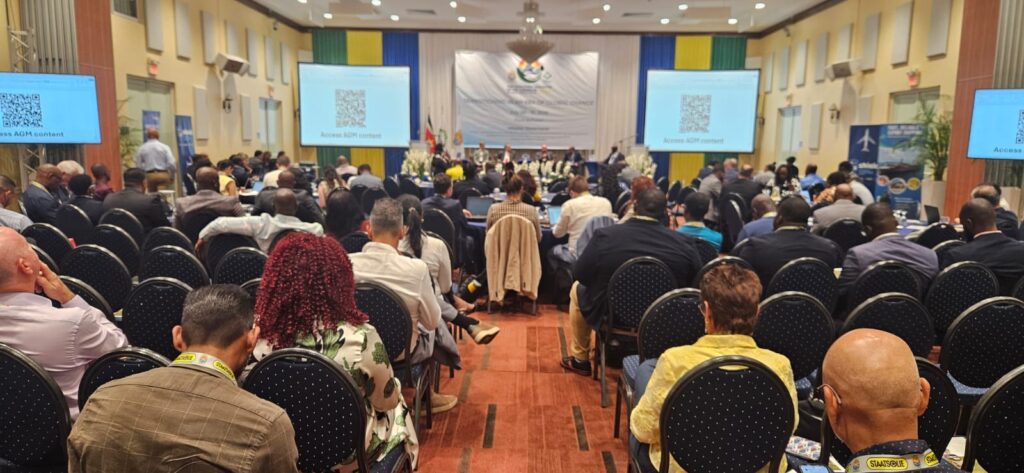
This article draws on discussions from the focal session “Port Electrification and Green Shore Power” held during the 29th Annual General Meeting of the Port Management Association of the Caribbean in Paramaribo, Suriname. LATITUDE-15 attended the event on site