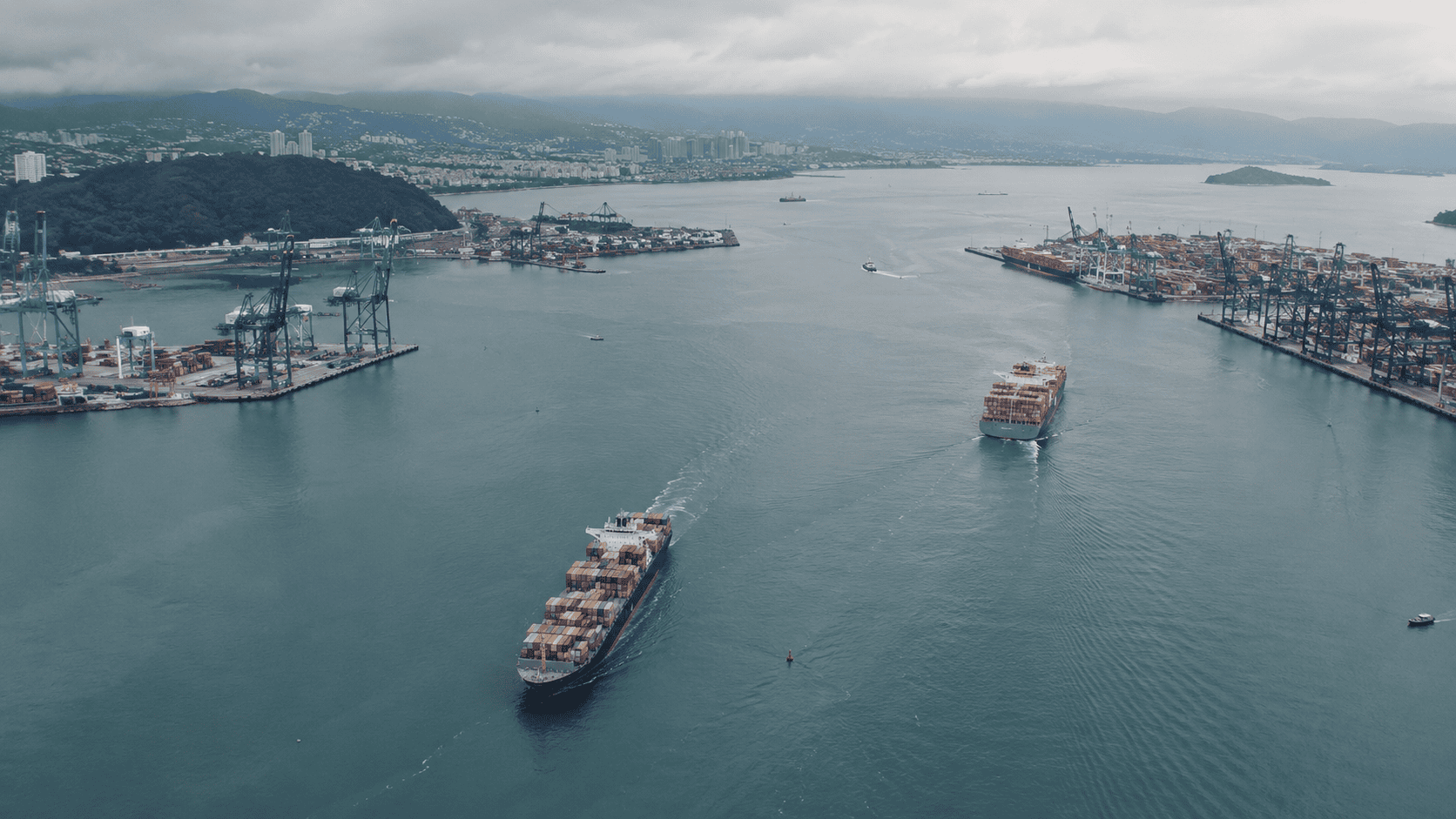
Latin America and the Caribbean’s container trade has moved back above pre-pandemic levels. But the regional recovery is far from uniform.
In 2024, Latin America’s containerised maritime trade reached an index of 104.6, with 2019 set at 100, according to the latest port report from the CEPAL. That places the region above its pre-pandemic baseline, but behind several other major markets, including North America at 113.3 and Asia at 112.5.
The headline number points to recovery. The underlying picture is more complex.
Across Latin America and the Caribbean, port systems have not moved through the post-pandemic cycle at the same pace. Pacific-facing systems have generally shown an earlier and more sustained recovery, while parts of the Atlantic-Caribbean space have experienced greater year-to-year volatility. Differences in trade exposure, maritime connectivity, transshipment intensity and vulnerability to external disruptions are producing increasingly distinct operating environments.
For ports and terminal operators, this matters because regional growth alone says little about where volumes are being generated, how stable they are, or whether recent gains can be sustained.
A recovery moving at different speeds
The broader global environment has remained difficult. Geopolitical tensions, climate-related disruption, changes in US tariff policy and persistent imbalances in logistics markets continued to affect maritime transport through 2025.
The report’s indicators show how fragile periods of normalisation have become. Global schedule reliability improved in early 2025 and reached 67.4% in June, supported by better operational planning, greater service stability and the optimisation of alternative routes. Yet the improvement did not hold. Reliability weakened again during the second half of the year as trade uncertainty and geopolitical tensions continued to force operational adjustments, diversions and service rescheduling.
Freight markets tell a similar story. After the extraordinary surge of the pandemic period — when rates increased almost eightfold between April 2019 and September 2021 — prices corrected sharply and reached their lowest post-pandemic levels in October 2023. But volatility returned as disruptions in the Red Sea, climate-related pressures and geopolitical tensions reshaped routes and capacity.
For Latin America and the Caribbean, these global shocks interact with highly different regional trade structures.
The Pacific side has, in several cases, benefited from stronger links to transpacific flows and global value chains. The report identifies an earlier and more sustained recovery across areas including Mexico’s Pacific coast, Pacific Central America and the west coast of South America.
That does not mean every Pacific port is following the same trajectory. Nor does it imply that Atlantic and Caribbean ports are structurally underperforming. Some of the region’s most important container hubs remain in the Caribbean basin.
Rather, the distinction lies in the drivers and stability of growth. Several Atlantic-Caribbean systems show greater volatility, reflecting differences in destination-market concentration, service patterns and exposure to transshipment activity.
This is why a regional average can be misleading. A 104.6 index confirms that containerised trade has recovered beyond its 2019 level, but it does not amount to convergence across the region’s port systems.
Transshipment changes the picture
The distinction becomes even more important when port throughput is separated from domestic trade.
A port can record strong container growth without an equivalent increase in cargo generated by its own economy or hinterland. In major hub systems, volumes may instead be influenced by carrier network decisions, relay operations and the redistribution of cargo between mainline and feeder services.
The report identifies transshipment as a key factor behind recent differences in port performance, particularly when comparing Panama’s Pacific and Caribbean systems with a broader group of Caribbean ports.
That has major implications for how regional rankings are interpreted.
In 2024, Santos remained Latin America and the Caribbean’s largest container port, handling 5.48 million TEU. It was followed by Manzanillo in Mexico with 3.92 million TEU, Cartagena Bay with 3.70 million TEU, and Callao with 3.07 million TEU.
But the wider ranking also highlights the weight of hub-based systems. Panama placed multiple facilities among the region’s leading ports, including MIT, Balboa, Colón CCT and Rodman PSA. In the Caribbean, Kingston handled 2.52 million TEU, while Caucedo reached 1.47 million TEU, San Juan 1.29 million TEU, and Freeport 1.25 million TEU.
These figures demonstrate the continuing strength of Caribbean connectivity. They also underline its exposure to decisions taken beyond individual ports.
Where transshipment represents a large share of activity, throughput can respond quickly to changes in shipping alliances, network design, port calls or route configuration. Growth may accelerate when a hub gains services or relay traffic, but the reverse can also occur when carriers reorganise networks.
This makes connectivity both an advantage and a source of vulnerability.
The issue is becoming more significant as the structure of global container shipping changes. The report estimates that the combined share of the three leading carriers or alliance groupings fell from above 80% in 2022-2023 to 61.2% in 2025, amid the dissolution of the 2M structure and the emergence of new configurations such as Gemini and Premier Alliance.
For LAC ports, those changes are not abstract developments in the global shipping market. They can influence service structures, hub selection, schedule patterns and the distribution of transshipment flows.
The next competitive divide will be about resilience
The uneven nature of the recovery points to a broader shift in port competition.
Capacity remains essential. So do berth productivity, terminal efficiency and hinterland connections. But the current environment is increasing the value of another set of capabilities: the ability to remain connected and operational when external conditions change.
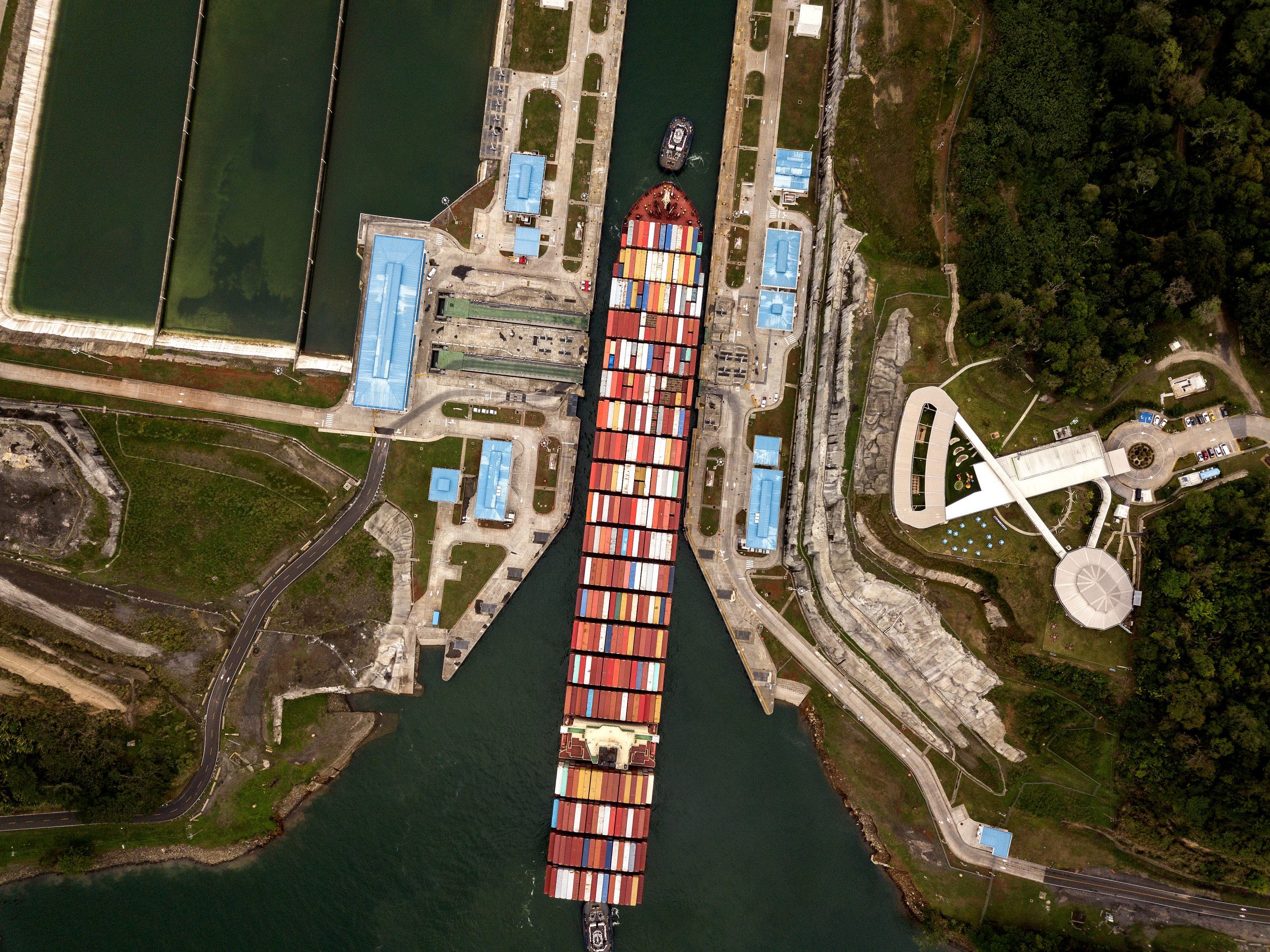
The recent experience of the Panama Canal illustrates the stakes. Climate-related constraints can affect vessel transit, alter routing decisions and contribute to wider freight volatility. At the same time, disruptions in the Red Sea and around the Suez corridor have shown how geopolitical shocks can rapidly reshape sailing patterns far beyond the immediate conflict zone.
For Latin American and Caribbean ports, resilience therefore extends beyond physical infrastructure. It includes the capacity to manage changing service networks, improve information flows, strengthen digital coordination and adapt investment strategies to a more volatile environment.
The CEPAL report places climate resilience, digital transformation and infrastructure financing among the central challenges facing the regional port and logistics system. These are increasingly interconnected. Digital tools can improve visibility and coordination, but require investment. Climate adaptation can protect operational continuity, but demands long-term financing. New capacity can support growth, but only if ports remain connected to viable maritime networks.
This is where the regional divide may become more consequential.
Latin America and the Caribbean have recovered beyond their 2019 container trade baseline. Yet the next phase will not be defined by recovery alone. It will be shaped by which port systems can convert volume growth into durable connectivity, absorb disruptions without losing competitiveness and secure the investment needed to adapt.
The region’s container rebound is real. The trajectories behind it remain markedly uneven.
Source: This article draws on the Port Report 2024–2025: Navigating a New Era of Globalization and Economic Interdependence, published by ECLAC in 2026.
LATITUDE15 note : 1/3 article series examining the latest shifts in Latin America and the Caribbean’s port and container shipping landscape.