
Latin America emerged as the main driver of traffic growth across the VINCI Airports network in the first quarter of 2026, with several markets expanding well above the group’s global pace. Yet the regional picture remained uneven, shaped by different combinations of domestic demand, airline expansion, international connectivity and fleet constraints.
According to figures released by VINCI Airports, more than 74 million passengers travelled through its airport network during the quarter, up 1.5% year on year. The operator said the result reflected the resilience of its geographically diversified portfolio despite disruptions linked to the conflict in the Middle East and tensions between China and Japan.
Across Latin America and the Caribbean, however, growth was significantly stronger in several markets. Passenger traffic increased by 12% in Costa Rica, 9.9% across the Dominican Republic portfolio, 8% in Brazil and 5% across Mexico’s OMA airports. Chile was the main exception, with Santiago Airport down 1.8%.
Brazil and Mexico advance on different traffic dynamics
Brazil was among the strongest contributors to the regional performance, with VINCI Airports’ portfolio handling 3.5 million passengers, an 8% increase from the first quarter of 2025.
Salvador Bahia Airport led the market with 2.28 million passengers and 12% growth. VINCI Airports linked the increase to expanded services from GOL, Azul and LATAM, alongside sustained long-haul demand via TAP. Manaus also recorded a strong quarter, with passenger traffic rising 9.1%.
The broader Brazilian picture was more mixed. Porto Velho declined 6.6%, while Boa Vista and Rio Branco fell 23% and 19%, respectively. This divergence shows that the country-level increase was concentrated in its stronger-performing platforms rather than evenly distributed across the portfolio.
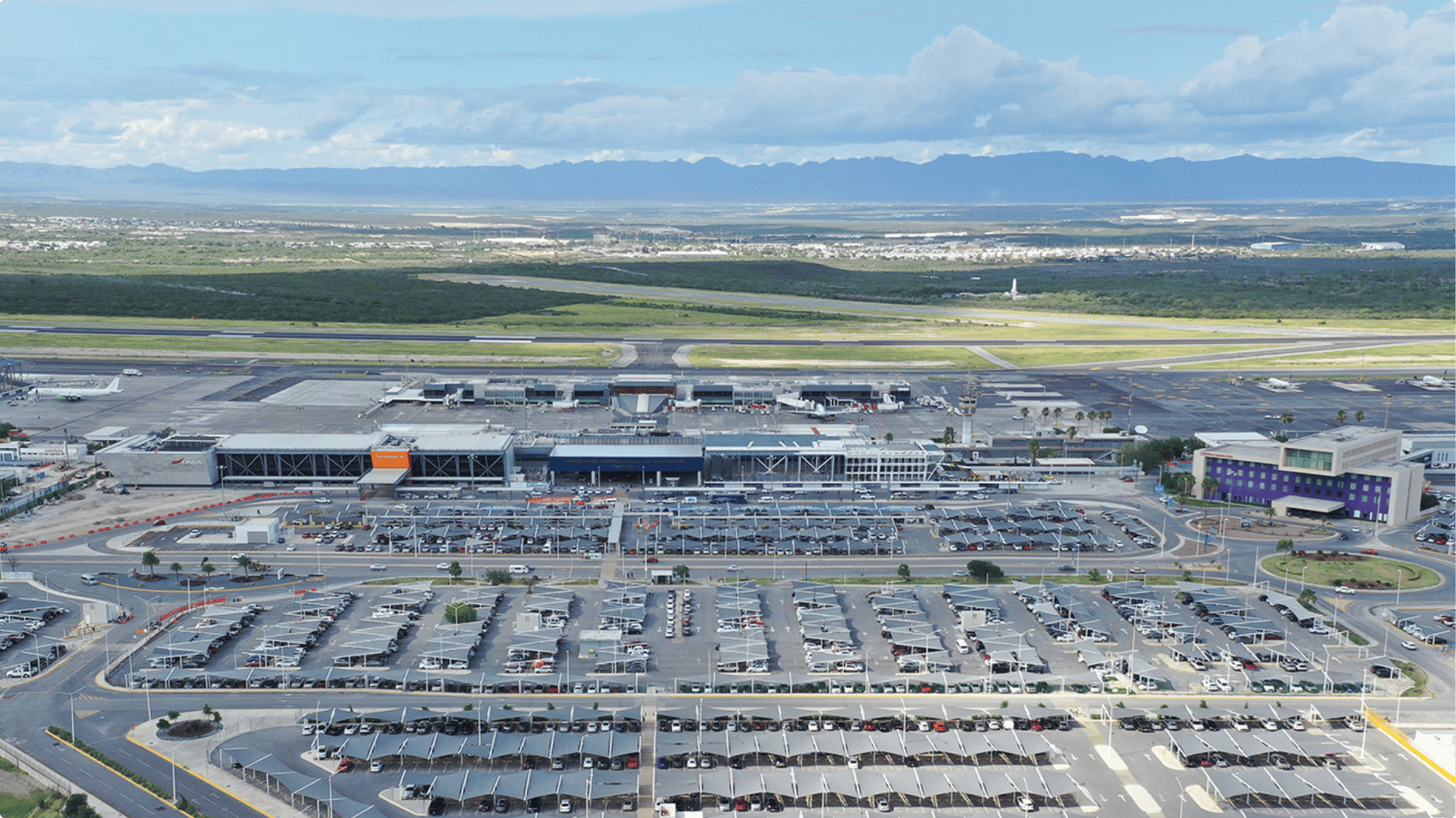
Mexico followed a different pattern. Passenger traffic across the OMA portfolio rose 5% to 6.77 million. Monterrey, the largest airport in the group’s Mexican portfolio by passenger volume, handled 3.58 million travellers, up 8.2%, with VINCI Airports pointing to domestic traffic as the main source of momentum.
Several smaller Mexican airports also posted double-digit gains, including Durango at 19%, Zacatecas at 17%, San Luis Potosí at 15% and Tampico at 13%. At the same time, traffic declined at Mazatlán, Culiacán, Ciudad Juárez and Reynosa, reinforcing the uneven nature of growth within individual national markets.
Caribbean and Central American markets maintain strong momentum
In the Dominican Republic, passenger traffic across the Aerodom portfolio increased 9.9% to 1.79 million. Santo Domingo accounted for most of that volume, reaching 1.38 million passengers after a 10% year-on-year increase.
VINCI Airports highlighted the strong progression of Arajet at Santo Domingo as a key factor behind the market’s performance. Samaná recorded the portfolio’s fastest percentage increase, up 64%, although from a much smaller traffic base of 63,000 passengers.
Costa Rica also remained one of the network’s strongest growth markets. Guanacaste Airport handled 793,000 passengers in the quarter, an increase of 12%, as the country continued to strengthen its international appeal.
The operational picture there was particularly notable: commercial aircraft movements rose 26%, more than twice the pace of passenger growth. Across the entire VINCI Airports network, the trend moved in the opposite direction, with passenger traffic increasing 1.5% while commercial movements declined 0.8%.
These figures point to differing capacity and traffic patterns across the portfolio. However, the data released by the operator do not provide enough detail to draw conclusions on load factors, aircraft gauge or seat capacity.
Santiago highlights the limits of a uniform regional growth story
Chile stood apart from the broader regional momentum. Santiago Airport handled 7.39 million passengers in the first quarter, down 1.8% year on year, while commercial aircraft movements declined 3.9%.
VINCI Airports attributed the decrease to fleet allocation issues affecting SKY Airline. The result illustrates how airline-level operational constraints can weigh on airport traffic even when the wider region is expanding.
The contrast is significant. While Costa Rica, the Dominican Republic, Brazil and Mexico all outpaced the 1.5% growth recorded across VINCI Airports’ global network, Santiago moved in the opposite direction.
Taken together, the first-quarter figures show a Latin American and Caribbean portfolio supported by several distinct growth engines rather than a single regional trend. Domestic demand strengthened Monterrey, airline expansion supported Salvador, Arajet contributed to momentum in Santo Domingo, and international demand remained central to Guanacaste’s performance.
For airport operators and airline partners, that diversity may be one of the region’s defining features in 2026: growth remains broad across several markets, but its drivers — and its vulnerabilities — continue to differ sharply from one platform to another.