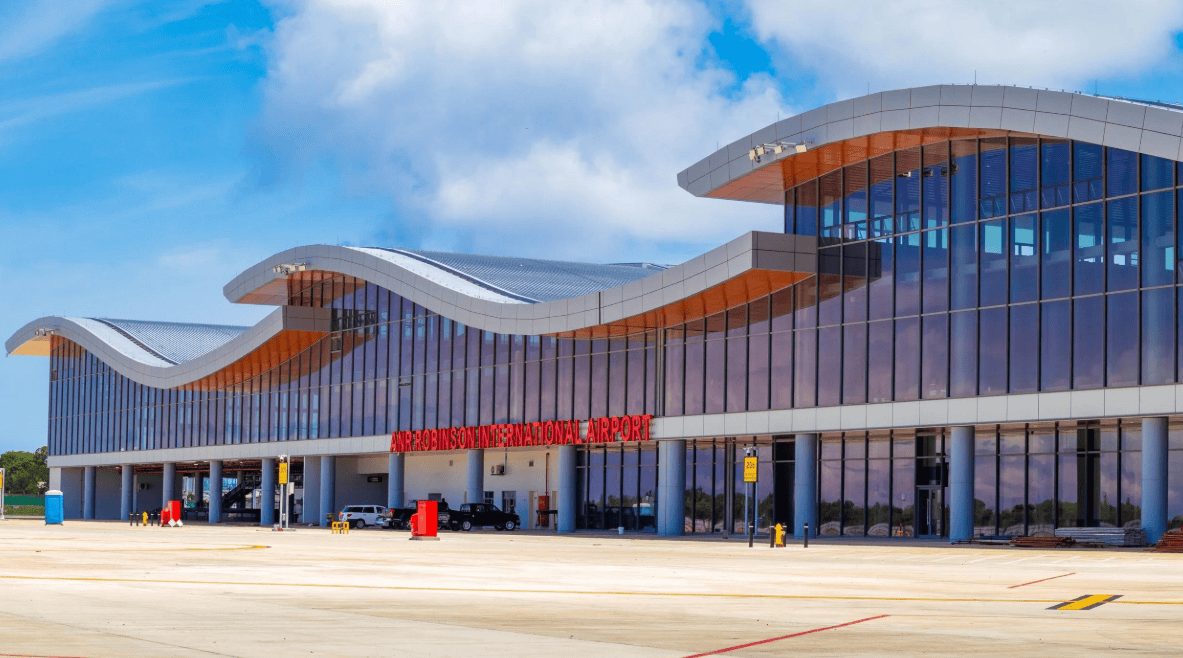

Costa Rica’s two main international gateways are increasingly serving different tourism economies. Juan Santamaría International Airport remains the country’s broad-based entry point, while Guanacaste Airport is developing as a more specialised leisure gateway, with shorter stays, higher visitor spending and a much stronger concentration of North American traffic.
Costa Rica received 1.78 million international tourists through Juan Santamaría International Airport (SJO) in 2025 and another 904,762 through Daniel Oduber Quirós International Airport, commercially known as Guanacaste Airport (LIR). The difference in scale remains substantial, but the growth pattern is shifting. In 2025, arrivals through SJO were virtually unchanged from 2024, while Guanacaste increased by around 2.7%.
The gap widened in early 2026. Between January and May, SJO received 864,558 international tourists, up about 6.4% from the same period of 2025. Guanacaste reached 525,751, an increase of 14.6%. The figures suggest that Costa Rica’s second gateway is not simply absorbing additional traffic from the country’s main airport: it is developing around a distinct tourism market.
Two gateways, two travel profiles
The difference becomes clearer in the Costa Rican Tourism Institute’s 2025 surveys of non-resident visitors departing through the two airports. The surveys covered 10,200 travellers at Juan Santamaría and more than 3,300 at Daniel Oduber Quirós, examining travel purpose, accommodation, length of stay, expenditure and activities.
At Juan Santamaría, 65.1% of respondents identified holidays, leisure or recreation as their main reason for travelling. Business and professional travel accounted for another 13.8%. At Guanacaste, leisure represented 83.6% of visitors, while business and professional travel accounted for just 4.4%.
SJO’s role extends well beyond holiday traffic. Among Central American visitors surveyed at Juan Santamaría, 56.9% travelled for business or professional reasons. The share was 32.5% among visitors from the rest of Latin America. The figures reinforce SJO’s position as a national and regional gateway serving tourism, corporate travel and wider economic links.
Guanacaste serves a much more concentrated leisure economy. The airport connects visitors more directly with the resorts, beaches and tourism products of Costa Rica’s northwestern Pacific region, reducing the need for those passengers to enter the country through the San José metropolitan area.
Shorter stays, higher spending
The economic profile of visitors also differs markedly between the two airports.
Travellers surveyed at Juan Santamaría stayed an average of 11.5 nights and spent US$1,707.70 per person during their visit. Passengers departing through Guanacaste stayed only eight nights on average, but their expenditure reached US$2,124.40 per person.
Calculated from those ICT averages, this equates to roughly US$148 per visitor-night through SJO compared with US$266 through LIR. The calculation is not a spending indicator published directly by ICT, but it illustrates the different value profiles associated with the two gateways.
Travel organisation provides another distinction. Almost 70% of SJO respondents arranged tourism services themselves with relatives or friends, while just 15.5% purchased a travel package from an agency in their home market. At Guanacaste, the package share rises to 30.9% and reaches 37.4% among European visitors.
The result is a second airport increasingly tied to a higher-spending, leisure-oriented tourism product rather than simply functioning as an alternative arrival point.
Guanacaste depends heavily on the North American market
Guanacaste’s specialisation also has a geographic dimension. The airport is particularly dependent on the United States and Canada, markets whose direct air access has helped turn Costa Rica’s northwestern Pacific coast into a tourism gateway in its own right.
That concentration contrasts with Juan Santamaría, where the passenger mix is broader and includes significant traffic from Central America, the rest of Latin America and Europe alongside North America. The ICT maintains separate scheduled-flight data for both airports, reflecting two increasingly different connectivity structures.
For Guanacaste, this specialisation offers a strong commercial advantage: airlines can connect major North American source markets directly with the tourism region passengers intend to visit. But it also creates exposure to changes in a relatively narrow group of origin markets.
The airport’s growth nevertheless continues to reinforce the model. Guanacaste Airport handled a record 1,973,831 total passengers in 2025 and finished the year with 26 direct international routes operated by 12 airlines, according to the airport operator.
Different journeys after the airport
What passengers do after landing provides another indication of the airports’ different functions.
At Guanacaste, 86.7% of surveyed visitors reported sun-and-beach activities, compared with 60.1% among those using Juan Santamaría. Conversely, 60.4% of SJO respondents visited a national park, biological reserve or protected area, compared with 40.6% at LIR.
Travel-party composition tells a similar story. At SJO, 27.3% of visitors travelled alone, while 21.6% travelled with friends and relatives. At Guanacaste, fewer than 5% travelled alone and more than half — 54.4% — travelled with friends and family.
Juan Santamaría therefore feeds a broader visitor journey across Costa Rica, including business, culture, nature and multi-destination travel. Guanacaste is more directly embedded in a regional leisure ecosystem built around beaches, accommodation and organised holiday travel.
A second gateway with its own market
Costa Rica’s airport system illustrates a model that matters beyond the country itself. Secondary international gateways do not necessarily have to compete with a national hub for the same passengers. They can develop around different catchment areas, source markets and visitor economics.
Juan Santamaría remains Costa Rica’s principal international gateway and the more diversified of the two airports. Guanacaste, however, is building a separate proposition: smaller in volume, more concentrated geographically, more strongly leisure-driven and associated with higher average expenditure per visitor.
The early-2026 growth figures indicate that this specialised gateway is gaining weight within Costa Rica’s tourism system. The next question is whether Guanacaste can maintain that momentum while broadening its source markets beyond North America — without losing the destination-focused model that has driven its expansion.
Sources: Instituto Costarricense de Turismo (ICT), 2025 airport visitor surveys and 2026 international arrivals/connectivity data; Guanacaste Airport.