The hierarchy of Latin America and the Caribbean’s container ports looks familiar when measured by volume. Santos leads, followed by Manzanillo, Cartagena and Callao. Change the metric from containers handled to the time ships spend in port, however, and the regional order looks very different.
The World Bank and S&P Global Market Intelligence’s Container Port Performance Index (CPPI) 2025 places Ecuador’s Posorja at the top of Latin America and the Caribbean and 20th worldwide. Yet Posorja ranked only 25th in the region by container throughput in 2024, according to ECLAC, with 955,728 TEUs.
That contrast highlights an increasingly important distinction in port competition: scale and operational efficiency are not the same thing.
Measuring time instead of boxes
Container throughput remains one of the clearest measures of a port’s commercial scale. In 2024, Santos handled 5.48 million TEUs, followed by Manzanillo in Mexico with 3.92 million, Bahía de Cartagena with 3.70 million and Callao with 3.07 million.
The CPPI asks a different question.
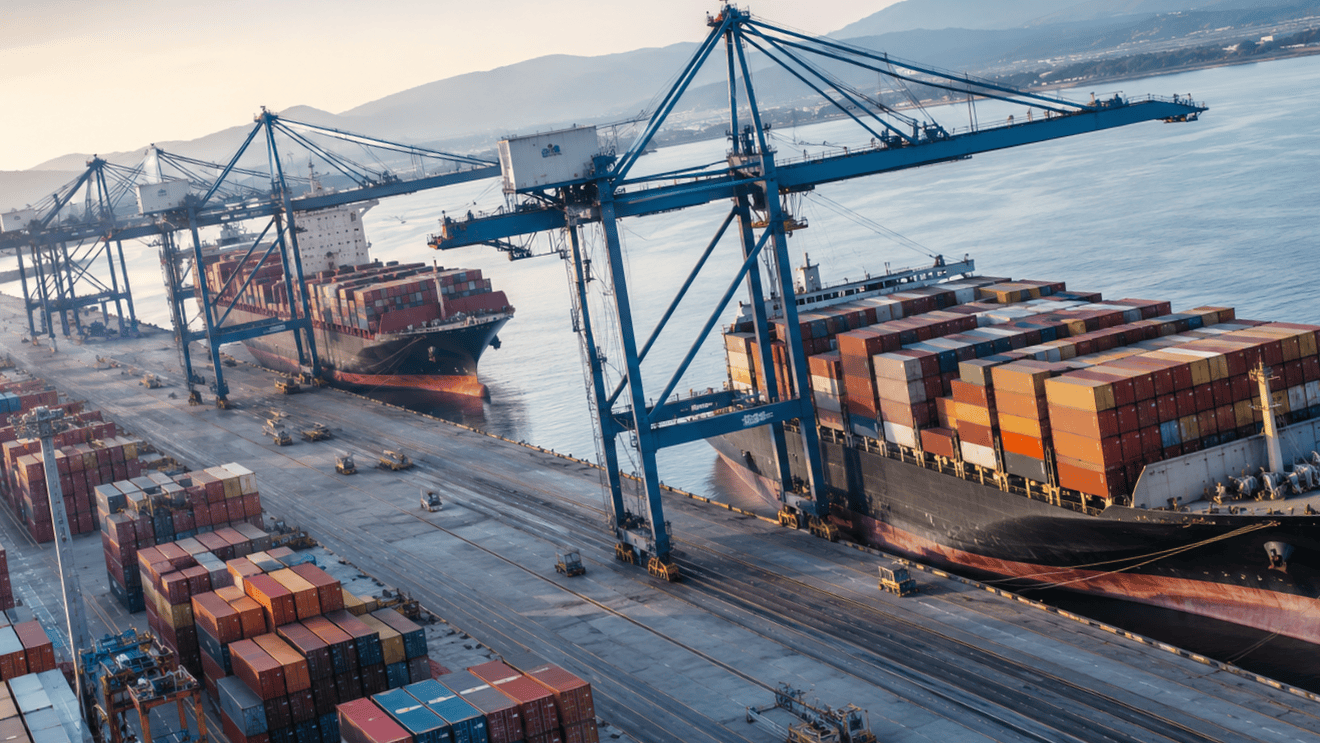
Rather than measuring how many containers move through a port, it looks at how long container vessels spend there, including waiting time and time at berth. Faster vessel turnaround can reduce delays, support schedule reliability and improve the use of port infrastructure.
Once that measure is introduced, the region’s traditional hierarchy changes considerably.
Behind Posorja, Coronel in Chile ranks 26th globally, followed among Latin America and Caribbean ports by Itapoá in Brazil at 39th, Cartagena at 42nd, Paita at 44th and Callao at 47th. Ensenada and Altamira in Mexico, Chancay in Peru and Buenaventura in Colombia also feature among the region’s highest-ranked ports.
Posorja shows what a smaller port can do
Posorja is the clearest illustration of why the two rankings should not be confused.
The Ecuadorian terminal handled less than one million TEUs in 2024, far below the volumes recorded at Santos, Manzanillo or Cartagena. Yet under the CPPI’s vessel-time measure, it leads the entire region.
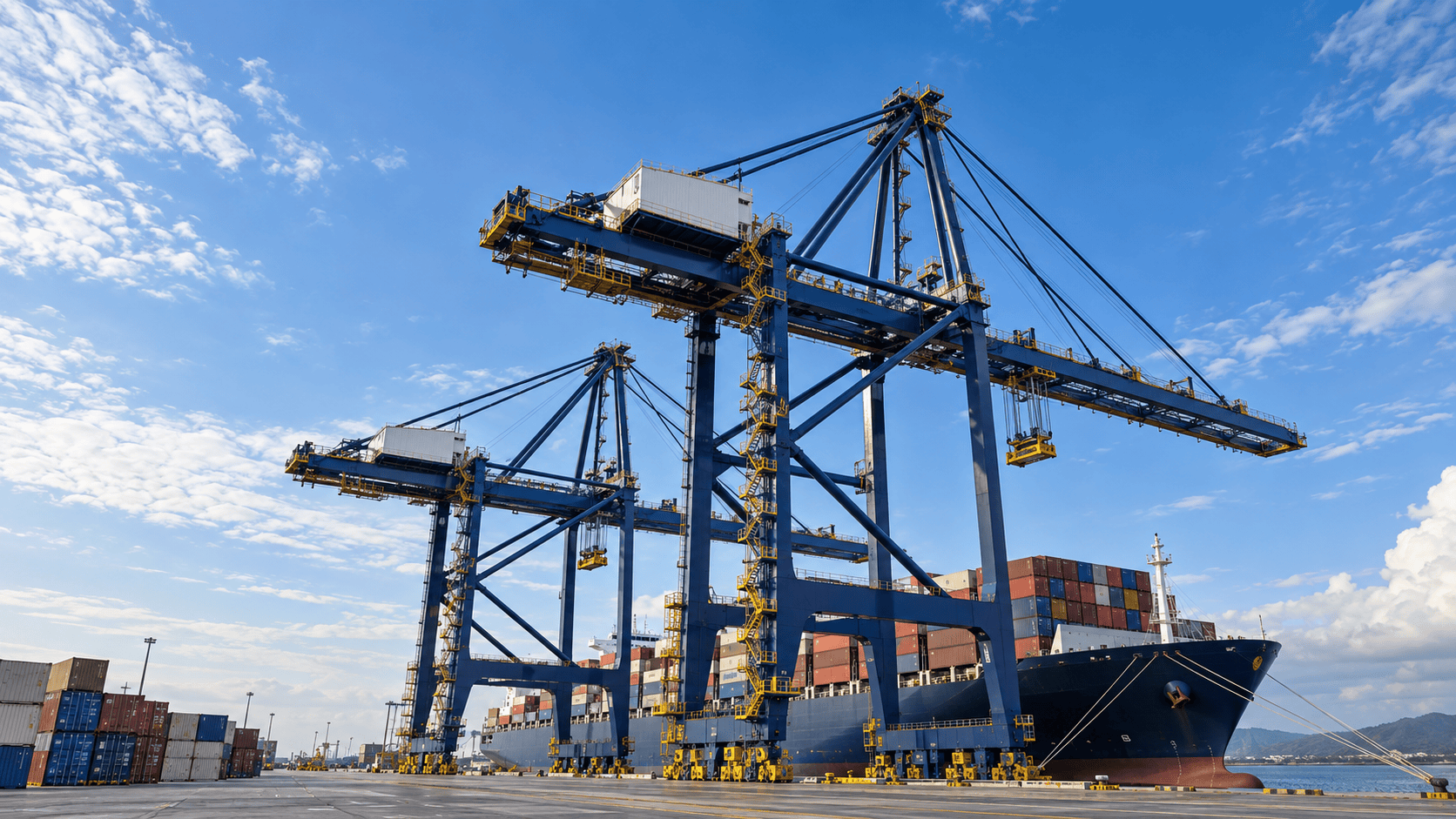
Its infrastructure provides part of the explanation. Opened in 2019 as a greenfield deepwater terminal, Posorja has continued to expand its berth and equipment. In April 2026, DP World inaugurated a 700-metre quay as part of a US$190 million private investment programme, allowing two large container vessels to be handled simultaneously.
The berth is expected to reach 800 metres by the end of 2026, while annual capacity is set to rise to around 1.4 million TEUs.
The result is important beyond Ecuador. Posorja suggests that a port does not need mega-hub volumes before operational performance becomes a competitive advantage.
For shipping lines, the value of a call is determined not only by how much cargo is available, but also by how predictably and quickly a vessel can complete that call.
Cartagena shows scale and efficiency can coexist
The comparison does not mean that smaller ports are inherently more efficient or that high throughput produces poor performance. Cartagena demonstrates the opposite.
Bahía de Cartagena was the third-largest container port system in Latin America and the Caribbean in 2024, with 3.70 million TEUs, while Cartagena still reached 42nd place worldwide in the CPPI 2025.
That combination matters because Cartagena operates not only as a gateway for Colombian trade but also as a major transshipment hub. Its position in international shipping networks has been reinforced by its selection as one of the global hubs used by the Gemini Cooperation between Maersk and Hapag-Lloyd.
Cartagena therefore represents a different model from Posorja. Instead of a smaller terminal using efficiency to compete with larger ports, it shows that high traffic volumes and strong vessel performance can coexist.
The distinction is important. CPPI rankings should not be read as a replacement for throughput rankings. They reveal another dimension of competitiveness.
Peru puts three ports among the regional leaders
Peru provides perhaps the strongest national example of that emerging port hierarchy.
Paita ranks 44th globally, Callao 47th and Chancay 73rd in the CPPI 2025. All three are among the highest-ranked Latin America and Caribbean ports, while Paita — despite being considerably smaller than Callao — records the better CPPI position.
Callao remains the heavyweight. With more than 3.07 million TEUs in 2024, it ranked fourth in the region by throughput. Paita operates on a different scale, while Chancay is only beginning to establish its position within regional container networks.
Their simultaneous presence high in the CPPI shows why port competition cannot be reduced to a single league table.
A new port can perform strongly before reaching maturity. A smaller gateway can turn ships efficiently without becoming a regional transshipment hub. And a large port can combine scale with competitive turnaround performance.
Efficiency is another form of capacity
For much of the port industry, capacity has traditionally been discussed in physical terms: longer berths, deeper channels, larger yards, more cranes and higher nominal TEU capacity.
Those investments remain fundamental. But operational efficiency can function like additional capacity: all else being equal, faster vessel turnaround allows the same berth infrastructure to accommodate more calls.
Reducing the amount of time vessels spend waiting or alongside can also improve schedule reliability and reduce disruption across the wider supply chain. This is why operational performance has become an increasingly important complement to traditional measures of port scale.
The rankings nevertheless require context. CPPI movements can reflect not only decisions made inside a port but also wider shipping conditions, including route changes, geopolitical disruption, congestion, weather and other supply-chain constraints. The index is therefore a performance indicator, not a definitive ranking of which port is “best.”
That distinction makes the comparison with ECLAC’s (Economic Commission for Latin America and the Caribbean) throughput figures particularly useful.
Santos shows the power of scale. Posorja shows the value of vessel efficiency. Cartagena demonstrates that the two can coexist, while Peru’s ports show that terminals with very different roles and levels of maturity can perform strongly under the same metric.
Latin America ’s port race is therefore becoming more complicated than a contest to move the most boxes. As terminals invest in new capacity, deeper channels and larger equipment, another competitive question is becoming harder to ignore: how much performance can they extract from every ship call?
Sources : World Bank — Container Port Performance Index 2025 – ECLAC / CEPAL — Port Report 2024-2025 – DP World — Posorja Terminal Expansion, April 2026 – Grupo Puerto de Cartagena — Cartagena and the Gemini Cooperation