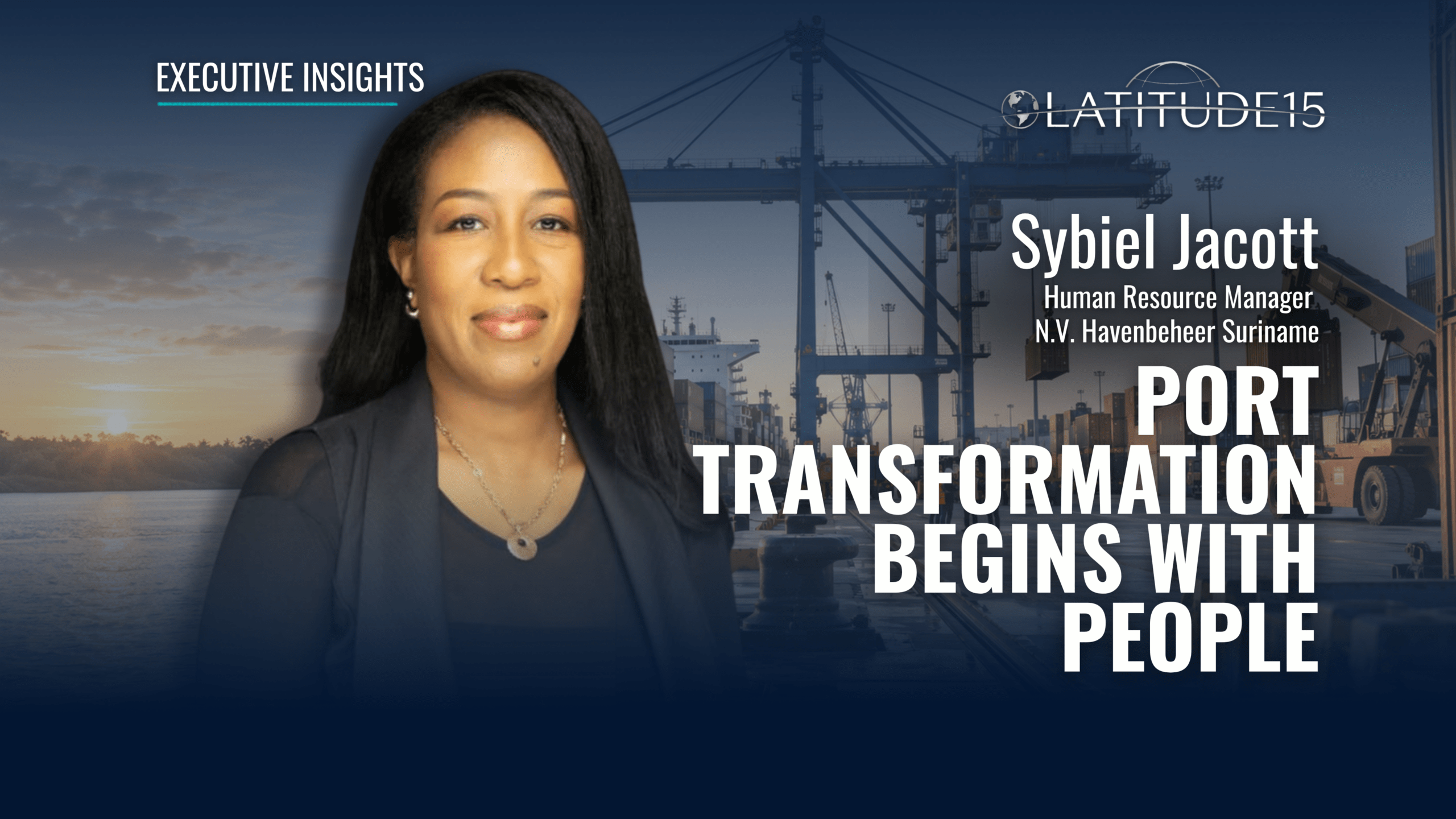
As ports evolve through new operating models, digitalization and changing employee expectations, skills development, knowledge transfer and talent retention are becoming strategic priorities. Sybiel Jacott, Human Resource Manager at N.V. Havenbeheer Suriname, explains why workforce development, organizational culture and adaptability are central to port transformation.
Port transformation is usually measured through infrastructure investment, terminal capacity and technology adoption. Behind those changes lies another challenge, increasingly strategic for port organizations: ensuring that the people supporting the transformation have the skills, knowledge and ability to adapt.
For Sybiel Jacott, Human Resource Manager at N.V. Havenbeheer Suriname, the evolution of ports must be accompanied by an evolution of the workforce itself.
Having spent almost two decades with the organization — she marks twenty years this September — Jacott has seen workplace expectations, technology and employee development change significantly. Her experience raises a question shared by ports across the region: how can organizations preserve operational expertise while preparing their workforce for a changing industry?
A landlord port still needs strategic expertise
N.V. Havenbeheer Suriname operates under a landlord model. “Simplified, it means that we rent out our land,” Jacott says. “But it is not just renting out. It means there is a strategy within that.” The company looks for partners interested in leasing that land and developing operations with economic value, in the short or the longer term.
It employs approximately 170 people — 112 men and 58 women — across six main departments, including Human Resources, operations, commercial services, human resources, infrastructure, security and corporate affairs, the latter covering safety, Public relations and documentation and legal affairs. Other departments are: ICT, procurement, Internal Audit, Office management and Finance.
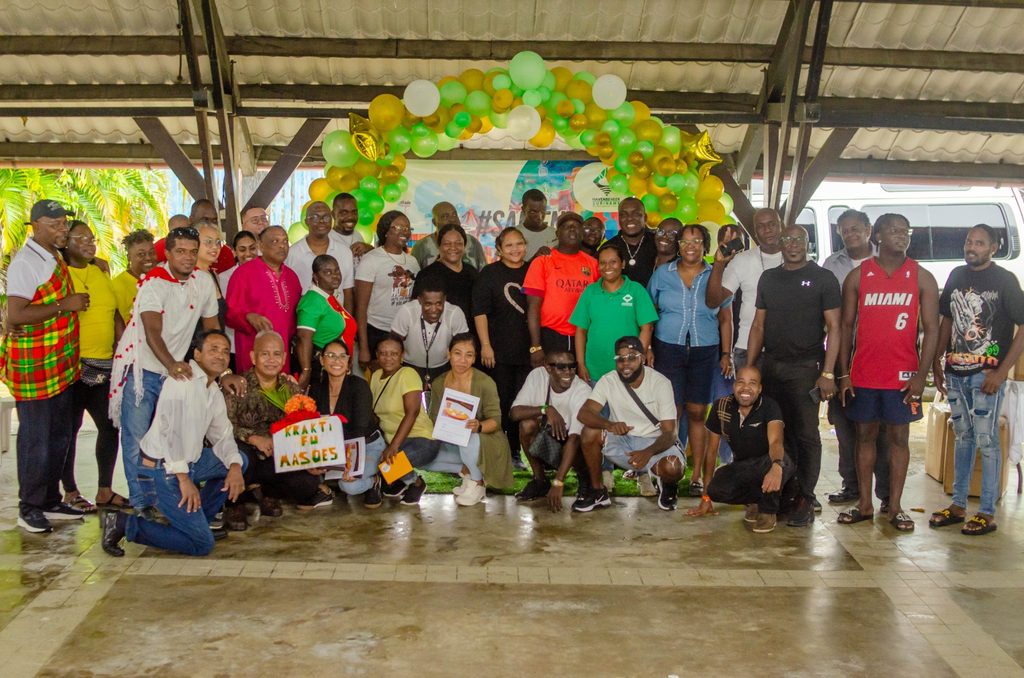
Two terminal operators lease parts of the terminals under long-term agreements. What matters to them, Jacott explains, is that the infrastructure and the regulations allow them to keep serving their own clients. The port management company’s role is to maintain those conditions: customer service focused on the terminal operators, legislation, regulations, infrastructure and, of course, safety.
Reliability underpins the relationship. “We continue to do what we say we are going to do,” she says — the way the company tries to be a good partner to its terminal operators.
The implication for port organizations is significant: outsourcing certain activities does not remove the need for internal capability. It changes the nature of that capability, shifting the focus from direct operational execution towards coordination, governance, regulation and ecosystem management.
Building port expertise beyond recruitment
Havenbeheer recruits mostly locally, and employees may come through local as well as regional training institutions. Arriving with a qualification, however, marks the beginning of a second learning process, specific to the port environment.
New employees go through an induction covering health and safety regulations, the collective bargaining agreement and working-time rules — and, above all, the safety culture, or as Jacott puts it, “how we do things around here.”
Beyond that, training depends on the position. Administrative and operational roles have different requirements, and employees are trained or mentored by colleagues who already know the job.
Much port expertise is therefore built inside the organization itself, progressively, through induction, mentoring and day-to-day operational experience. For port leaders, that raises a critical workforce question: how to preserve accumulated experience while continuously preparing new generations of employees.
Digital transformation is also cultural transformation
Asked whether digitalization is first a training question, Jacott is direct. “I don’t believe it is a training question first,” she says. “I would say digitalization is more something about work culture and generations.”
The challenge is not only whether employees can use new tools. It concerns the way the organization approaches data — how information is stored, handled and thought about.
She points to the generations now working alongside one another. Colleagues who built their careers in environments dominated by paperwork, administration and physical files approach technology differently from those who entered a digital world.
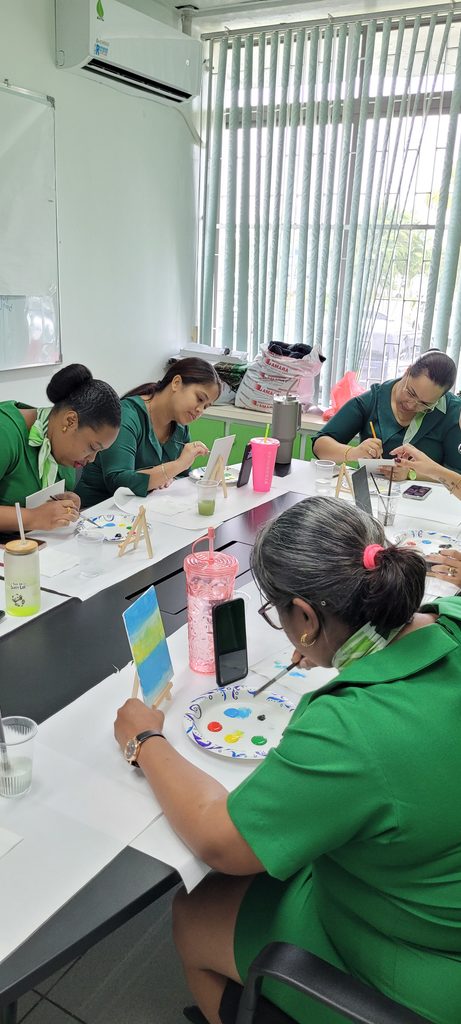
Rather than viewing this as a limitation, Jacott sees an opportunity. Training plays a part, and so do workshops and conferences — several have been held in Suriname on the subject of generations in the workplace. What emerges is complementarity: employees with stronger digital skills share that knowledge, while more experienced colleagues contribute their operational understanding.
“You use them to mentor each other in what they do best,” she explains — a way, in her view, to help the company progress and to make it a place where every generation feels at home, acknowledged and able to grow.
Strengthening regional cooperation between HR professionals
Regional initiatives already exist: partnerships between training institutions, and conferences where shared challenges are discussed. Jacott would like to see more directed at the teams responsible for the workforce itself.
“What I would like to see more is training for our HR departments, but also the recognition for the work that HR people have to do,” she says. “We are human, we are there for everyone , but who is there for HR and but everybody expects us to always have the answers to different difficult questions.”
She would also welcome more opportunities for HR professionals to meet their counterparts across the region. Supporting workforce transformation requires HR teams to remain informed, connected and equipped to navigate increasingly complex expectations — and many of the challenges facing ports, from generational change to digitalization and retention, extend beyond any single organization.
Growing competition for port talent
Career expectations are changing as well. Employees may still want to build a career within a port organization, Jacott says, but the assumption of staying in the same position for decades is evolving. Some want to take on different roles within the same company in order to gain broader experience, while younger employees may want to go out into the world and build a career elsewhere.
Aspirations nonetheless remain individual. Some people are content in one role — the work is good, they like it, the pay is fine — for twenty or thirty years. Others want to progress, take on new challenges and build a path in line with their own ambitions.
For employers, this means retention requires more than offering a position. Organizations have to keep rethinking how they develop their people, how they conduct performance appraisals and how they communicate. Employees today have access to far more information than they did twenty years ago — and now, Jacott notes, there is AI.
That, in her words, means staying on your toes: “Sharper, more informed, better communication … but also better payment. Because nowadays the competition is not only locally, it is regional, it is global.”
People remain an organization’s most valuable asset, she argues — but one that must be developed and trained to meet the requirements of changing times.
Preparing ports for the next phase
Jacott’s experience at N.V. Havenbeheer Suriname points to a challenge shared by many port organizations: transformation requires investment, but also the ability to develop, engage and retain the workforce that will deliver it.
Her message is ultimately one of adaptation and cooperation. “What we can do as professionals is to strive to be better, to work together and to form partnerships and to communicate,” she concludes, “and to know that we are part of one community and that there is room for everybody.”