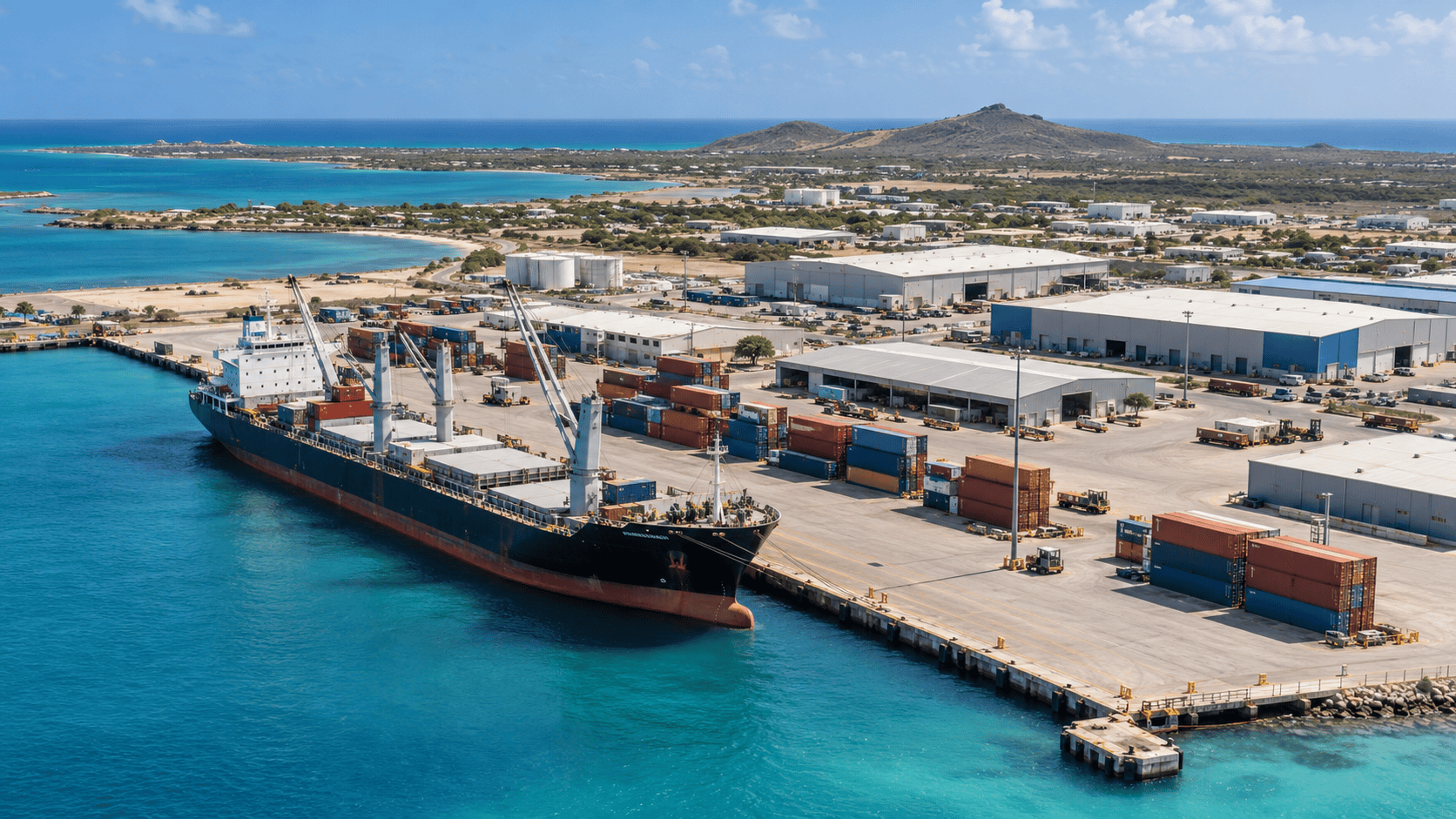
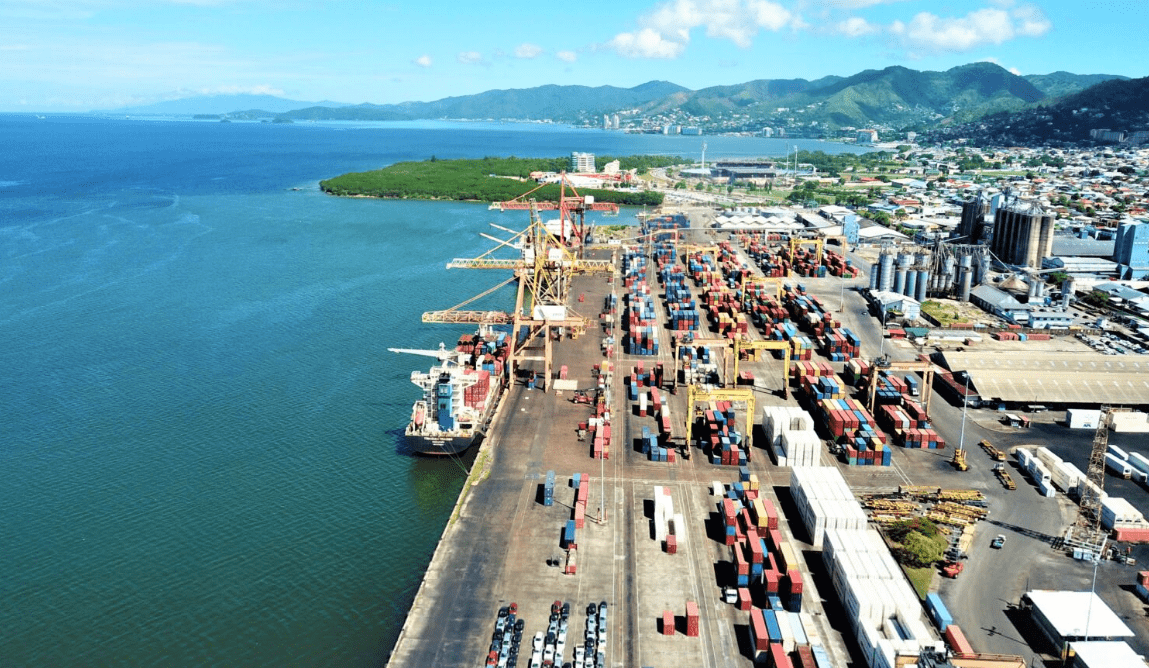
Port of Spain handled 357,820 TEUs in 2025, marking its strongest annual container performance in more than a decade and confirming the port’s growing importance within Southern Caribbean shipping networks. The figures, published by the Port Authority of Trinidad and Tobago, also reveal the scale of transshipment activity underpinning Trinidad and Tobago’s maritime positioning.
The increase continues a broader recovery trend visible since 2023. After handling 317,322 TEUs in 2023 and 324,575 TEUs in 2024, Port of Spain gained further momentum in 2025 as regional shipping flows stabilized and carriers reinforced Caribbean network rotations. The port had previously fallen to 236,370 TEUs during the pandemic-affected year of 2020.
Beyond the headline figures, the structure of the traffic offers a more revealing picture of the port’s regional function. In 2025, transshipment volumes represented a substantial share of activity, with 95,049 TEUs recorded in transshipment empties and 86,806 TEUs in transshipment full containers.
Those numbers suggest that Port of Spain is operating as more than a domestic gateway port serving Trinidad’s import-export economy. The port increasingly functions as a redistribution and repositioning node for containerized cargo moving across the Southern Caribbean and nearby South American trade corridors.
Transshipment activity remains central to the port’s role
The scale of empty container movements is particularly notable. Empty repositioning alone accounted for more than 95,000 TEUs in 2025, exceeding even import volumes during the year.
This reflects broader structural realities within Caribbean shipping. Many island markets generate asymmetric trade flows, forcing carriers to reposition empty equipment across multiple ports to maintain network balance and equipment availability. Hub ports capable of handling these repositioning operations efficiently therefore gain strategic value within regional liner networks.
Port of Spain appears to be consolidating that role.
The 2026 year-to-date figures continue to point in the same direction. During the first four months of the year, the port handled 101,978 TEUs, including 32,106 TEUs in transshipment empties and 16,097 TEUs in transshipment full containers.
Even at this early stage of the year, transshipment-related activity remains one of the dominant components of throughput.
CMA CGM and MSC continue to shape the port’s traffic profile
Another major takeaway from the statistics is the concentration of traffic among a small number of global carriers.
CMA CGM alone generated 159,095 TEUs in 2025, ahead of MSC with 132,878 TEUs. Together, the two groups accounted for the majority of container activity recorded at Port of Spain.
The operational profile of those carriers also highlights the port’s regional logistics role. CMA CGM recorded particularly high levels of transshipment empty containers, totaling 49,297 TEUs in 2025.
In 2026 year-to-date data, CMA CGM remained the dominant operator with 56,031 TEUs during the first four months of the year, while MSC handled 30,755 TEUs over the same period.
The presence of other international carriers including COSCO, ONE and ZIM further illustrates the diversity of regional and interregional shipping services calling at the port.
A stronger position within Southern Caribbean logistics flows
For Trinidad and Tobago, the recent traffic trajectory carries implications beyond port throughput alone. Sustained container growth can reinforce the country’s positioning within Caribbean supply chains at a time when regional logistics competition continues to intensify.
Major Caribbean transshipment hubs such as Kingston, Caucedo, Freeport and Cartagena continue to dominate larger-scale regional cargo redistribution. However, Port of Spain occupies a different niche within the Southern Caribbean system, supported by proximity to northeastern South America, energy-related trade flows and intra-Caribbean connectivity patterns.
The latest statistics suggest that the port is strengthening that intermediary role rather than competing directly with the region’s mega-hubs.
As carriers continue adjusting network configurations, equipment allocation and feeder connections across the Caribbean Basin, ports capable of combining gateway cargo with flexible transshipment activity may remain strategically important despite the concentration trends affecting global liner shipping.