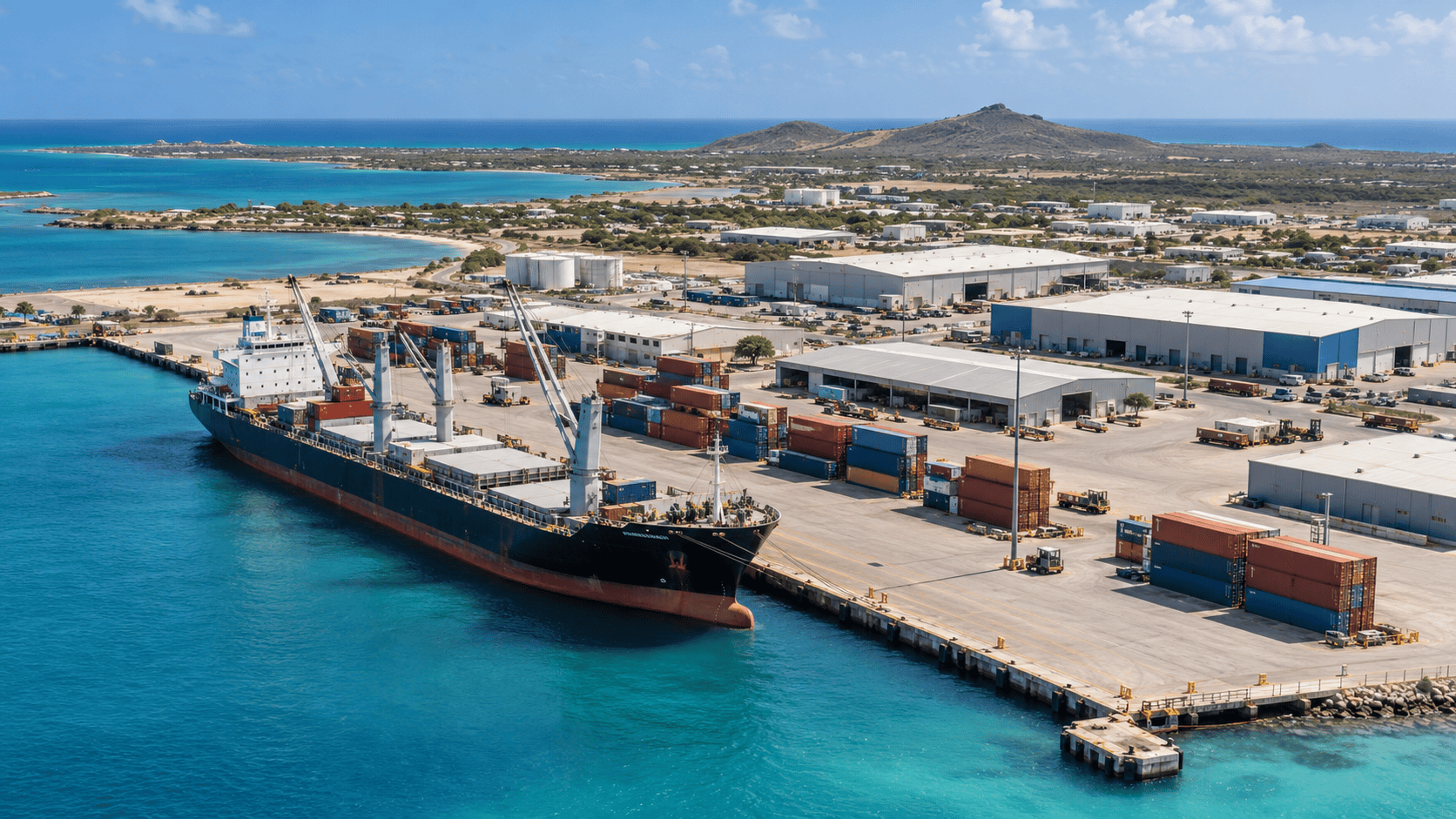
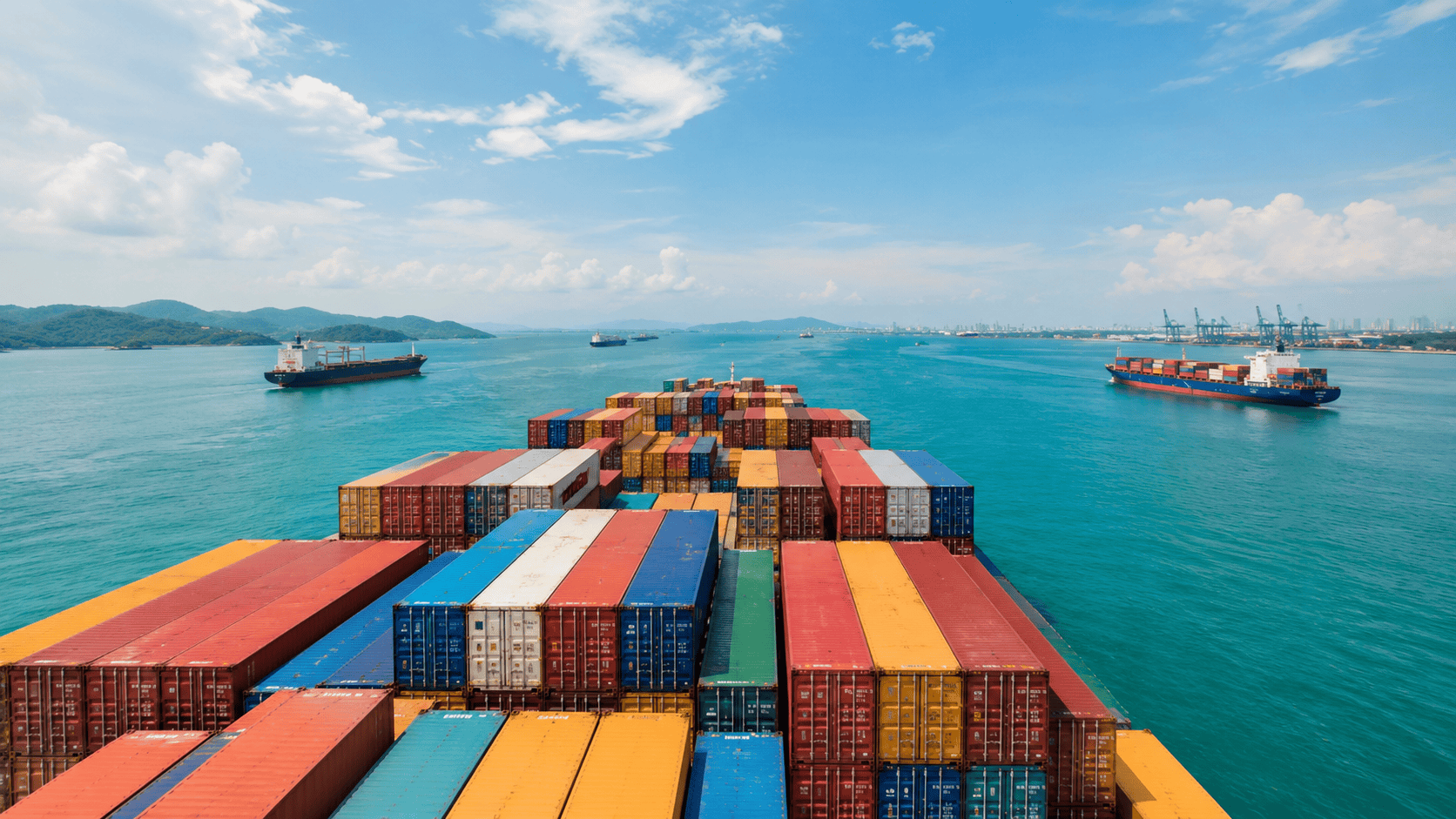
Panama’s port system handled about 9.9 million TEU in 2025, reinforcing its position as one of Latin America’s largest container hubs. Now the country is preparing for another step-change: 5 to 6 million TEU of additional annual transshipment capacity through two proposed terminals, Corozal on the Pacific side and Telfers on the Atlantic.
The scale is considerable. That planned capacity is equivalent to roughly half of Panama’s entire 2025 container throughput, although future capacity and current traffic are not directly comparable.
But Corozal and Telfers are about more than handling additional boxes. They form part of a broader effort by the Panama Canal Authority to capture more economic value from cargo moving around the Canal — rather than relying solely on vessels passing through its locks.
Two terminals, one larger logistics strategy
The two projects sit at opposite ends of Panama’s interoceanic corridor.
Corozal would expand terminal capacity on the Pacific side, while Telfers would strengthen the Atlantic side. Together, the Panama Canal Authority estimates they could require around B/.2.6 billion in investment, with construction expected to take approximately three years once the concessions are awarded.
Their main business would be transshipment. That distinction is critical because Panama is not primarily adding capacity for its own imports and exports. The country is strengthening its role as a redistribution platform for international container networks.
In 2025, transshipment accounted for approximately 89.5% of containers handled by the Panamanian port system. In other words, close to nine out of every ten containers moving through the country’s terminals were being transferred through Panama rather than entering or leaving the domestic economy.
Corozal and Telfers are designed to increase the scale at which Panama can perform that hub function.
Panama already operates at transshipment scale
The existing terminal network gives perspective to the planned expansion.
In 2025, Manzanillo International Terminal handled approximately 2.86 million TEU, while Balboa processed around 2.68 million. Colon Container Terminal handled 1.74 million, PSA Panama about 1.35 million and Cristóbal roughly 1.21 million.
Adding 5 to 6 million TEU of new capacity would therefore be equivalent in scale to several large existing terminals combined. But capacity is not demand.
The commercial success of Corozal and Telfers will depend on whether shipping lines route additional transshipment volumes through Panama, whether the terminals can compete on productivity and cost, and whether the country continues to occupy a valuable position within evolving liner networks.
The projects are therefore better understood as a strategic bet on Panama’s future role in global container shipping than as a response to a simple shortage of terminal space today.
Beyond the locks
That strategic ambition is explicit in the Panama Canal Authority’s Vision 2025–2035.
The programme combines port development with logistics infrastructure, storage, intermodal projects, energy initiatives and long-term water-security investments. One of its stated objectives is to diversify services and increase capacity without increasing the use of water resources.
That is particularly significant for an asset whose recent operating history has demonstrated how strongly transit capacity can be affected by water availability.
The strategy does not imply that Panama wants to reduce the importance of vessel transit. The opposite is true. Between October 2025 and July 2026, deep-draft vessel transits through the Canal increased by more than 6% year on year.
Panama is therefore diversifying from a position in which its core transit business remains active.
The objective is to place additional layers of commercial activity around that business: terminal handling, storage, logistics, intermodal services and energy infrastructure.
That gives the country more ways to capture value from each cargo flow.
Port expansion does not solve the Canal’s water constraints, and transshipment activity is not disconnected from Canal traffic. But it creates another path for economic growth without making every incremental revenue opportunity dependent on putting an additional ship through the locks.
Why two oceans matter
Developing Corozal and Telfers simultaneously also reflects the geography that gives Panama its strategic advantage. Instead of concentrating the next generation of capacity in one location, the Canal Authority is looking to strengthen both ends of the corridor.
For liner operators, additional capacity on the Atlantic and Pacific sides could provide greater flexibility for feeder networks, vessel rotations and container repositioning.
That flexibility matters because shipping networks do not remain static. Alliances change. Vessel sizes increase. Services are consolidated or redirected. Calls move according to productivity, demand, berth availability and schedule reliability.
A stronger two-ocean terminal system gives Panama more options when those networks are redesigned.
The strategic value of Corozal and Telfers therefore lies not only in the number of TEU they could handle, but in how much flexibility they could add to the wider logistics platform.
Private capital, strategic control
The financing model is another important part of the strategy.
The Panama Canal Authority intends to use private capital and operating expertise while retaining ownership and strategic control of the underlying assets.
Private concessionaires would finance, develop and operate the infrastructure for defined periods. At the end of the concession, the assets revert fully to the Canal.
That model allows Panama to draw on global terminal expertise without permanently transferring control of infrastructure surrounding one of its most strategic national assets.
Market engagement has already attracted many of the industry’s largest names, including APM Terminals, DP World, PSA International, COSCO Shipping Ports and Terminal Investment Limited, alongside major liner groups.
Those discussions should not be confused with formal bids. The prequalification process began in early 2026, and interested groups submitted documentation in July. The Canal Authority is evaluating those submissions on technical, financial and legal criteria before moving to the next stage.
As of late August 2026, no final official list of prequalified operators had been published.
Panama has tried Corozal before
The Pacific project also comes with history.
Panama attempted to develop a terminal at Corozal a decade ago. APM Terminals, Terminal Link, PSA International and Terminal Investment Limited were prequalified during the 2016 process. But when the time came to submit final offers in 2017, none did so. The tender was cancelled.
That precedent is useful because it shows that location and headline capacity alone are not enough to guarantee a successful concession. The difference this time is that Panama is not trying Corozal in isolation.
The project now sits alongside Telfers and within a broader logistics programme covering both oceans, intermodal infrastructure, energy and other services. The Canal Authority has also undertaken a much wider market-engagement and prequalification process before moving toward concession awards.
Whether that produces a different commercial outcome remains to be seen.
The real test is utilisation, not capacity
The headline figure of 5 to 6 million TEU is impressive, but building that capacity will only be the first step. The real measure of success will be utilisation.
Shipping lines will still choose hubs according to terminal productivity, network connectivity, berth availability, cost and reliability. At the same time, competing gateways across Latin America are investing in their own infrastructure and increasingly seeking direct liner services.
Panama cannot assume that the strategic geography that built its transshipment business will automatically guarantee the next phase of growth. Corozal and Telfers are therefore not simply two new container terminals.
They are a test of whether Panama can turn the geography that made the Canal indispensable into a broader logistics platform — one capable of capturing more value from cargo before, during and after vessel transit.
The next phase of Panama’s maritime growth may depend less on adding ever more ships through the locks than on how much economic activity the country can build around the cargo already moving through its interoceanic corridor.