
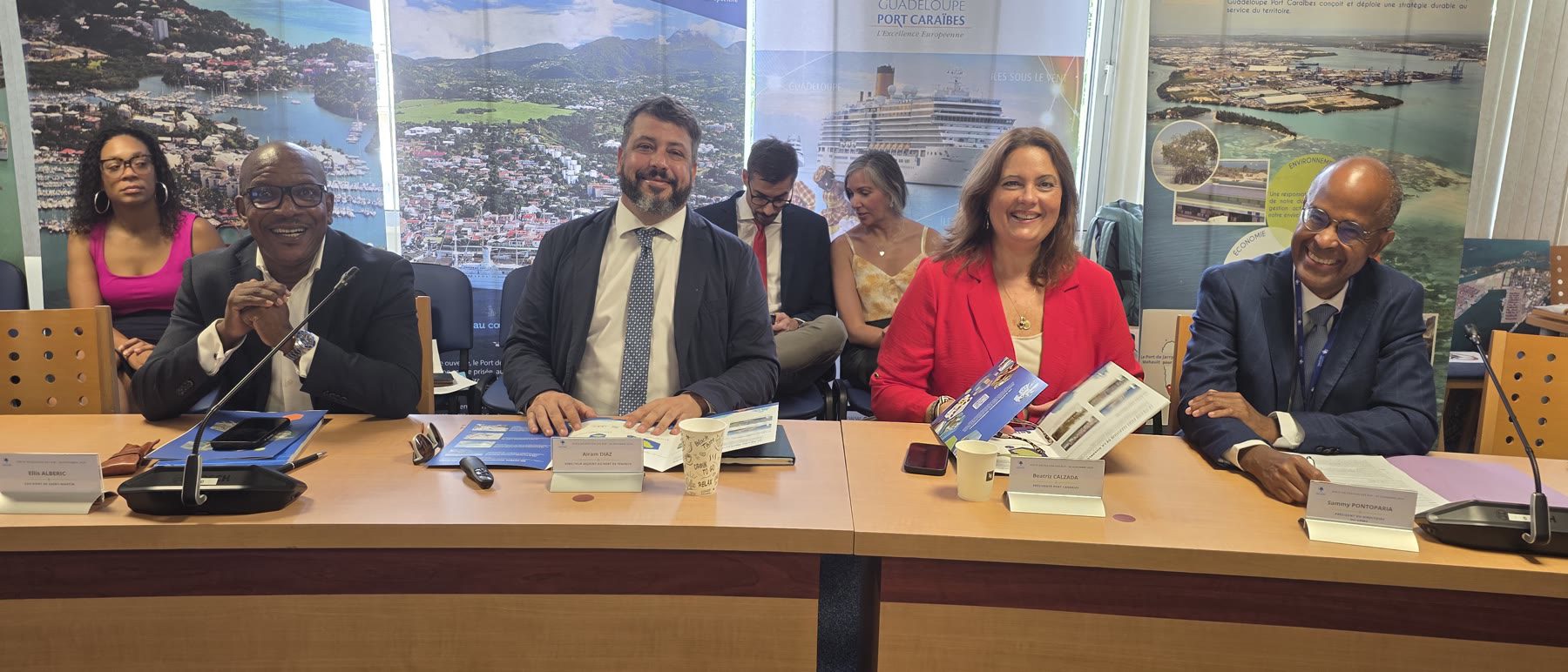
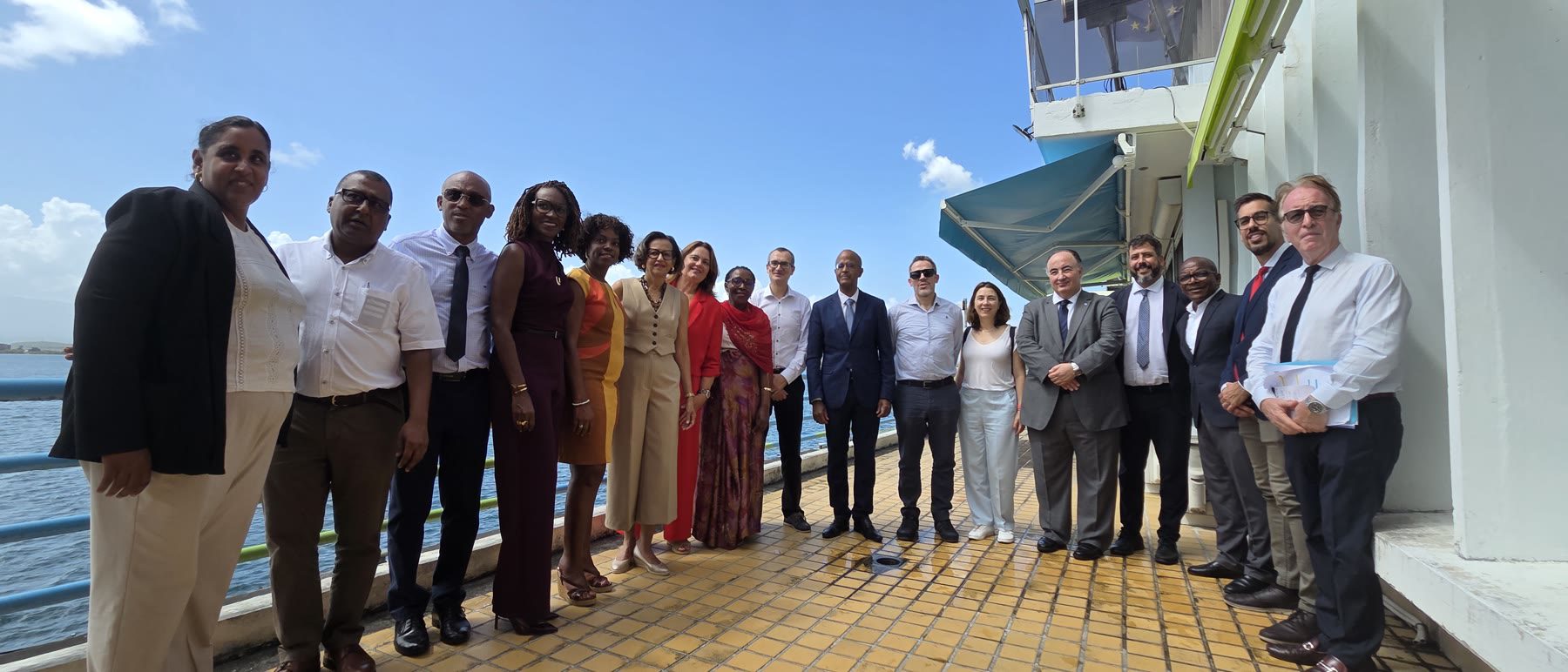
On 4 November 2026, the Grand Port Maritime de la Guadeloupe – Guadeloupe Port Caraïbes hosted presidents and representatives of ports from the European Union’s outermost regions for a site visit and a working meeting. The meeting took place on the sidelines of the 30th Conference of Presidents of the Outermost Regions, held in Guadeloupe on 5 and 6 November. The maritime ETS, that is, the application of the EU Emissions Trading System (ETS) to shipping, was at the heart of the discussion.
A Working Group of Ten Ports
The ports cooperate within the EU Outermost Regions Ports Working Group. It brings together Ports of Madeira (APRAM), Ports of the Azores, the Port Authorities of Las Palmas and of Santa Cruz de Tenerife, the Port Establishment of Saint-Martin, the Grand Ports Maritimes of Guadeloupe, Martinique, French Guiana and La Réunion, and the Port of Longoni in Mayotte.
In a common position paper published on 12 March 2026, the group called for a differentiated application of EU climate and energy rules, namely the ETS, the Alternative Fuels Infrastructure Regulation (AFIR) and FuelEU Maritime. It also proposed a permanent outermost-regions ports committee within the European Commission, better access to EU funding, and staff exchanges and training between ports. According to the Spanish trade daily El Mercantil, the Canary Islands government planned to propose, at the Guadeloupe meeting, a working group to prepare the creation of a formal association.
The Concern: Calls Moving to Non-EU Ports
Presenting the group, Airam Díaz Pastor, deputy director of the Port Authority of Santa Cruz de Tenerife, said that concern over the ETS was what first brought the ports together. In his view, the cost it adds encourages shipping lines to re-route cruise and container calls to nearby ports outside the EU. He said the ports want the ETS to stop applying to the outermost regions.
He also reported that the European Sea Ports Organisation (ESPO) had suggested a working group combining outermost regions and islands. The ports prefer a voice of their own, separate from island Member States such as Malta or Cyprus, because the EU treaties give the outermost regions a specific status.
Saint-Martin, a Shared Island
Albéric Ellis, director of the Port Establishment of Saint-Martin, described his territory as directly exposed. The island is divided between a French and a Dutch side, and he said that if such measures apply, the French port would lose its competitiveness: goods would be landed on the Dutch side before reaching the French part. He added that Saint-Martin, like Guadeloupe, is carrying out an ambitious port development project, intended to guarantee its sovereignty and its security and to create a better balance between the two sides of the island.
A Call for a “Europe of the Regions”
Speaking in English, Beatriz Calzada, president of the Port Authority of Las Palmas, said the group was set up so that Europe would “realize that it must adapt its rules to our reality”. She cited the ETS as an example of rules that make the ports less competitive, and suggested it may be time to “return to the Europe of the regions”. Paula Cabaço, president of Ports of Madeira, said the Madeiran ports have been committed to the project for over a year.
For Marie-Luce Penchard, chair of the supervisory board of the Grand Port Maritime de la Guadeloupe, the ETS issue goes beyond ports and also affects airports and tourism. She said the environmental question should be handled in a way that does not cost these territories their competitiveness.
What the EU Already Provides on the Maritime ETS
The issue is not new. The Commission proposed extending the ETS to shipping in July 2021, as part of the Fit for 55 package, and the rule has applied since 1 January 2024 under Directive (EU) 2023/959, which already included a temporary derogation for the outermost regions.
Under the current rules, the European Commission states that until 31 December 2030, shipping companies do not have to surrender allowances for voyages between a port in an outermost region and a port in the same Member State. The exemption also covers voyages within an outermost region and between outermost regions of the same Member State, such as Guadeloupe–Martinique.
In its strategy for the outermost regions adopted on 10 September 2026 (COM(2026) 660), the Commission states that its proposal for the review of the ETS extends these maritime and aviation derogations until 31 December 2035. The same strategy announces an assessment of the temporary FuelEU Maritime exemptions for these regions during the 2028 review of that regulation, and commits the Commission to strengthen the competitiveness of outermost-region ports under the EU ports strategy.
The ports’ request goes further than these derogations: it covers the maritime ETS, AFIR and FuelEU Maritime together, and calls for a permanent dialogue body with the Commission.
Read also: Caribbean Ports Explore Shore Power Cooperation with Europe