Brazil is upgrading its port infrastructure to accommodate larger cargo ships, combining dredging operations, channel improvements and new approaches to infrastructure management. According to the Ministry of Ports and Airports (MPor), the modernization effort extends beyond deeper waterways to include terminal capacity, inland connections and long-term planning. The initiative comes as Brazilian ports handled 1.4 billion tonnes of cargo in 2025, a 6.1% increase from the previous year.
Larger Ships Are Redefining Port Access Requirements
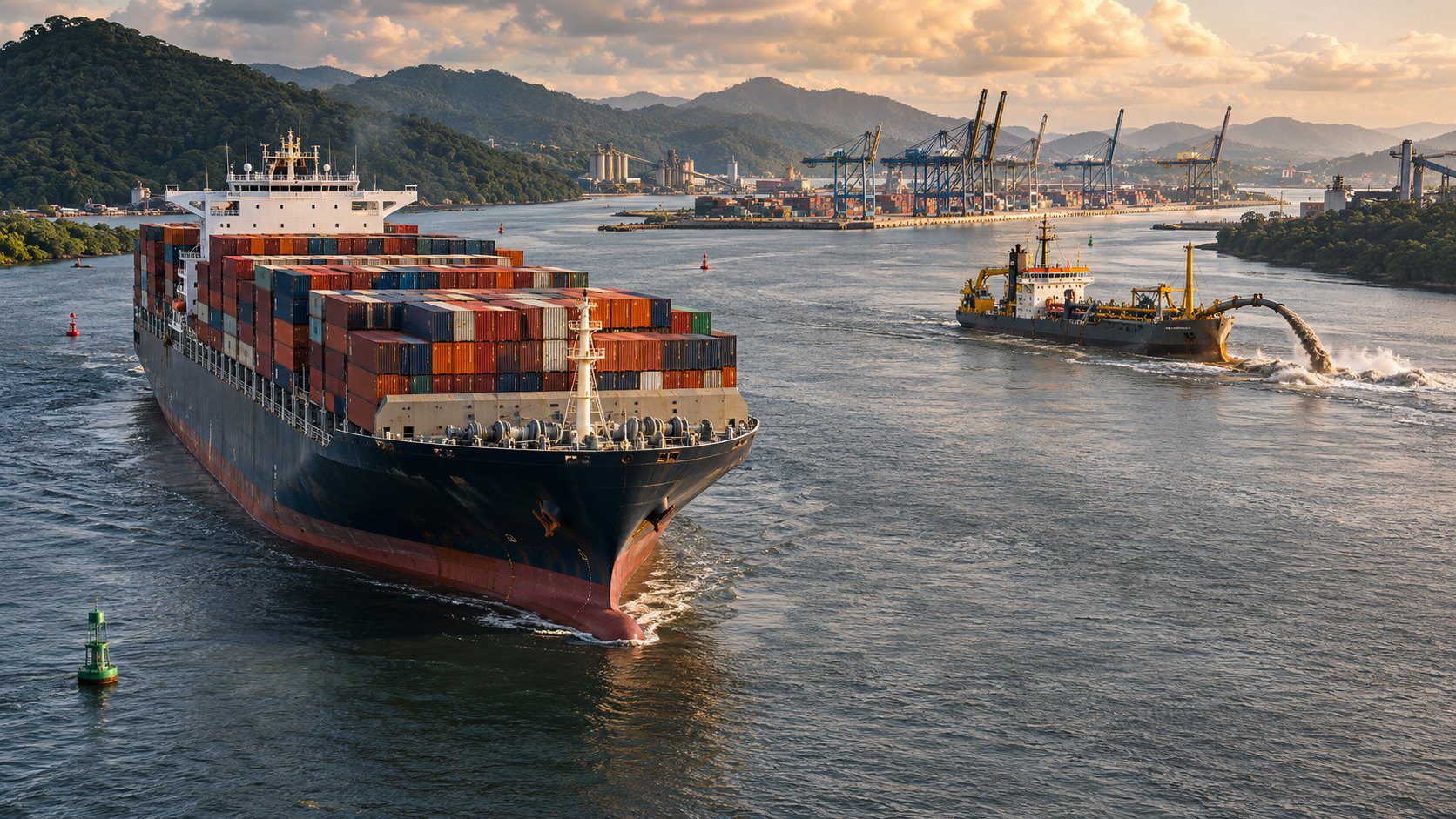
The growing dimensions of container ships are placing new demands on Brazil’s port infrastructure. According to the MPor, container vessels have evolved from approximately 300 metres in length to ships reaching 400 metres, while newer models can carry nearly three times as many containers as those used in the early 2000s.
Accommodating these vessels requires sufficient depth in navigation channels, turning basins and berthing areas. A ship’s draft determines the minimum water depth needed for safe navigation. When available depth is insufficient, operators may need to reduce cargo loads or wait for more favourable tidal conditions.
Dredging addresses these limitations by removing accumulated sediment from channels and port areas. However, maintaining navigable depths also requires regular monitoring and maintenance, particularly where sedimentation changes the conditions of access waterways.
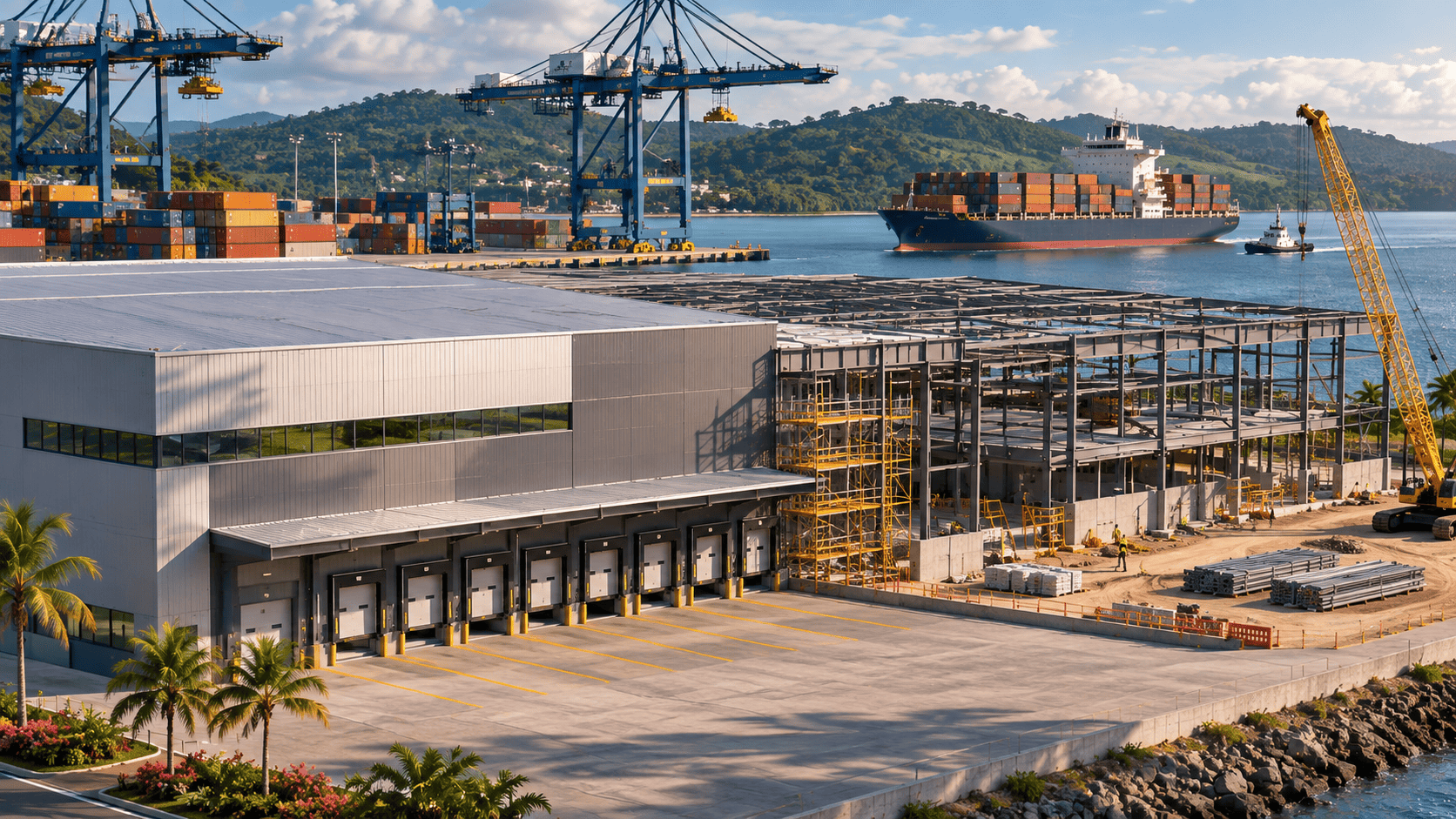
The challenge is not limited to depth. Channel width, manoeuvring space and berth characteristics must also match the dimensions of larger vessels. Even where maritime access is improved, terminals need sufficient handling capacity and connections to road, rail and inland waterway networks to accommodate additional cargo.
These requirements are becoming increasingly important as Brazil evaluates how its ports can respond to changing vessel dimensions while supporting continued cargo growth.
Suape, Rio de Janeiro and Recife Illustrate Different Stages of Modernization
Several Brazilian ports illustrate how infrastructure improvements are progressing at different stages, from completed dredging projects to newly contracted works.
At the Port of Suape, in Pernambuco, dredging of the outer access channel was completed in 2024, establishing an officially approved depth of 20 metres. Further works covering the inner channel, turning basin and liquid bulk piers were completed in January 2026.
The latter intervention received BRL 247 million in investment, including BRL 100 million allocated by the MPor through the federal Novo PAC programme. Following completion, approved depths reached 16.25 metres in the inner channel and 18.39 metres in the turning basin and the piers concerned.
These improvements form part of Suape’s broader infrastructure development. Separately, the port has recently expanded its international maritime connections, as reported by LATITUDE15 in its article on the addition of Suape to a weekly Americas shipping service. The two developments illustrate changes in physical infrastructure and shipping connectivity, although the ministry’s statement does not establish a direct causal relationship between them.
At the Port of Rio de Janeiro, the deepening of the access channel increased its minimum depth from 15 to 16.2 metres. According to the MPor, the intervention allows an operational draft of 15.3 metres and has enabled the port to accommodate vessels measuring up to 366 metres in length.
Recife represents a different stage of modernization. In January 2026, the ministry signed a dredging contract estimated at BRL 100 million. The planned works aim to deepen maritime access to 12 metres, creating conditions for vessels up to 210 metres long. These are intended capabilities rather than completed improvements.
Together, the projects demonstrate how Brazil is addressing different port access requirements through targeted infrastructure interventions.
Channel Concessions Open a New Infrastructure Management Model
Beyond dredging works, Brazil is exploring changes in how access channels are managed and maintained.
Paranaguá, in Paraná, became the country’s first public port to have its maritime access channel awarded under a private-sector concession model. The auction took place in October 2025, introducing a new approach to the management of port access infrastructure.
The port also launched a maintenance dredging campaign in May 2026, covering the access channel between its entrance and the Antonina turning basin. The operation begins with surveys to establish channel depths and determine the volume of sediment requiring removal.
The concession model could extend to other ports, although several proposals remain under development. At Itajaí, in Santa Catarina, discussions are continuing over a potential channel concession. The proposed improvements include deepening the waterway to support vessels measuring up to 400 metres.
Additional access-channel projects are being developed for Rio Grande, in Rio Grande do Sul, Santos, in São Paulo, and ports managed by Companhia das Docas do Estado da Bahia (Codeba).
The MPor has not provided implementation timetables or detailed contractual arrangements for these projects in its November announcement. Their prospective benefits therefore remain dependent on future decisions and infrastructure delivery.
Brazil Looks Beyond Dredging With Long-Term Port Capacity Planning
While individual projects address immediate navigation constraints, the ministry is also developing instruments to identify future infrastructure requirements across the port system.
The National Ports Secretariat (SNP) is preparing the Port Sector Plan 2050, known as PSPort 2050. The planning initiative is intended to guide the sector’s development over the coming decades by examining terminal capacity, infrastructure requirements and integration with other transport modes.
Its scope also includes sustainability and adaptation to climate change, linking future port development to broader operational and environmental considerations.
A second initiative, Port Saturation Monitoring (MSP), is also under development. Coordinated by the SNP, it is designed to identify potential capacity limitations in public ports, private-use terminals and their land and maritime access connections before these constraints become critical.
Both initiatives reflect a central consideration in port modernization: deeper channels alone cannot guarantee greater operational capacity. A port may become accessible to larger vessels while still facing limitations at its berths, cargo-handling facilities or inland transport connections.
This infrastructure perspective complements the wider regional discussion explored by LATITUDE15 in its analysis of South America’s maritime competitiveness, where port connectivity and shipping networks are examined as additional factors shaping the sector.
For Brazil, the next challenge will be coordinating maritime access improvements with terminal operations and logistics infrastructure. The effectiveness of ongoing modernization will depend not only on accommodating larger ships, but also on the capacity of the wider port system to handle the cargo they bring.
FAQ
Why do larger ships require deeper port channels?
Larger ships may have greater drafts, requiring sufficient water depth for safe navigation. Inadequate depth can restrict cargo loads or require vessels to wait for favourable tides.
Which Brazilian ports have completed dredging upgrades?
Suape completed major dredging works in 2024 and January 2026. Rio de Janeiro has also deepened its access channel, enabling operations involving vessels up to 366 metres long.
What is planned for the Port of Itajaí?
A proposed channel concession includes deepening works intended to accommodate vessels up to 400 metres long. Discussions to enable the concession are ongoing.
What is Brazil’s PSPort 2050?
PSPort 2050 is a port sector planning initiative under development to guide long-term infrastructure, capacity and transport integration, including sustainability and climate adaptation considerations.