Transnational criminal networks operate across maritime routes, container systems and national borders. Caribbean ports are now confronting a central weakness: local incidents are not always converted into regional intelligence.
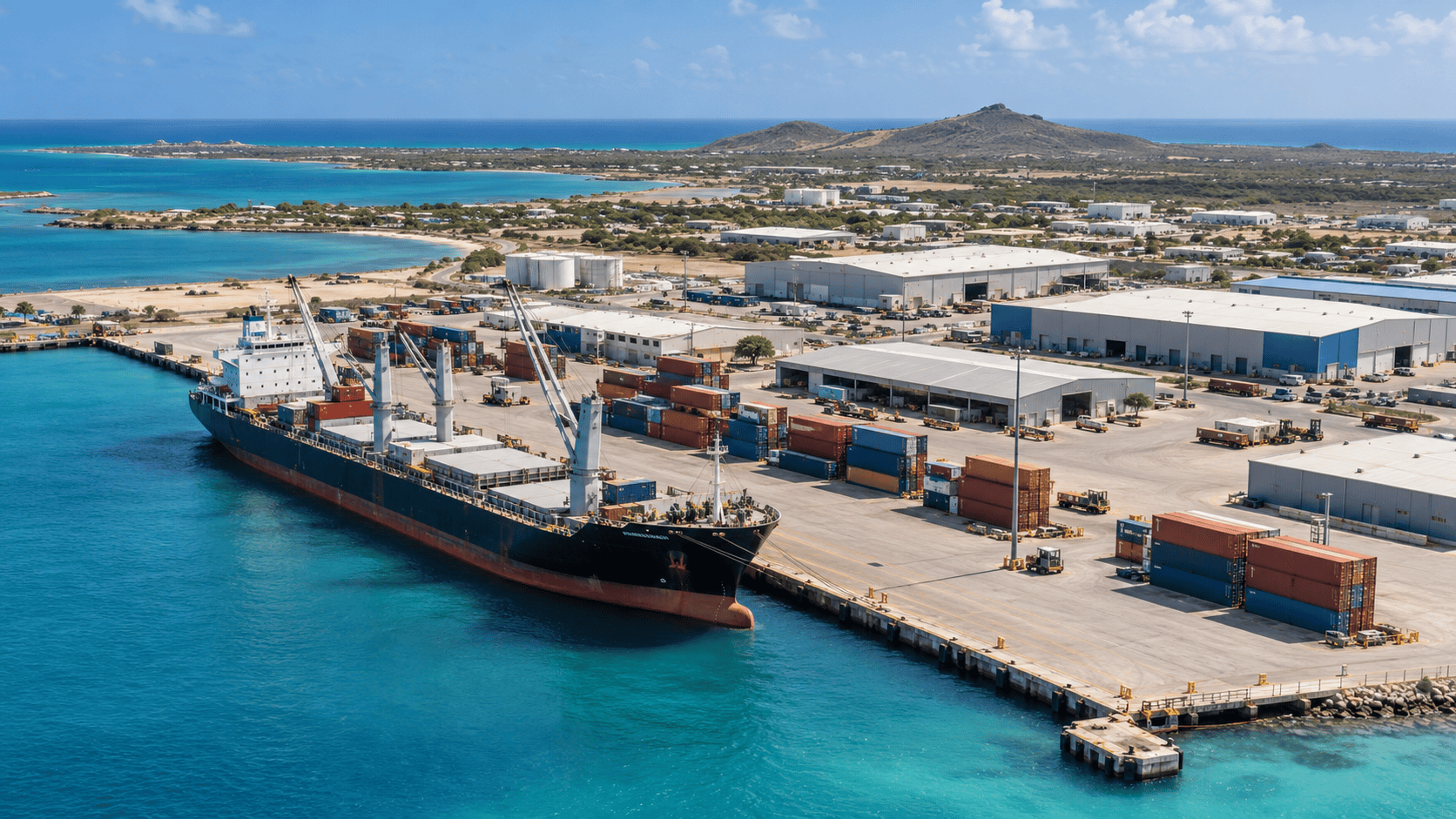
Caribbean ports are economic gateways. They move food, fuel, consumer goods, industrial inputs and passengers between territories whose economies depend heavily on maritime trade.
They are also strategic points of exposure.
An illicit shipment discovered in one terminal may not be an isolated event. Similar weapons, drugs or ammunition may be intercepted elsewhere in the region within days. Yet without a common reporting structure, those incidents may remain separate entries in national systems rather than pieces of a wider regional pattern.
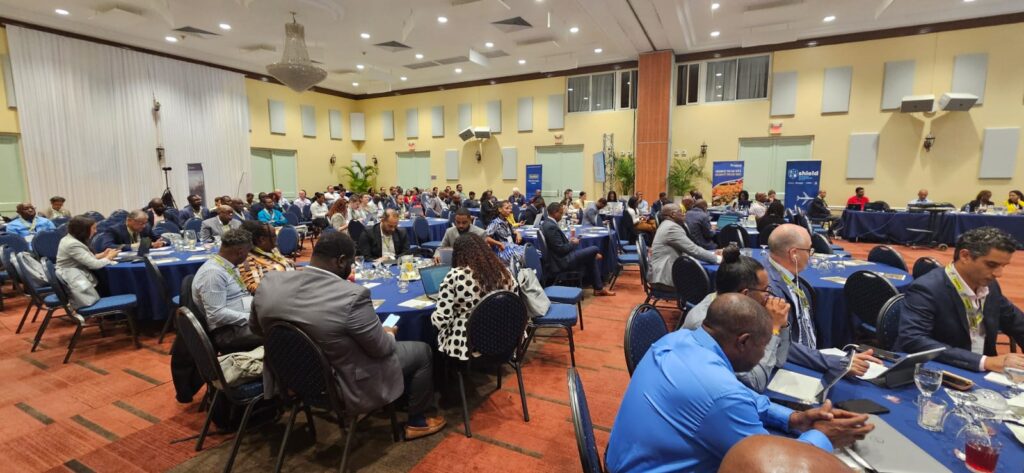
Discussions at the 29th Annual General Meeting of the Port Management Association of the Caribbean, held in Suriname, placed this information gap at the centre of the regional port-security debate.
The problem is not simply whether ports have fences, scanners or security procedures. It is whether authorities can connect what happens inside one terminal with what is happening across neighbouring ports and maritime routes.
Ports are economic gateways—and security front lines
Transnational criminal organisations increasingly use maritime trade routes, containerised cargo systems and port logistics infrastructure to move drugs, arms and ammunition, Mona Swoboda, Program Manager at the Inter-American Committee on Ports of the Organization of American States, told PMAC members.
These threats can be amplified by gaps in inspection, monitoring and enforcement capacity. They are particularly difficult for small island developing states, which often operate with limited technical and human resources while remaining highly dependent on maritime trade.
The maritime areas these states are responsible for monitoring can be up to ten times larger than their land territory, according to the presentation. That imbalance creates a substantial operational burden for authorities responsible for surveillance, inspection and interdiction.
At the same time, growing cargo volumes are increasing pressure on screening and risk-management systems.
Ports therefore occupy a dual position. They are engines of trade, but they are also critical intervention points for disrupting criminal networks before illicit goods move further through domestic or regional supply chains.
“Ports really sit at the center of this disruption,” Mona Swoboda said.
That role makes security part of the port’s economic function. A terminal that cannot maintain secure and reliable operations risks more than a temporary operational problem. It can affect the continuity of essential services, the confidence of shipping partners and the reputation of the territory it serves.
The regional blind spot is fragmented information
Many of the weaknesses identified during the PMAC discussion were not presented as purely technical problems.
Swoboda pointed instead to fragmented approaches, limited coordination frameworks and institutions working in silos. Maritime authorities, port authorities, terminal operators, customs, border agencies, law-enforcement bodies and other public and private stakeholders may all hold part of the information needed to understand a threat.
In practice, however, information and intelligence sharing remain limited at both national and regional levels.
That becomes a serious weakness when the networks being monitored do not operate within one jurisdiction.
“The threats do not stop at the national border,” Swoboda said. “Our responses also can’t stop at the border.”
A port may successfully intercept a suspicious cargo, secure the affected area and follow its internal procedures. But the wider value of that intervention depends on whether the information is transmitted, compared with other incidents and used to identify recurring origins, routes, methods or actors.
Without that regional layer, several ports can encounter related events without recognising the connection.
After an interception, where does the information go?
PMAC Chairman Darwin Telemaque illustrated the problem by asking what happens when weapons or drugs are discovered in different ports over the same period.
Individually, each interception may appear local. Viewed together, they could reveal a pattern involving a common origin, shipping route, container process or criminal network.
But that only becomes possible if the incidents are consolidated.
“How does it go upstream?” Darwin Telemaque asked.
The question goes beyond reporting for statistical purposes. It concerns whether local discoveries generate actionable intelligence for institutions capable of investigating activity across several countries.
Telemaque argued that the cost of failing to secure ports should not be measured only in financial terms.
“It’s not only a cost in dollars and cents. It’s a cost in national reputation, loss of services, loss of lives.”
For territories dependent on imported food, energy and essential goods, a serious security incident can disrupt far more than activity inside the terminal. It can affect the broader economy and the public services supported by reliable maritime access.
ISPS compliance is essential—but it is not the entire strategy
The International Ship and Port Facility Security Code remains a fundamental framework for protecting ships and port facilities and managing the security of the ship–port interface.
However, Telemaque cautioned against treating compliance with the ISPS Code as equivalent to a complete port-security strategy.
“ISPS is not port security,” he told participants.
His point was not that ISPS requirements are unimportant. Rather, he argued that a port’s responsibilities extend beyond the immediate ship-to-shore interface.
Port authorities must also consider the protection of employees, users, surrounding communities, national services and economic activity. That broader responsibility includes preparedness, internal coordination, incident reporting and cooperation with agencies beyond the terminal boundary.
Compliance therefore provides an essential foundation, but it does not remove the need for a wider operational and territorial security framework.
Martinique places security inside its investment strategy
The security challenge also carries a direct financial cost.
During its port presentation, the Grand Port Maritime de la Martinique identified the fight against drug trafficking as a major priority in 2025 and 2026. The intervention stressed that confronting trafficking organisations requires substantial time, funding and additional tools.
Security has consequently been incorporated into the port’s five-year development strategy rather than treated as a separate operational expense.
The port expects to allocate €5.8 million to terminal security over the next five years, with the objective of bringing the facility’s security arrangements closer to the standards of leading European ports.
That investment forms part of a broader five-year programme valued at approximately €180 million, covering cargo development, security and other port activities.
The Martinique case illustrates a wider shift in the way security is being positioned. Expansion and operational growth cannot be planned independently of the systems required to protect terminals, workers and cargo flows.
The port’s objective was expressed simply: develop the port, but do so securely.
Towards a regional port-security reporting network
PMAC used the discussion to outline a possible regional response.
Telemaque said the association intended to establish a port-security subcommittee bringing together senior security officials from its member ports. PMAC would work with Swoboda and relevant port officers to design a shared method through which members could report incidents.
Under the proposed model:
- individual ports would submit information through a common mechanism;
- the incidents would be consolidated at regional level;
- emerging trends could be communicated to organisations such as CARICOM IMPACS and the Regional Security System;
- relevant information could then be transmitted to other international or enforcement partners.
The proposal had not yet become an operational system at the time of the meeting. Its significance lies in the attempt to close the gap between local detection and regional intelligence.
Existing mechanisms could provide part of the foundation. The OAS port programme has developed a contact database for Port Facility Security Officers across its 34 member countries. During the session, Mona Swoboda offered to explore how PMAC members not already included could be connected to the network.
Knowing who to contact in a neighbouring territory during an incident is a basic requirement. Building a system capable of consolidating and analysing reports would represent the more difficult next step.
Caribbean ports cannot address transnational threats solely through isolated national responses. Criminal networks already treat maritime routes as interconnected systems. Regional security arrangements must begin to do the same.
The region’s ports need equipment, trained personnel and strong compliance procedures. But they also need trusted channels through which information can move as quickly as the cargo and risks they are expected to monitor.
Without that coordination, successful interceptions may remain isolated events. With it, ports can become part of a regional intelligence network capable of protecting not only individual terminals, but also the trade and essential services that depend on them.