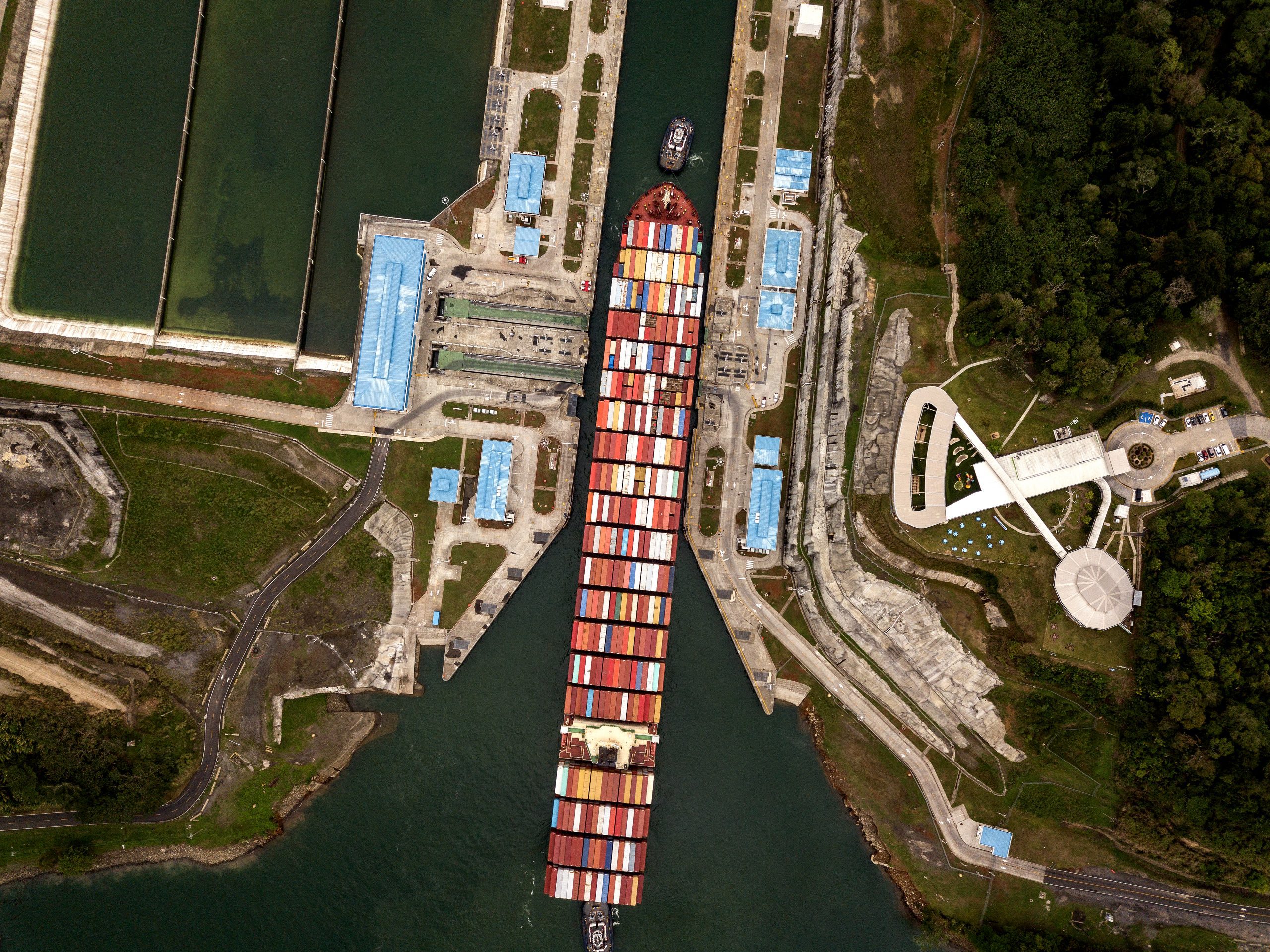
The Panama Canal recorded 13,951 vessel transits in fiscal year 2026, up 4.1% from the previous year, while tonnage increased 6.5% to 521 million PC/UMS tons. Total revenue rose 16.6% to 6.6 billion balboas, according to preliminary results released by the Panama Canal Authority (ACP) on October 21.
The results cover the fiscal year from October 2025 through September 2026 and reflect stronger demand across key maritime segments, particularly energy shipping and container transport.
The figures were presented during a call hosted by Bank of America Merrill Lynch, with Panama Canal Administrator Ilya Espino de Marotta, Deputy Administrator Miguel Lorenzo and Vice President of Finance Juan Mojica discussing operational performance, water management and the canal’s longer-term investment strategy.
Transit and Tonnage Growth Reflect Shifting Vessel Traffic
The Panama Canal handled 547 more vessel transits than in FY2025, when 13,404 ships used the waterway. Tonnage increased from 489.2 million to 521 million Panama Canal Universal Measurement System (PC/UMS) tons, outpacing the growth in vessel movements.
According to the ACP, energy shipping segments and strong containership activity contributed to the increase. Changes in international trade flows also supported demand for the interoceanic route.
Larger vessels played an important role in this performance. Ships using the Neopanamax locks accounted for 52.2% of total canal tonnage, with tonnage through these locks increasing 8.2% year over year.
The difference between transit and tonnage growth highlights the changing composition of traffic through the canal. PC/UMS tonnage measures vessel capacity under the canal’s measurement system rather than the physical weight of cargo transported.
Revenue Growth Outpaces Maritime Traffic
Total revenue reached 6.6 billion balboas (approximately US$6.6 billion) in FY2026, representing a 16.6% increase compared with the previous fiscal year.
Revenue growth was therefore considerably stronger than the increases in vessel transits and tonnage. While traffic composition and the services used by vessels can influence revenue, the published results do not provide a detailed breakdown of the factors behind this difference.
The ACP described the financial performance as supporting its capacity to invest in strategic projects, including initiatives under its Vision 2025–2035.
The financial figures remain preliminary and unaudited. They represent total revenue rather than net profit or the canal’s financial contribution to the Panamanian government.
During the results presentation, Administrator Ilya Espino de Marotta emphasized the canal’s role in facilitating international maritime trade through reliable and safe transit services.
Water Management and Transit Reliability Remain Central
Alongside traffic growth, water availability continued to shape canal operations. The ACP maintained a maximum authorized vessel draft of 50 feet (15.24 metres) throughout the dry season, supporting operating conditions for shipping customers despite climate-related challenges.
Water conservation measures and improved rainfall in the canal watershed also allowed the authority to reinstate its Last-Minute Reservation service for vessels using the Panamax locks on October 21.
The system offers vessels without an existing booking an additional opportunity to secure a transit slot when capacity becomes available and the ACP decides to offer it. It does not guarantee passage for unreserved vessels.
Water management remains a central part of the canal’s long-term strategy. The ACP is advancing initiatives under Vision 2025–2035, including the proposed Río Indio Lake Project, intended to strengthen water security.
For shipping operators, the combination of stable draft conditions, available transit capacity and predictable scheduling remains an important factor in planning routes through the Panama Canal.
Source: Panama Canal Authority
FAQ
How many vessels transited the Panama Canal in FY2026?
The Panama Canal recorded 13,951 vessel transits in FY2026, an increase of 4.1% from 13,404 in FY2025.
How much revenue did the Panama Canal generate in FY2026?
Total revenue reached 6.6 billion balboas, equivalent to approximately US$6.6 billion, up 16.6% year over year. The figures are preliminary and unaudited.
What share of Panama Canal tonnage used the Neopanamax locks?
Neopanamax vessels accounted for 52.2% of total PC/UMS tonnage in FY2026, with tonnage through these locks increasing 8.2% compared with the previous fiscal year.