
Guadeloupe ’s regional air traffic continued to recover in 2025, but the picture remains sharply uneven across neighboring markets. While flows to Martinique, French Guiana and the Northern Islands strengthened, traffic with the wider Caribbean remained well below pre-pandemic levels, highlighting a persistent gap in the recovery of regional connectivity.
According to Guadeloupe Maryse Condé International Airport’s 2026 press kit, the Martinique/French Guiana market handled 370,335 passengers in 2025, up 5.3% year on year, while the Northern Islands reached 187,605 passengers, an increase of 5.6%. Yet the wider Caribbean segment moved in the opposite direction, declining 3.1% from 2024 to 40,622 passengers.
Proximity markets show greater resilience
The strongest pattern emerging from the airport’s data is the relative resilience of nearby regional markets.
Martinique and French Guiana together accounted for 17.3% of the airport’s passenger traffic in 2025. Although the segment remained 15.7% below its 2019 level, its year-on-year growth points to a continuing recovery in traffic within the French Caribbean and Guiana corridor.
Fort-de-France remained the airport’s second-largest destination after Paris, with 320,223 passengers, up 5.3% from 2024. Cayenne also recorded growth, reaching 50,112 passengers, an increase of 5.2%.
The Northern Islands present an even stronger recovery profile. With 187,605 passengers, the market remained only 2.3% below 2019 levels, making it one of the closest regional segments to a full return to its pre-pandemic traffic base.
However, performance within the segment was far from uniform. Grand Case recorded 157,338 passengers, down 0.5% year on year, while Saint-Barthélemy rose sharply to 30,267 passengers, an increase of 58.4%.
Wider Caribbean connectivity remains the weak point
The contrast becomes more pronounced when looking beyond Guadeloupe’s closest regional markets.
The airport’s wider Caribbean segment handled 40,622 passengers in 2025, representing just 1.9% of total passenger traffic. The market declined 3.1% compared with 2024 and remained 58.5% below its 2019 level, according to the airport’s figures.
This is the clearest sign that the recovery of regional air links remains incomplete. While nearby markets are regaining traffic, broader Caribbean connectivity has yet to return to its pre-pandemic scale.
Route-level figures reinforce that fragmented picture. Traffic to the Dominican Republic reached 19,128 passengers, down 5.2% year on year, while Barbados entered the airport’s top ten destinations with 5,506 passengers as a new market in the 2025 ranking.
These figures do not point to a single regional trajectory. Instead, they show a network in which individual markets are moving at significantly different speeds.
Airline performance reflects the same uneven landscape
Carrier data also underline the differentiated nature of the recovery.
Air Antilles handled 92,656 passengers in 2025, an increase of 193.9% compared with 2024. Yet its traffic remained 61.9% below 2019, a reminder that strong annual growth can coexist with a substantial longer-term gap.
St Barth Executive recorded 15,458 passengers, up 154.2% year on year, while remaining 20.4% below 2019. Sky High, meanwhile, handled 19,128 passengers, down 5.1% from 2024.
The data therefore require caution. Large percentage increases may reflect recovery from lower comparison bases, and the airport’s press kit does not provide sufficient detail on seat capacity, frequencies, load factors or fleet changes to attribute these movements to a single cause.
A regional recovery moving at different speeds
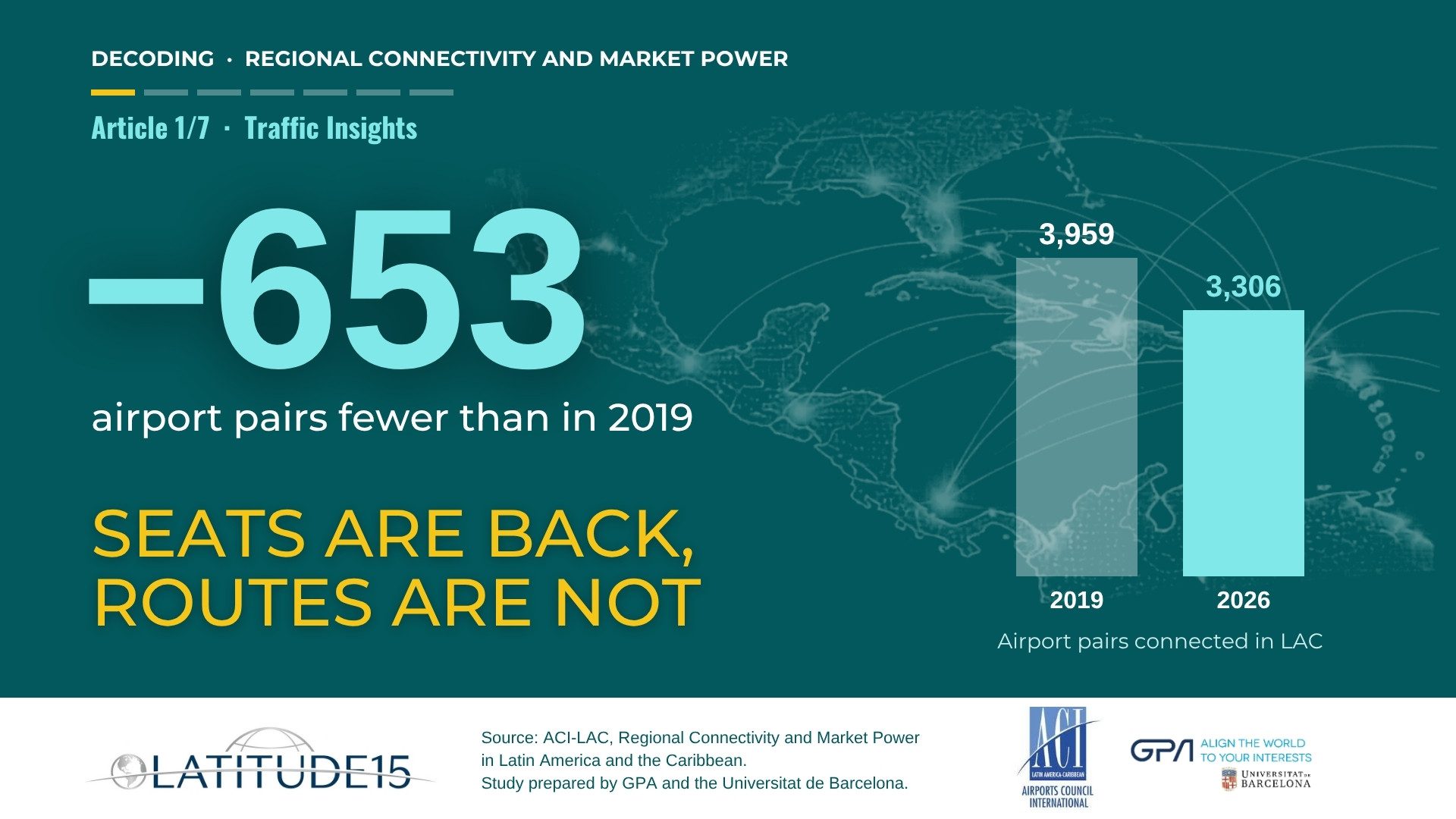
Guadeloupe ’s 2025 figures reveal a clear divide in the pace of regional recovery. Nearby markets — particularly the Northern Islands and the Martinique/French Guiana corridor — are showing greater resilience, while the wider Caribbean segment remains substantially below its 2019 traffic level.
For Guadeloupe Maryse Condé International Airport, the picture is therefore less one of uniform regional growth than of connectivity recovering at different speeds across distinct markets. The return of proximity traffic is significant, but it has not yet translated into a full restoration of the airport’s broader Caribbean network.