
International aviation law increasingly extends beyond accident investigation itself to include broader obligations related to family assistance, crisis coordination and humanitarian response mechanisms.
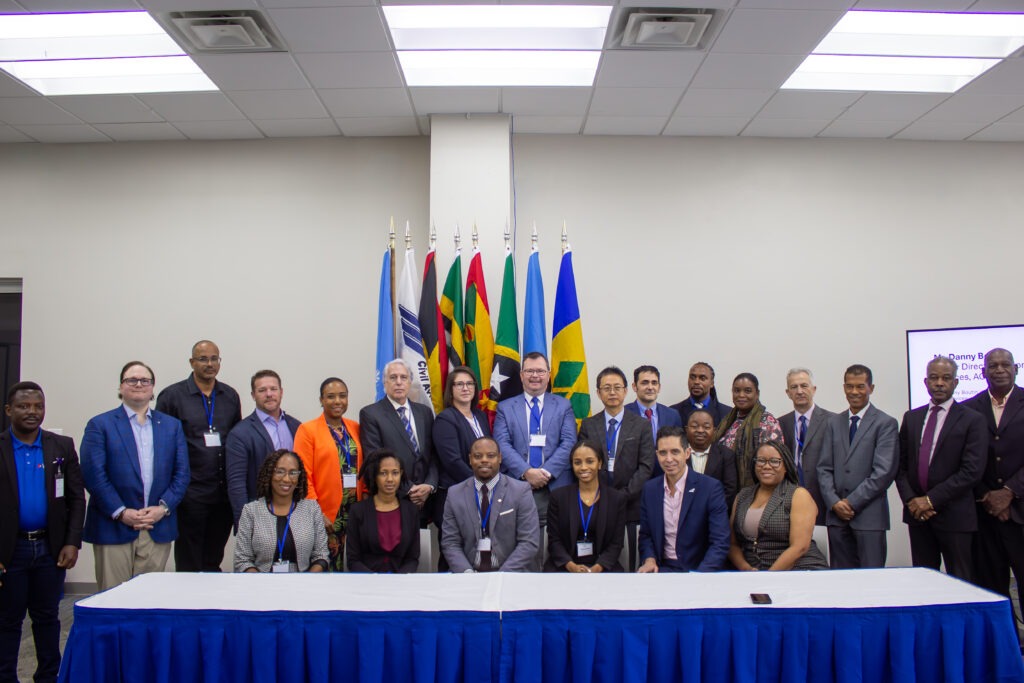
These issues were among the themes discussed during the First Legal Seminar on Emerging Legal Frameworks in Civil Aviation organized by the Eastern Caribbean Civil Aviation Authority on 13–14 November 2025 in Antigua and Barbuda.
One of the presentations delivered during the seminar, “States’ Legal Obligations to Provide Assistance to Aircraft Accident Victims and Their Families,” was presented by Fernando Camargo, Regional Officer at the International Civil Aviation Organization North American, Central American and Caribbean Office. The presentation examined the legal and institutional responsibilities placed on states following aviation accidents.
International aviation law extends beyond accident investigation
According to the presentation, international aviation obligations linked to accidents are rooted partly in Article 26 of the Chicago Convention, which establishes responsibilities related to accident investigation procedures.
Over time, however, international aviation frameworks have expanded to include broader obligations relating to the treatment of victims and assistance provided to their families.
The presentation highlighted that modern aviation response systems increasingly integrate humanitarian coordination, information management and institutional preparedness alongside technical investigation processes.
Family assistance becomes part of aviation governance
The seminar discussions emphasized that states are encouraged to establish formal systems to support victims and families following aviation accidents.
According to the presentation, these mechanisms may include communication support, coordination centres, information services and assistance throughout the response process.
The presentation also referenced the importance of maintaining coordinated communication with families while ensuring that support systems remain integrated into broader emergency response structures.
These obligations increasingly form part of wider aviation governance and crisis management frameworks used by states and aviation authorities.
Travel facilitation and crisis coordination
The presentation further outlined operational measures linked to international family assistance obligations.
These include facilitating emergency visas and travel documentation for family members and survivors travelling across borders following an aviation accident.
The framework also covers coordination related to the return of personal effects and human remains, as well as cooperation between government agencies, airlines, airports and diplomatic authorities involved in the response process.
The seminar highlighted how aviation accident response increasingly requires coordination across multiple institutional and operational levels.
ICAO standards and state responsibilities
Several international standards governing accident response were referenced during the seminar.
The presentation cited provisions contained in ICAO Annex 9, which addresses facilitation procedures and family assistance mechanisms, as well as ICAO Annex 13, which governs aircraft accident and incident investigation responsibilities.
The presentation also noted that states are encouraged to designate national coordinators responsible for activating family assistance systems and managing inter-agency coordination during accident response operations.
These frameworks form part of broader international efforts to standardize aviation crisis response procedures across jurisdictions.
Why preparedness matters for regional aviation systems
The issues discussed during the ECCAA seminar illustrated the growing importance of institutional preparedness within aviation governance systems.
For regional aviation markets, particularly those involving multiple island jurisdictions and international traffic flows, coordination between regulators, airports, airlines and public authorities remains an important component of accident response planning.
The discussions also highlighted how aviation emergency frameworks increasingly combine technical investigation procedures with humanitarian and operational coordination requirements.
Aviation accident response becomes part of broader governance systems
Discussions during the ECCAA legal seminar showed that aviation accident response frameworks now extend well beyond investigative responsibilities alone.
As international aviation systems become more interconnected, family assistance mechanisms, facilitation procedures and coordinated crisis management increasingly form part of broader aviation governance and safety oversight structures.