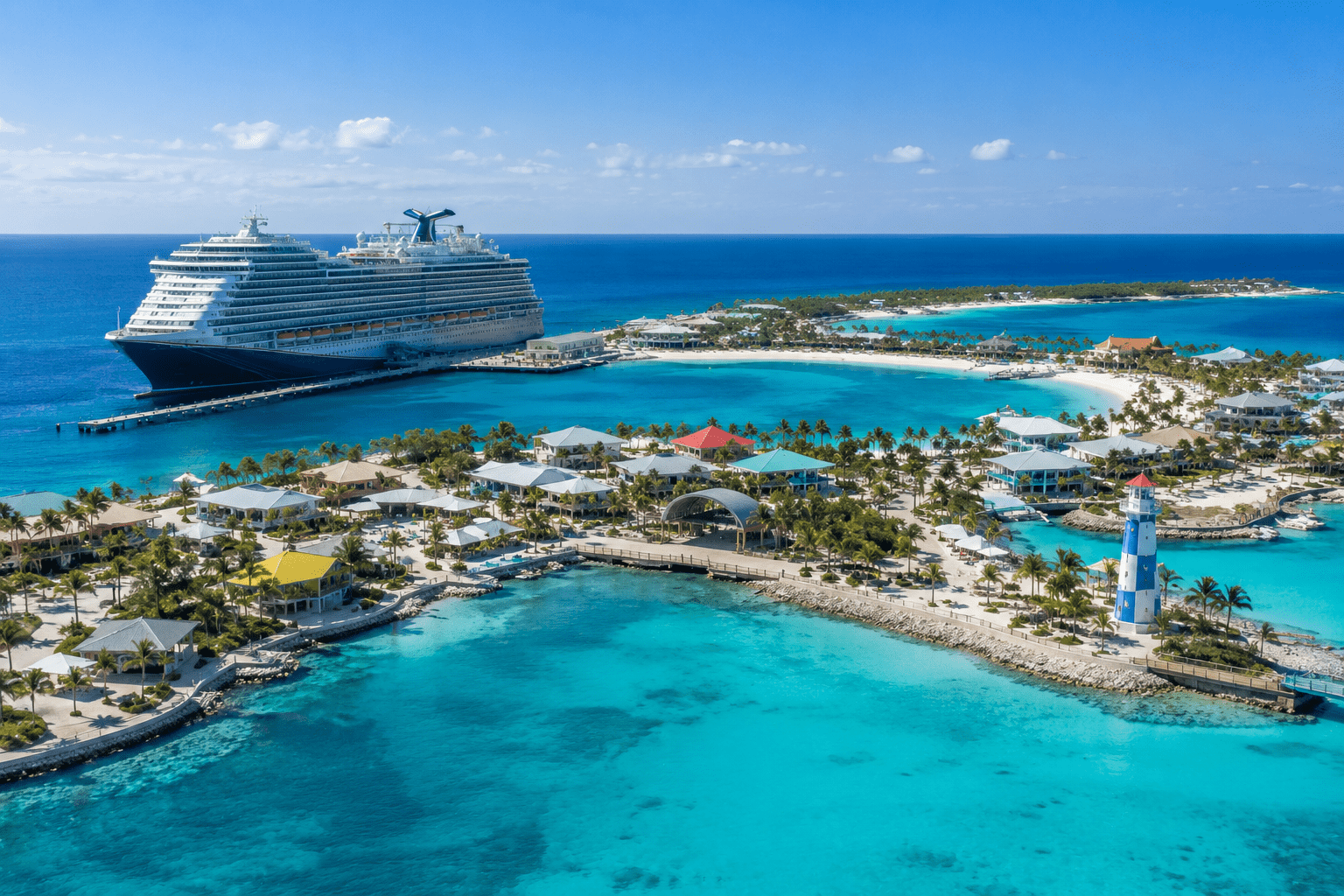
Across the Caribbean, exclusive cruise destinations are becoming increasingly central to how cruise operators structure passenger experience, infrastructure investment and long-term deployment strategy.
The latest Travel & Cruise Magazine published by the Florida-Caribbean Cruise Association (FCCA) repeatedly highlights projects such as Celebration Key, Great Stirrup Cay and Ocean Cay not simply as tourism expansions, but as highly integrated environments combining infrastructure, entertainment, transportation and destination management within cruise line-controlled ecosystems.
Taken together, these developments suggest that cruise operators may be moving beyond the traditional port-of-call model toward a more vertically integrated approach to Caribbean tourism — one that could gradually reshape how passenger flows, economic activity and destination competition evolve across the region.
Exclusive Destinations Are Expanding Beyond the Traditional Private Island Model
Private cruise destinations are not new to the Caribbean. However, the scale, sophistication and strategic positioning of recent projects highlighted throughout the publication suggest the model is evolving significantly.
Carnival Cruise Line’s Celebration Key development in Grand Bahama illustrates this shift particularly well. The project is presented as a large-scale destination ecosystem featuring:
- a mile-long white sand beach,
- the Caribbean’s largest freshwater lagoons,
- dedicated themed “portals,”
- retail and food environments,
- and integrated transportation and visitor infrastructure.
Similarly, Norwegian Cruise Line Holdings’ investments at Great Stirrup Cay include:
- a new two-ship pier,
- expanded welcome facilities,
- a tram transportation system,
- and a six-acre waterpark expected to open in 2026.
MSC Cruises continues expanding Ocean Cay as a destination specifically designed around the company’s own guest experience model and sustainability positioning.
The way these projects are framed throughout the publication is notable. They are no longer presented merely as optional attractions attached to cruise itineraries. Increasingly, they appear positioned as strategic infrastructure ecosystems capable of shaping deployment logic, passenger behavior and long-term brand differentiation.
Cruise Operators Are Increasingly Prioritizing Operational Control
One of the clearest underlying themes emerging from the publication is the growing operational value cruise operators attach to controlled destination environments.
Traditional Caribbean cruise calls involve multiple variables largely managed outside cruise line control:
- transportation systems,
- traffic conditions,
- passenger circulation,
- retail interactions,
- excursion logistics,
- local infrastructure,
- and security coordination.
Exclusive destinations allow cruise operators to manage many of these variables internally.
This creates several operational advantages repeatedly reflected throughout the publication’s broader discussions around passenger experience and deployment planning.
Controlled destination environments allow operators to optimize:
- passenger flow,
- shore-to-ship movement,
- excursion timing,
- retail capture,
- staffing,
- and experience consistency.
The publication’s feature on modern cruise terminals reinforces this broader industry trend toward reducing operational friction and creating increasingly seamless passenger environments.
Within this context, exclusive destinations appear less like isolated resort projects and more like extensions of the cruise ship itself — carefully designed environments intended to maintain brand consistency from embarkation through shore experience.
Passenger Spending Capture Is Becoming Increasingly Strategic
Another major implication emerging from the publication concerns how tourism spending circulates within these evolving destination models.
Traditional cruise destinations typically distribute passenger spending across a broad local ecosystem involving:
- taxis,
- restaurants,
- excursion operators,
- retail shops,
- beaches,
- and independent tourism businesses.
Exclusive destinations potentially alter that circulation model by concentrating larger portions of passenger activity within cruise line-managed environments.
The publication does not explicitly frame this as a conflict. In fact, several executives emphasize the importance of maintaining local integration.
Christine Duffy, President of Carnival Cruise Line, notably stresses that Celebration Key is designed differently from fully isolated private island concepts because guests will still be encouraged to participate in excursions and explore the wider Bahamian destination.
That distinction is important because it reflects growing industry sensitivity around how exclusive developments interact with surrounding economies.
Still, the operational logic behind these projects suggests cruise operators increasingly value environments where they can exercise greater influence over:
- retail ecosystems,
- transportation,
- guest movement,
- food and beverage operations,
- and overall experience delivery.
As these models expand, questions surrounding how tourism value is distributed across destinations may become increasingly important for regional stakeholders.
Traditional Destinations May Face Growing Competitive Pressure
The expansion of exclusive destinations may also be reshaping competitive dynamics across the Caribbean.
Historically, cruise destinations largely competed against one another through:
- natural appeal,
- infrastructure,
- accessibility,
- and tourism experiences.
Now, traditional destinations increasingly compete alongside highly controlled environments specifically designed around cruise operational priorities and curated guest expectations.
This could create additional pressure on destinations already investing heavily in:
- terminal modernization,
- transportation infrastructure,
- tourism redevelopment,
- and experience enhancement.
The publication repeatedly emphasizes that cruise operators increasingly prioritize:
- seamless experiences,
- operational efficiency,
- differentiated attractions,
- and passenger satisfaction.
Exclusive destinations are specifically engineered around those objectives.
For traditional destinations, this may increase the importance of differentiating through elements less easily replicated within controlled cruise environments, including:
- cultural authenticity,
- urban experiences,
- local entrepreneurship,
- heritage,
- gastronomy,
- and broader territorial diversity.
In this sense, the rise of exclusive destinations may not simply intensify competition between cruise operators and destinations, but also encourage destinations to rethink how they position themselves within the regional tourism landscape.
Caribbean Cruise Geography May Be Gradually Evolving
Taken together, the publication suggests that exclusive cruise destinations are becoming increasingly influential within the structure of Caribbean cruise tourism.
These projects combine:
- infrastructure investment,
- operational integration,
- tourism development,
- passenger experience design,
- and deployment strategy within unified ecosystems directly linked to cruise brands.
At the same time, the growing scale of these developments may gradually influence how cruise traffic circulates across the region.
Destinations capable of integrating effectively into these evolving deployment models may strengthen their position within cruise networks. Others may face increasing pressure to compete through specialization, partnership strategies or differentiated tourism experiences.
The publication does not suggest that traditional Caribbean destinations are being displaced. Cruise executives throughout the issue continue emphasizing collaboration with governments and local stakeholders.
However, the expansion of exclusive destination ecosystems increasingly points toward a cruise industry where control over infrastructure, passenger experience and tourism environments may become more central to long-term competitive strategy.
As these projects continue expanding across the Caribbean, they may gradually reshape not only how passengers experience cruise tourism, but also how the geography of the regional cruise economy itself is organized.