Colombia is accelerating preparations for a lower-carbon maritime sector as authorities, industry stakeholders and international partners move into the next phase of planning around shipping emissions, port infrastructure and alternative fuels.
Last week, Colombia’s maritime authority, Dirección General Marítima (DIMAR), convened a national workshop alongside the International Maritime Organization’s GreenVoyage2050 Programme and MTCC Latin America to define priority actions for the country’s future National Action Plan (NAP) on maritime decarbonisation. While the initiative remains at a planning stage, the discussions already point to a broader strategic ambition: positioning Colombia within the emerging ecosystem of cleaner shipping and low-carbon maritime logistics.
The discussions brought together representatives from ports, shipping, government, energy and academia around a common challenge increasingly shaping global maritime policy: how to adapt national maritime systems to future IMO climate requirements while maintaining competitiveness.
A broader maritime transition strategy is taking shape
The workshop highlighted that Colombia’s approach goes beyond compliance alone. Stakeholders focused on how regulation, energy infrastructure and port development could evolve together to support both domestic and international shipping.
Among the priorities identified were the development of a more flexible regulatory framework for alternative fuels, stronger coordination between maritime and energy sectors, and expanded technical capacity across the industry. Participants also stressed the importance of data-driven planning and emissions monitoring as the country prepares a baseline assessment of its maritime sector.
DIMAR Director General Admiral John Fabio Giraldo described the initiative as a “structured and coordinated approach to maritime decarbonization”, centred on institutional alignment and long-term preparedness for future global standards.
The strategy reflects a broader shift now visible across several emerging maritime economies. Rather than waiting for international regulation to force adaptation, countries are increasingly trying to position themselves early within the future low-carbon shipping landscape.
Ports and alternative fuels move to the centre of planning
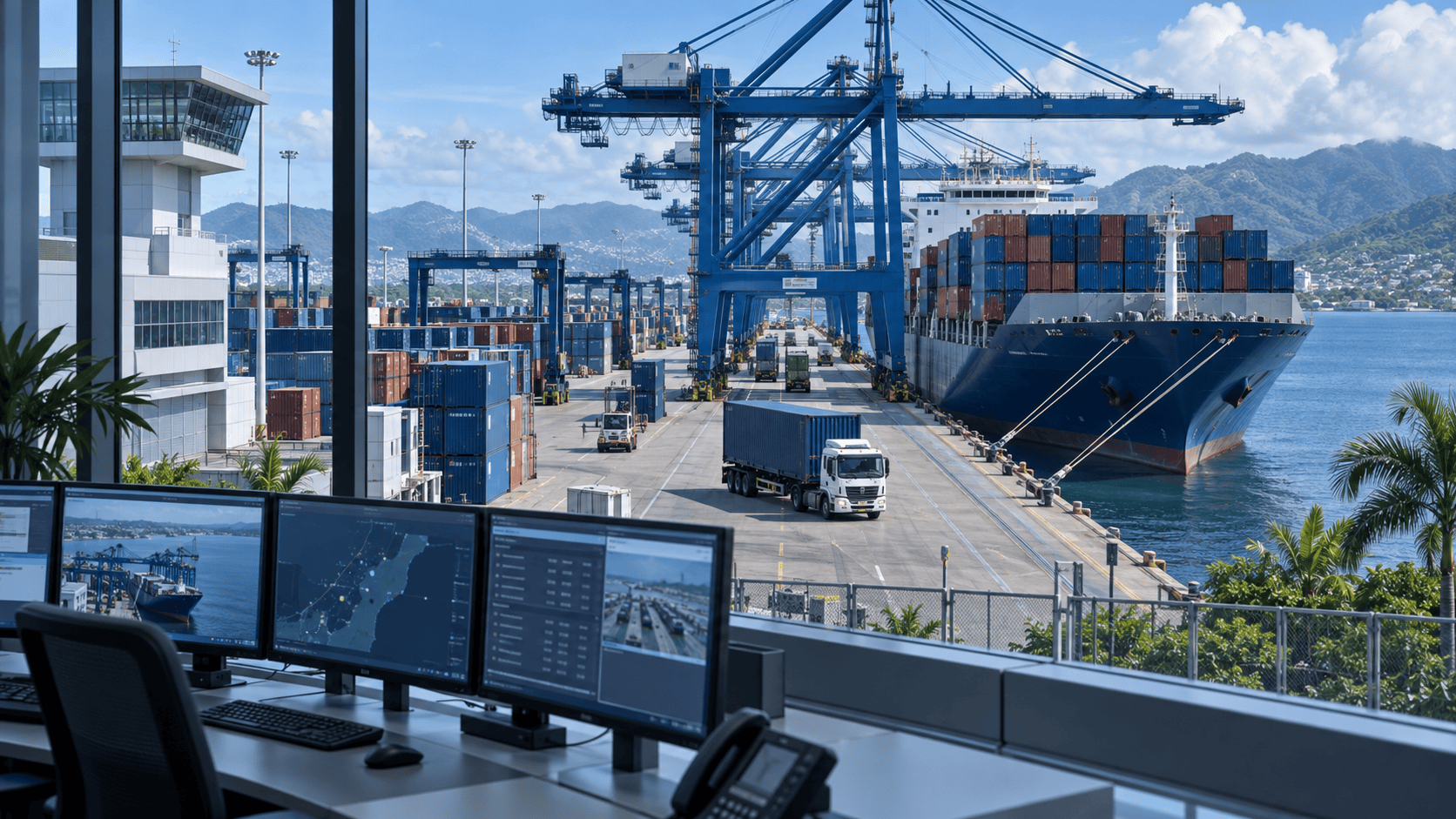
One of the clearest signals emerging from the discussions was the growing importance of ports within decarbonisation strategies.
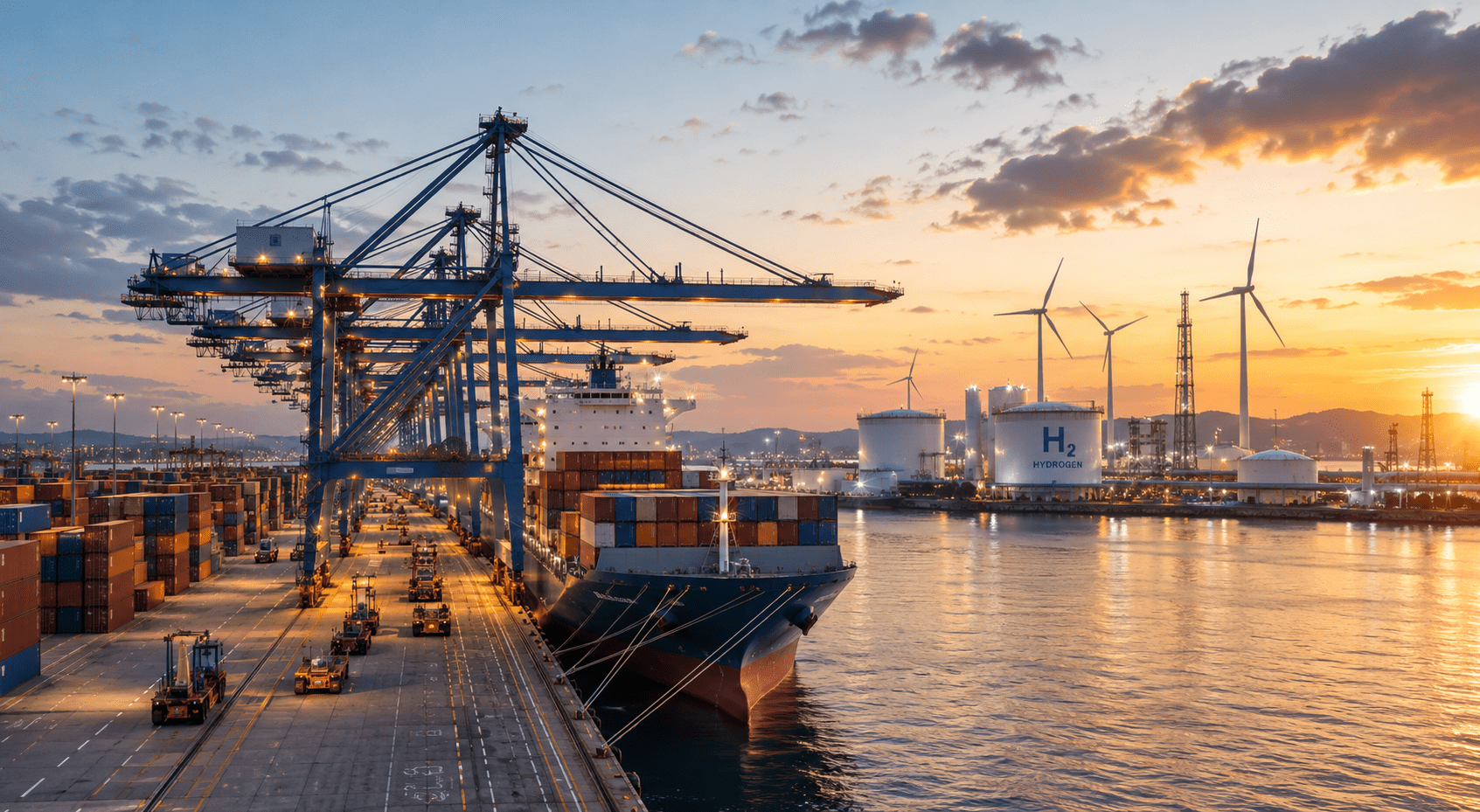
Port electrification, energy efficiency improvements and cleaner ship-port interfaces were all identified as priority areas. These measures are becoming increasingly important as ports worldwide prepare for tighter emissions requirements and the gradual expansion of low-emission maritime corridors.
The Colombian discussions also placed significant emphasis on alternative fuels, particularly biofuels and green hydrogen. Stakeholders highlighted the need for dedicated roadmaps, targeted incentives and closer alignment with national energy planning to scale future production and adoption.
For Colombia, the issue is not only environmental. The country is also examining how maritime decarbonisation could support wider industrial and economic opportunities linked to renewable energy and future clean fuel markets.
Subaskar Sitsabeshan, Programme Officer at IMO’s GreenVoyage2050 Programme, noted that Colombia is “uniquely positioned to link its renewable energy ambitions with maritime decarbonization”, particularly through a holistic approach covering shipping, ports and international corridors.
A regional positioning play beyond compliance
The initiative also reflects a wider regional dynamic now emerging across Latin America and parts of the Caribbean.
As the IMO’s decarbonisation framework continues to evolve, maritime economies are increasingly aware that infrastructure readiness, regulatory alignment and fuel availability could become competitive advantages over the coming decade.
For ports and shipping corridors across the wider Caribbean basin, the transition could eventually reshape investment flows, bunkering activity and logistics networks. Countries capable of adapting earlier may be better positioned to attract future green shipping activity and participate in new maritime energy value chains.
Colombia’s participation in the second phase of the GreenVoyage2050 Programme places it alongside countries such as Mexico, Indonesia, Nigeria, Senegal and South Africa, all of which are working on national maritime decarbonisation pathways supported by IMO technical cooperation.
From policy ambition to implementation
The next phase of Colombia’s work will focus on stakeholder consultations and the development of a national baseline assessment aimed at identifying emissions profiles, infrastructure gaps and priority actions.
The process remains complex. Maritime decarbonisation requires coordination across shipping operators, ports, fuel suppliers, regulators and energy systems — often with significant investment requirements and uncertain technology timelines.
Still, the discussions in Bogotá suggest that Colombia is seeking to move early in a transition that is rapidly becoming both an environmental and economic issue for global shipping.
Beyond the technical agenda, the GreenVoyage2050 delegation also met with students in Bogotá to discuss future careers linked to green shipping, alternative fuels and environmental management — another indication that maritime decarbonisation is increasingly being viewed not only as an infrastructure challenge, but also as a long-term industrial transformation.