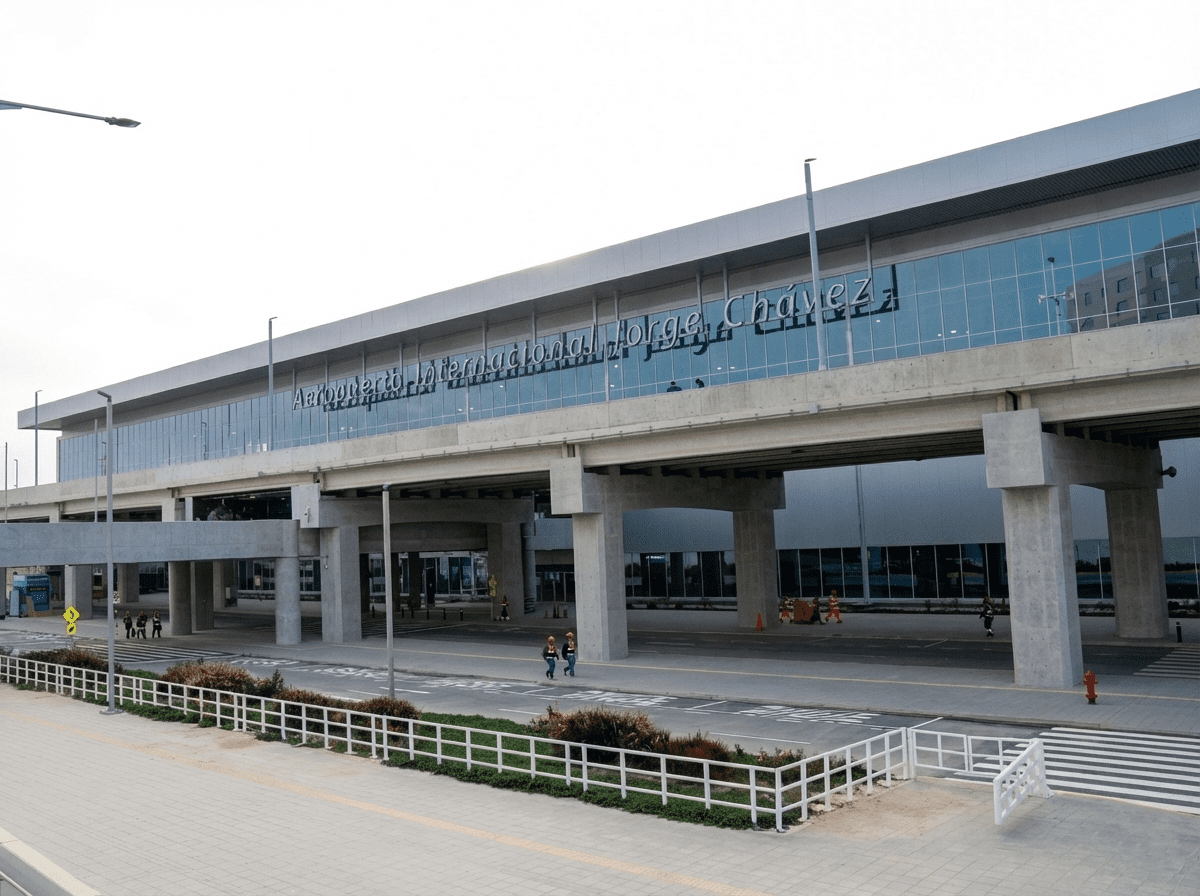
Jorge Chavez International Airport entered 2026 with another quarter of sustained growth, but beyond the traffic figures, the airport’s latest developments point to something larger taking shape in Lima. Across operations, connectivity, passenger experience, sustainability and infrastructure, Peru’s main gateway is increasingly positioning itself as a multi-dimensional regional platform rather than simply a high-volume airport.
A hub growing beyond domestic demand
During the first quarter of 2026, the airport handled 6.36 million passengers, up 2.2% compared with the same period last year. International traffic remained the main growth driver, reaching 2.68 million passengers (+4.2%), while connecting traffic climbed 5.4% to nearly 488,000 passengers. Together, the figures support Lima’s ambition to strengthen its role as a connection point between the northern and southern parts of the continent.
That evolution is becoming increasingly visible in the airport’s airline network. Carriers including United Airlines, Air France, Air Transat, LEVEL, Arajet, Flybondi and Sky Airline continue expanding or consolidating their presence in Lima, strengthening the airport’s connectivity profile across North America, Europe and Latin America.
For the airport operator, the latest numbers also highlight a broader diversification of activity. Aircraft movements rose 8.6% during the quarter, supported by strong growth in cargo operations (+21.3%) and executive aviation (+20.7%). Air cargo volumes reached 66,603 metric tons, with imports surging 20.6%, a trend closely linked to the continued expansion of e-commerce and faster regional logistics flows.
The cargo segment is becoming increasingly strategic for major Latin American hubs. Airports are no longer competing solely on passenger volumes, but also on their ability to integrate logistics, trade connectivity and operational resilience into a broader regional platform. Lima’s latest figures suggest Jorge Chavez is continuing to strengthen its positioning in that direction.
Operational efficiency becomes part of the competitive strategy
Operational performance is also becoming a more visible component of the airport’s positioning. During the quarter, Jorge Chavez achieved an on-time performance rate of 86.21%, improving by more than four percentage points compared with the same period in 2025.
At the same time, Lima Airport expanded its check-in infrastructure with a new island incorporating 30 additional kiosks, bringing the airport’s total to 123 kiosks across domestic and international operations. The airport says the expansion is intended to reduce waiting times and optimize passenger flows during peak activity periods.
These investments may appear incremental individually, but together they reflect a broader trend among emerging regional hubs: improving passenger fluidity and reducing friction throughout the terminal experience. As Latin American gateways increasingly compete on operational reliability and passenger processing efficiency, infrastructure modernization is becoming a key differentiator alongside route development.
The airport is also continuing to diversify its infrastructure offering. Earlier this year, Lima Airport launched a tender process for a new executive aviation terminal at the former Faucett Avenue facility, reinforcing the airport’s ambition to accommodate different traffic segments while expanding non-traditional aviation activity.
Sustainability and technology move into the passenger experience
Sustainability and technology are also beginning to play a more visible role inside the passenger journey itself. Lima Airport recently introduced IRBin, an artificial intelligence-powered recycling robot developed by Peruvian startup Cirsys. Installed in both domestic and international passenger areas, the system is designed to improve PET bottle recycling through an interactive interface operating 24/7.
While relatively modest in operational scale, the initiative reflects a wider shift taking place across the airport sector. Environmental strategies are increasingly moving beyond backend infrastructure and becoming integrated directly into the terminal experience itself. Airports are using technology not only to optimize waste management, but also to make sustainability initiatives more visible and accessible to passengers.
Peru is also using the airport as a tourism and identity platform
Jorge Chavez International Airport was recently nominated once again at the World Travel Awards South America 2026 alongside several major Peruvian tourism assets. Beyond the awards themselves, the nominations highlight how Lima Airport is increasingly being presented as an extension of Peru’s tourism identity.
Rather than functioning solely as a transit facility, the airport is positioning itself as an experiential gateway to the country. Peruvian gastronomy, local brands, cultural references and upgraded passenger spaces are becoming part of the airport’s international image strategy, reflecting a growing convergence between aviation infrastructure and national tourism branding.
The airport’s ecosystem also received additional nominations through Costa del Sol Wyndham Lima Airport and airport lounge The Club LIM, reinforcing Lima’s ambition to elevate the overall passenger environment around its main gateway.
A broader transformation of regional gateways
The developments seen in Lima mirror a wider transformation occurring across several major Latin American gateways. Airports are no longer viewed only as transportation infrastructure. They are increasingly evolving into economic platforms, logistics nodes, tourism showcases and technology-enabled passenger environments simultaneously.
For Jorge Chavez International Airport, the first quarter of 2026 suggests that traffic growth is now only one part of a broader strategic transition. The airport’s current trajectory appears increasingly defined by its ability to combine connectivity, operational performance, infrastructure diversification, passenger experience and visible sustainability into a more competitive regional hub model.