As pressure builds on the global shipping industry to reduce emissions, the Caribbean is approaching a critical phase in its own maritime energy transition. Cruise operators, cargo carriers and port authorities are all facing growing expectations around decarbonisation, yet the region’s operational realities leave little room for expensive or highly complex solutions.
In that context, biofuels are increasingly emerging as the most practical and immediately scalable pathway for Caribbean shipping. Recent industry discussions highlighted in Caribbean Maritime Magazine point to biofuels as one of the few low-carbon fuel options capable of fitting the region’s current infrastructure, fleet profile and operational constraints.
Unlike more experimental alternatives such as ammonia or hydrogen, biofuels offer a transition route that can begin now rather than decades into the future.
Why biofuels are gaining traction
One of the biggest advantages of biofuels is operational compatibility.
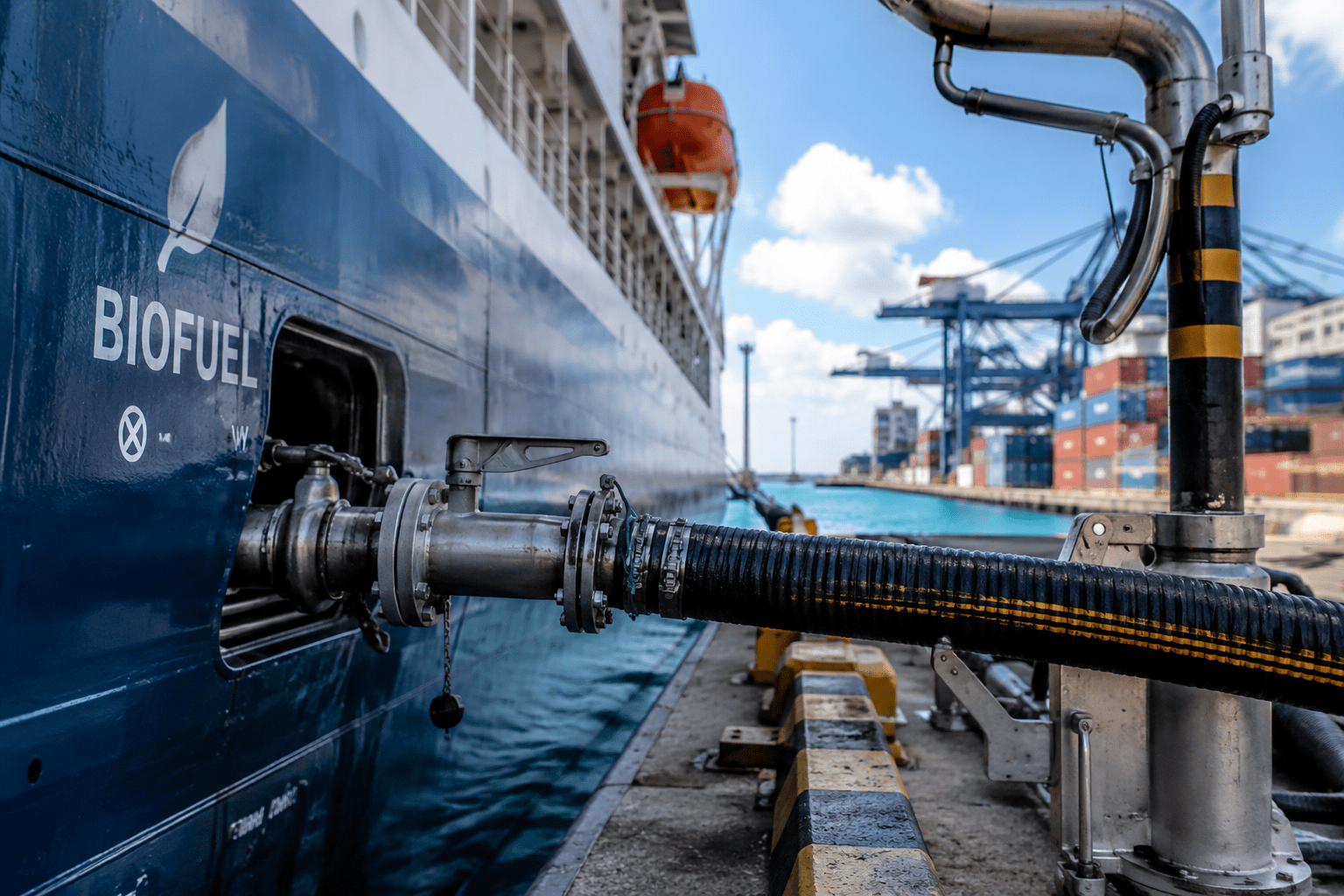
Many biofuel blends can be used as “drop-in” fuels, meaning vessels can partially or fully transition without major engine modifications or complete infrastructure overhauls. For Caribbean ports — where investment capacity and terminal scale vary considerably — that distinction is important.
The region’s maritime industry is highly fragmented, with a mix of cruise ports, inter-island cargo operations, bunkering services and smaller multi-purpose terminals. Deploying entirely new fuel ecosystems across that landscape would require massive capital expenditure, new safety frameworks and long implementation timelines.
Biofuels offer a far more achievable starting point.
When sourced from sustainable feedstocks such as waste oils or agricultural residues, they also provide measurable lifecycle emissions reductions while helping lower sulphur emissions and improve local air quality around port areas.
For environmentally sensitive island economies heavily dependent on tourism and coastal ecosystems, these environmental gains carry additional strategic value.
Cruise shipping could accelerate adoption
The cruise sector may become one of the strongest drivers of alternative fuel adoption in the Caribbean.
The region remains the world’s largest cruise market, and operators are facing mounting pressure from regulators, investors and travelers to demonstrate credible decarbonisation strategies.
That pressure increasingly extends beyond vessels themselves and into the ports they serve.
Caribbean ports capable of supporting lower-emission bunkering operations may strengthen their attractiveness within future cruise deployment strategies, particularly as major cruise groups intensify ESG commitments and carbon reduction targets.
For destinations that market themselves around marine environments, sustainability branding is also becoming commercially relevant. Cleaner maritime operations are gradually shifting from being a reputational bonus to a competitive expectation.
The infrastructure challenge remains manageable
The transition toward biofuels still requires preparation, but the scale of adaptation remains considerably more manageable than many alternative fuel scenarios currently discussed within global shipping.
Ports will still need:
- segregated storage capacity,
- certified handling procedures,
- trained personnel,
- and stronger fuel traceability systems.
However, these upgrades can often be integrated progressively into existing bunkering and fuel supply operations rather than requiring entirely new industrial ecosystems.
That distinction matters for Caribbean ports balancing modernization ambitions against limited financial resources and relatively modest cargo volumes.
By comparison, fuels such as ammonia or hydrogen introduce far more demanding storage, regulatory and safety requirements. Methanol remains promising for some future applications, but regional supply availability and infrastructure readiness are still limited.
Biofuels therefore occupy a unique position within the Caribbean maritime transition: not necessarily the final destination, but potentially the first truly deployable solution at regional scale.
A strategic opportunity for regional ports
Beyond emissions reduction, biofuels could also create a new layer of maritime competitiveness across the Caribbean.
As shipping lines and cruise operators seek cleaner fuel pathways, ports capable of developing reliable low-carbon bunkering services may strengthen their strategic relevance within regional and transatlantic trade networks.
Some Caribbean ports could gradually position themselves as alternative-fuel service hubs, particularly for vessels operating between the Americas and Europe. That opportunity becomes even more relevant as carbon pricing mechanisms and environmental reporting requirements continue expanding internationally.
The shift also opens opportunities for regional collaboration around:
- fuel standards,
- pilot projects,
- training,
- certification,
- and shared regulatory frameworks.
For a region often constrained by fragmented maritime systems, the energy transition could unexpectedly become a catalyst for greater operational coordination.
A pragmatic transition pathway
The Caribbean maritime sector does not need to solve the entire decarbonisation challenge overnight.
What the region increasingly needs are practical, scalable and commercially realistic transition steps that can reduce emissions without destabilizing already fragile supply chains. In that regard, biofuels are gaining attention not because they are perfect, but because they are achievable.
For many Caribbean ports and operators, that may ultimately prove more important.
In the coming years, the success of the region’s maritime transition may depend less on futuristic fuel ambitions and more on the ability to implement realistic solutions consistently, safely and at operational scale.