Air transport supported USD 160 million in economic activity and 5,200 jobs in Guyana in 2023, according to IATA’s latest country assessment. The sector’s total contribution was equivalent to 1% of national GDP, reflecting not only the activity generated by airlines and airports, but also the wider effects of tourism, supply chains and employee spending.
Direct aviation activity accounted for less than half of that total. Airlines, airports, air navigation service providers and related businesses generated USD 78.9 million, equivalent to 0.5% of GDP, while directly employing 2,000 people. The difference illustrates how aviation’s economic footprint extends beyond the companies operating aircraft and airport infrastructure.
Direct aviation activity generates USD 78.9 million
Airlines represented the largest direct contributor to aviation-related output in Guyana. They generated USD 45.7 million and directly supported around 700 jobs in 2023.
Airports, air navigation service providers and civil aviation manufacturing activities contributed a further USD 33.2 million while supporting 1,300 jobs. Together, these two segments accounted for the sector’s USD 78.9 million direct contribution and its 2,000 direct employees.
The figures reveal a difference between employment and economic output across the industry. Airport and related activities supported nearly twice as many direct jobs as airlines, while airlines produced the higher contribution to GDP.
IATA’s total estimate of USD 160 million also incorporates benefits generated outside the direct aviation sector. These include expenditure across the supply chain, spending by aviation employees and tourism activity supported by air travel. The report does not provide a separate breakdown for each indirect and induced component, but their inclusion almost doubles the sector’s measured contribution to the national economy.
Tourism broadens aviation’s economic footprint
Tourism supported by air transport contributed an estimated USD 35 million to Guyana’s GDP and sustained approximately 1,800 jobs in 2023.
This employment figure is close to the 2,000 jobs generated directly by aviation, demonstrating how the benefits of international air access spread into activities outside airports and airline operations.
International visitors were also estimated to spend USD 34.3 million annually on goods and services supplied by local businesses. These purchases can support a range of sectors linked to the visitor economy, including accommodation, food services, ground transport and retail.
The USD 35 million contribution to GDP and the USD 34.3 million in visitor spending should not be added together, however. They measure different aspects of tourism’s economic role: one estimates value added to the economy, while the other reflects expenditure by international visitors.
The data nevertheless underline the close relationship between aviation and tourism development. For a market heavily dependent on international travel, the availability of air services determines not only how visitors reach the country, but also how tourism-related spending is distributed across local businesses.
Cargo and accessibility extend aviation’s strategic value
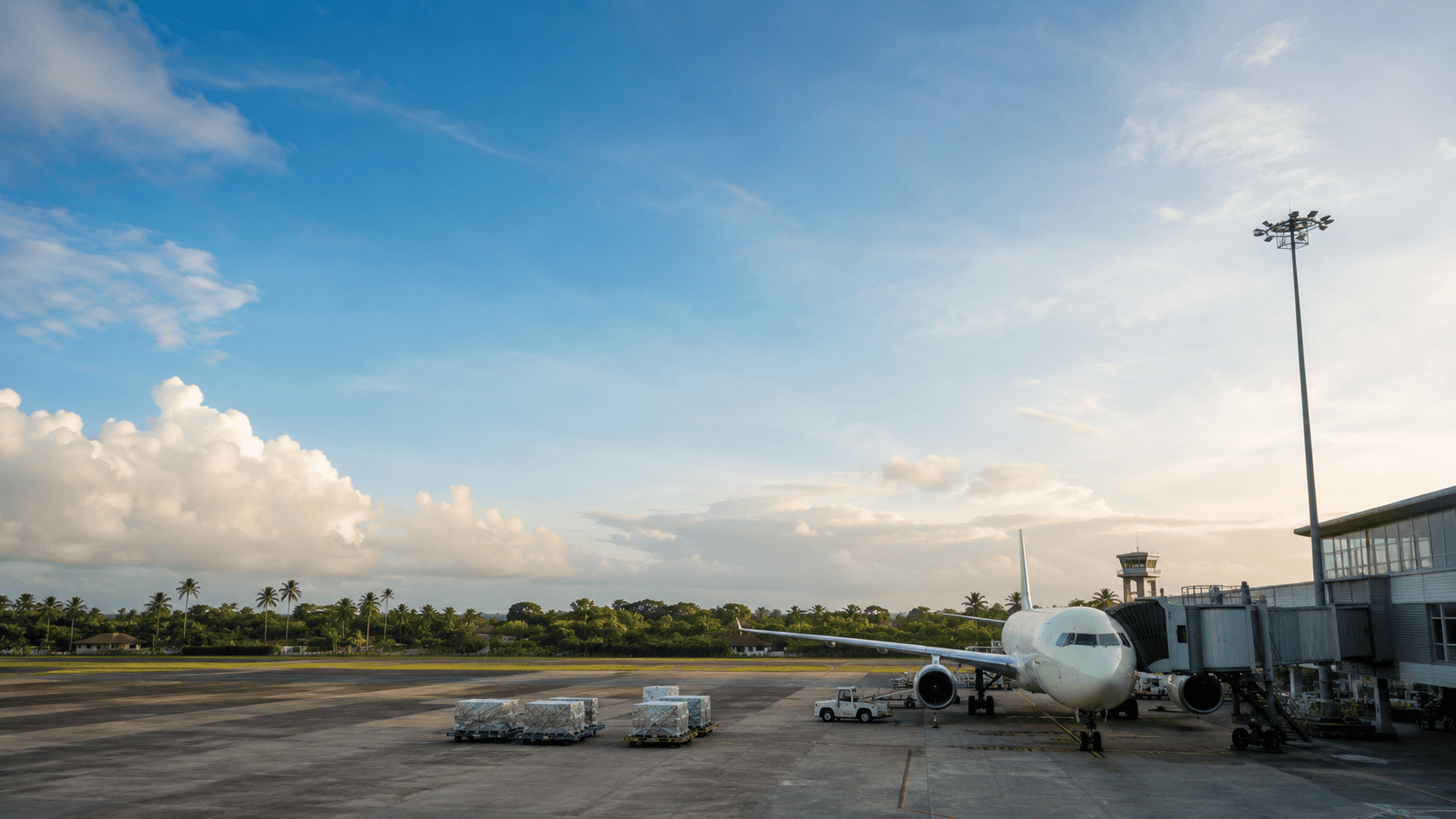
Guyana’s airports handled 11,300 tonnes of air cargo in 2023, placing the country as the world’s 120th-largest air freight market. The country was also ranked as the 117th-largest trade market in the data cited by IATA.
The report does not identify the principal goods transported, the routes used or the value of the cargo. The volume should therefore be viewed as a broad indicator of air freight activity rather than a detailed measure of its contribution to Guyana’s trade.
Air cargo can nevertheless play a strategic role by providing rapid access to international markets, supporting time-sensitive supply chains and enabling the movement of emergency and humanitarian goods. Its wider economic value may therefore be greater than its share of total national freight volumes alone would suggest.
The economic benefits of aviation also depend on whether residents can access air travel. IATA estimates that the local population needed to work an average of 5.2 days to afford a plane ticket in 2023, based on average fares and GDP per capita.
Guyana recorded an estimated 584 air trips per 1,000 inhabitants during the same year. These figures offer an indication of aviation use and affordability, although national averages do not capture differences in income or purchasing power between households.
Aviation’s direct contribution remains limited to 0.5% of Guyana’s GDP, but its total impact is twice as large when tourism, supply chains and employee spending are included. Its strategic value therefore extends beyond airport activity, providing access to international visitors, commercial markets and essential flows of goods.