On 10 February 2026, off the coast of Le Carbet and Bellefontaine in Martinique, the French Armed Forces in the Antilles conducted POLMAR 26, a maritime pollution response exercise organized under the ORSEC maritime emergency framework. Beyond the institutional announcement, the real significance of the operation lies in what it demonstrates: not a routine drill, but a full-scale test of crisis response capacity in the event of a tanker-related pollution incident. The scenario simulated a vessel in distress generating an oil spill off the coast, a situation representative of high-impact maritime emergencies.
A highest-level exercise designed for major incidents
POLMAR 26 was classified as a Level 3 operation, the highest intervention level in maritime emergency response grading. This category corresponds to incidents requiring extensive personnel, technical assets and potentially prolonged operational engagement. As part of the exercise, a crisis management team was activated within the Martinique prefecture, tasked with coordinating aerial, maritime and land-based resources.
Such activation goes well beyond technical training. It tests command structures, decision-making chains and information flow under realistic conditions, factors that ultimately determine real-world effectiveness during an actual maritime emergency.
Multi-agency coordination at the core of the response model
The operation brought together military, civilian and scientific actors, illustrating the integrated French doctrine for state action at sea. Participating entities included the French Navy, SNSM sea rescue services, the CROSS Antilles-Guyane coordination center, CEPPOL, CEDRE, the maritime authority, the Martinique Marine Park and the coastal reserve unit.
All assets operated under the single authority of the Prefect of Martinique acting as Director of Maritime Rescue Operations. This centralized command structure is a key efficiency driver, minimizing jurisdictional overlap, accelerating decision-making and ensuring tactical coherence during complex incidents.
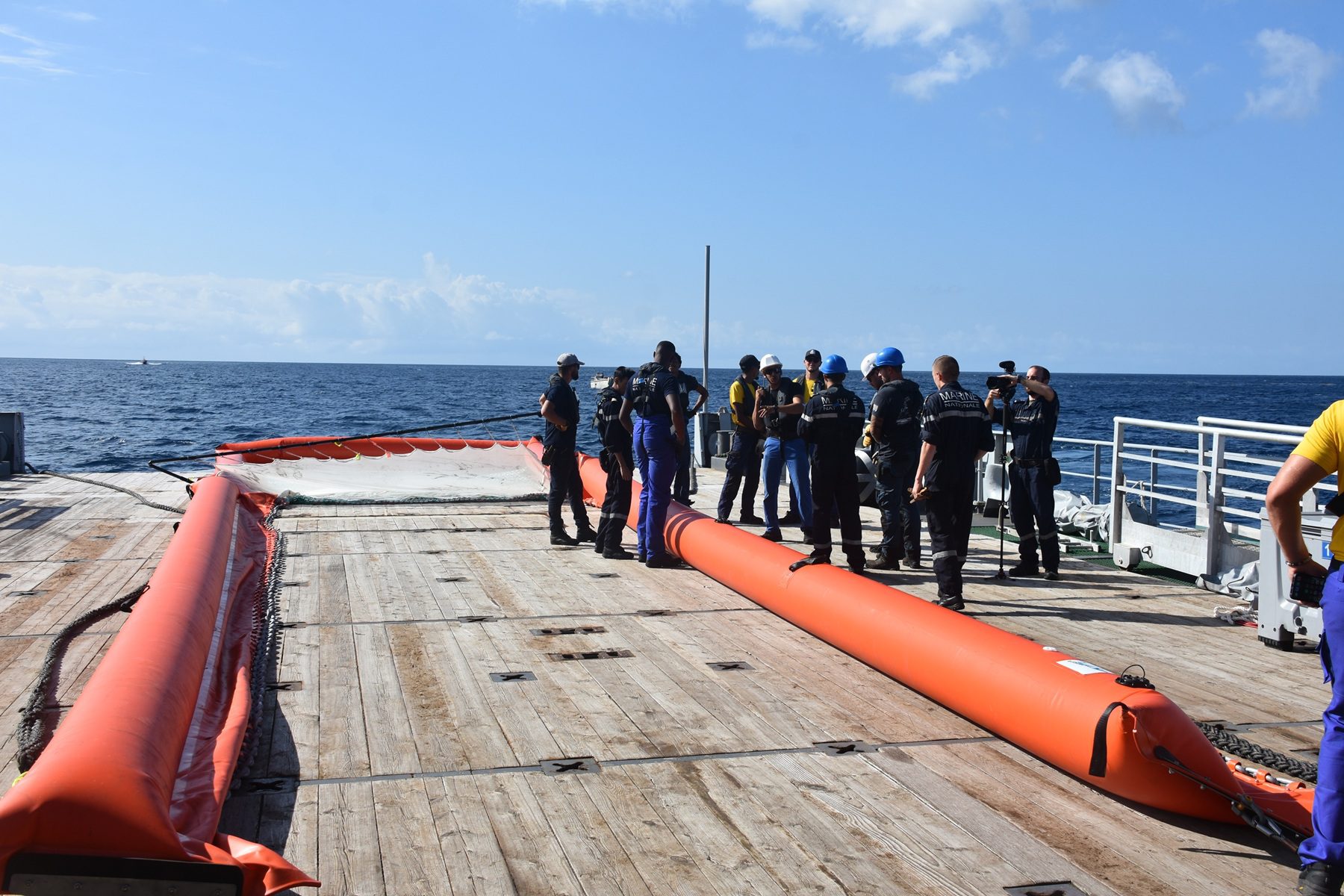
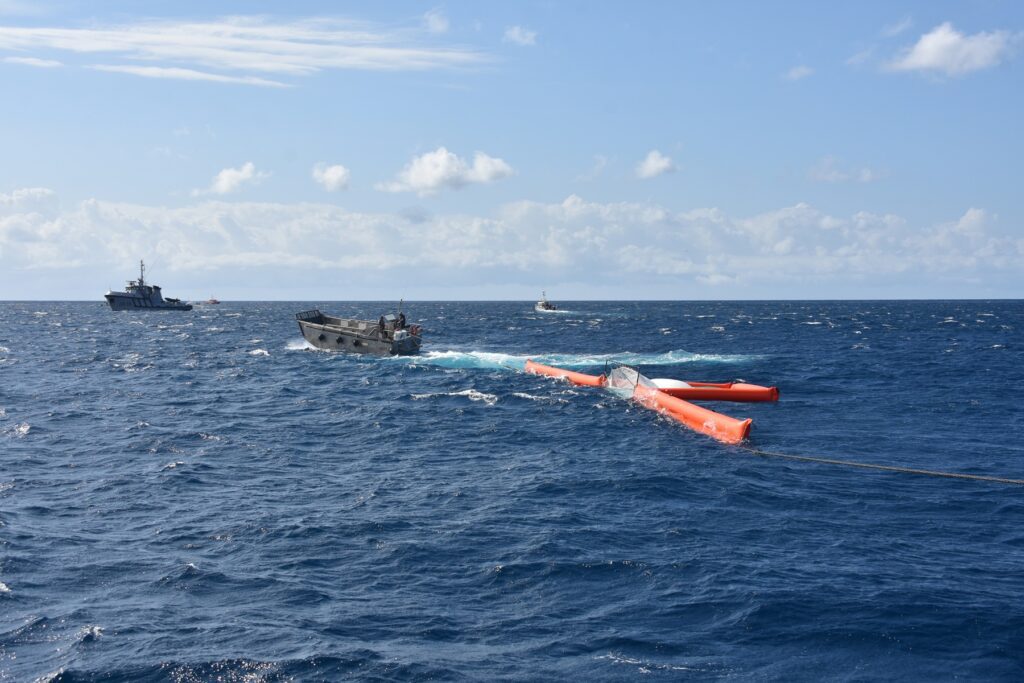
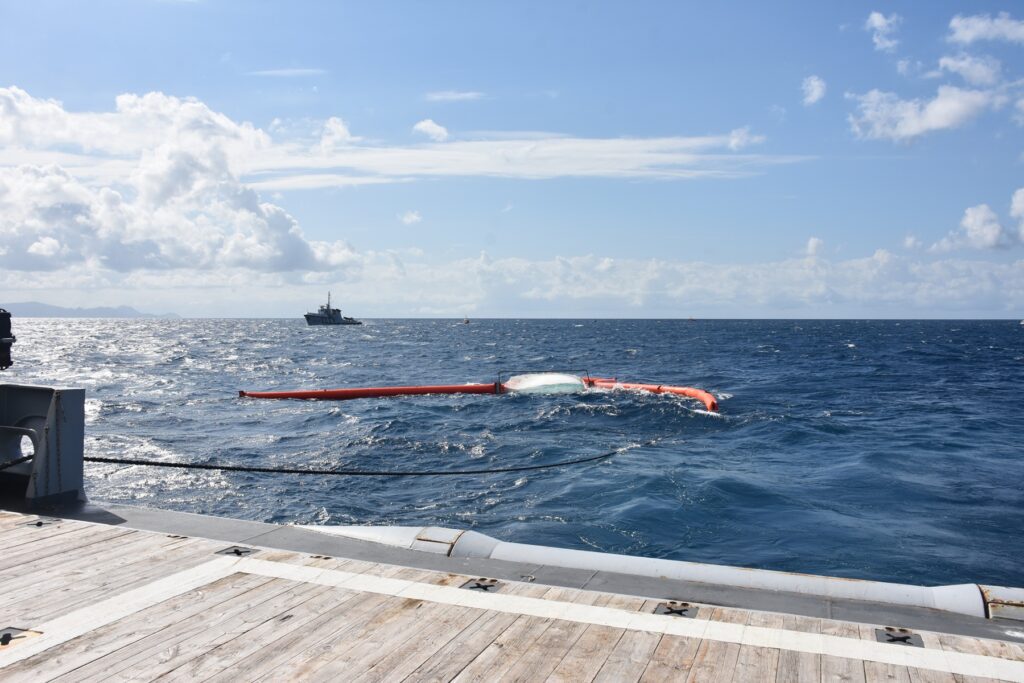
From a technical standpoint, the exercise deployed representative response assets. The overseas support and assistance vessel Dumont d’Urville and two SNSM boats deployed THOMSEA anti-pollution trawls, equipment described as distinct from conventional offshore containment booms.
The simulated spill was visualized using green fluorescein dye, a biodegradable and non-toxic marker that allows responders to track pollutant dispersion without environmental impact. This method enables realistic testing of detection, tracking and containment procedures.
ORSEC maritime as the structural backbone of response capability
The exercise was conducted within the framework of the ORSEC maritime Antilles system, which defines the overall organization of emergency response at sea based on identified risks. The framework covers three main incident categories: search and rescue operations, assistance to vessels in difficulty, and marine pollution response.
Designed as an adaptive system, ORSEC is regularly validated through exercises and real-world incidents and is built on continuous risk assessment. This structured architecture is essential for ensuring rapid intervention and effective coordination between agencies.
An operational indicator for maritime stakeholders
Beyond the drill itself, POLMAR 26 provides a concrete indicator of regional preparedness for maritime pollution events. The simultaneous deployment of specialized assets, coordinated multi-agency response and realistic simulation conditions allow authorities to assess procedural robustness and response speed. For maritime operators, port authorities, insurers and offshore stakeholders, such exercises serve as a tangible signal that institutional response capabilities are structured, tested and deployable in major incidents.
POLMAR 26 should therefore be understood not as a demonstration exercise, but as a practical validation of crisis-management architecture at sea. In a region exposed to tanker traffic and international shipping routes, this type of training reinforces operational credibility and contributes to confidence among industry actors who depend on reliable maritime risk-response systems.