New data from the IATA show that Latin American carriers recorded the strongest international passenger demand growth among major aviation markets, highlighting the region’s accelerating recovery and expanding air connectivity.
Global air travel demand continued its upward trajectory in early 2026, with Latin American airlines emerging as one of the strongest performing segments of the industry. According to new data released by the International Air Transport Association (IATA), global passenger demand measured in revenue passenger kilometers (RPK) increased by 6.1% in February 2026 compared with February 2025, reflecting sustained resilience in the aviation sector despite ongoing geopolitical uncertainties.
At the global level, airline capacity — measured in available seat kilometers (ASK) — grew by 5.6% year-on-year, while the industry-wide load factor reached 81.4%, marking the highest February figure on record. International traffic rose by 5.9%, while domestic markets expanded by 6.3%, underscoring continued momentum in both global and regional travel demand.
Latin American airlines lead international demand growth
Within this global context, Latin American airlines recorded the strongest growth among major international markets, reinforcing the region’s increasing importance within the global aviation landscape. International passenger demand for carriers in the region surged 13.5% year-on-year, while capacity expanded 9.3%. Load factors reached 85.0%, up 3.1 percentage points compared with February 2025, reflecting strong demand and improved aircraft utilization across the region.
These results place Latin American aviation among the most dynamic segments of the global industry. By comparison, international demand for European carriers increased 5.0%, while North American airlines also recorded 5.0% growth. Airlines in the Middle East saw a more modest 0.9% increase in demand, while African carriers reported 4.8% growth. Asia-Pacific airlines posted 8.6% growth, supported in part by strong travel demand linked to Lunar New Year travel flows.
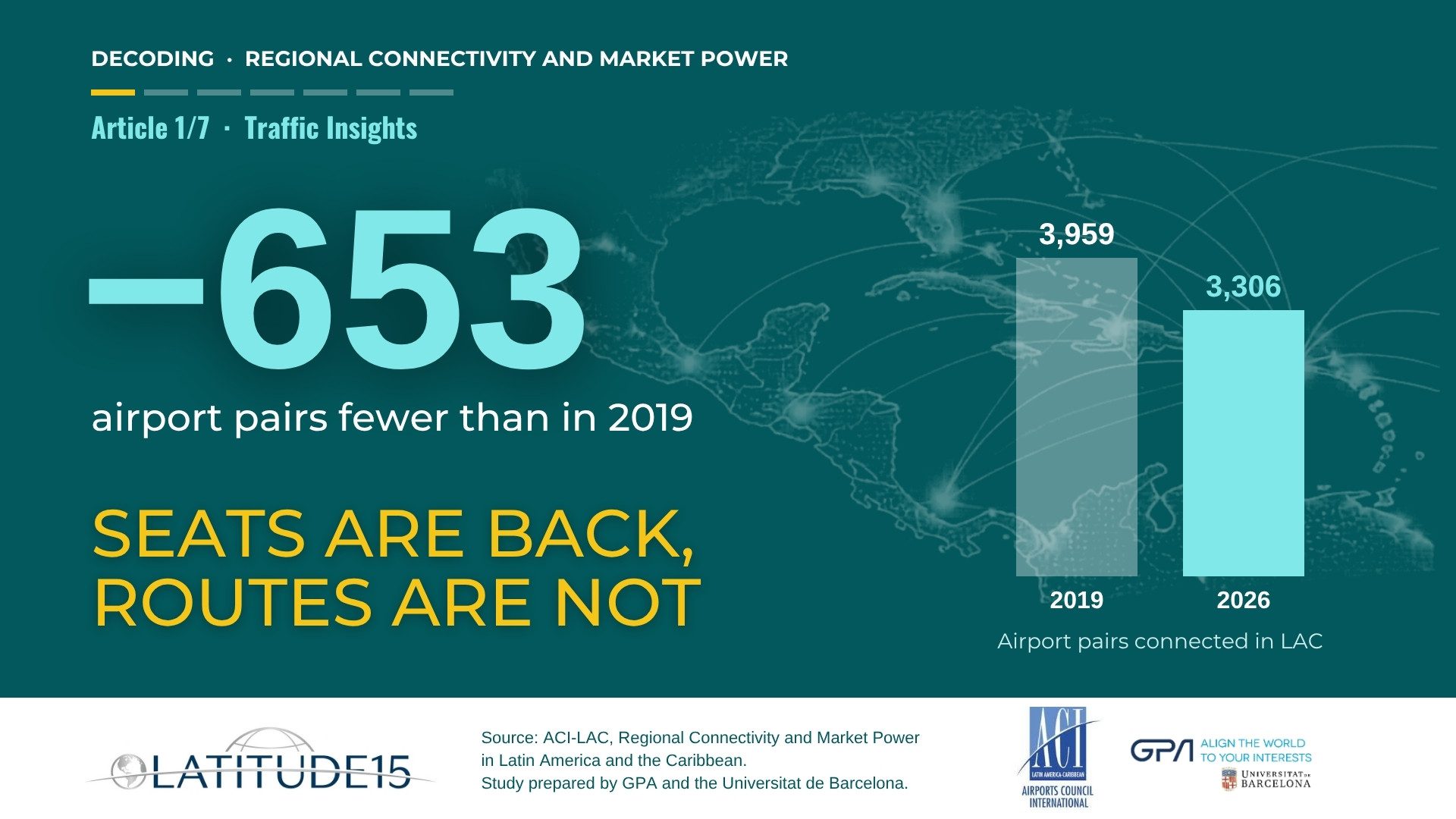
Overall, Latin America and the Caribbean accounted for approximately 5.4% of global passenger traffic in 2025, but the region continues to demonstrate strong growth potential relative to its current market share.
The combination of expanding tourism flows, improving airline connectivity and the gradual strengthening of regional aviation networks is contributing to rising passenger demand across several key markets.
Strong demand persists despite industry uncertainties
Domestic markets also continued to support the global expansion of air travel. Worldwide domestic RPK grew 6.3% year-on-year, with particularly strong demand recorded in Brazil and China, two of the largest domestic aviation markets outside the United States. Capacity growth in domestic markets closely matched demand, resulting in a relatively stable global domestic load factor of 82.8%.
Despite the strong performance observed in February, the outlook for the aviation sector remains influenced by several external factors.
According to Willie Walsh, while the fundamentals for continued demand growth remain positive, geopolitical tensions and rising fuel costs could affect airline profitability and operational strategies in the months ahead. Fuel prices have already increased sharply, and capacity deployment is beginning to adjust in certain markets, particularly on routes linked to the Middle East.
Capacity growth projections for March, for example, have already been revised downward to 3.3%, compared with earlier expectations of more than 5%, reflecting the industry’s cautious response to evolving global conditions. Even so, the strong passenger demand observed across several regions — particularly in Latin America — suggests that the aviation sector continues to recover steadily as international travel demand strengthens.