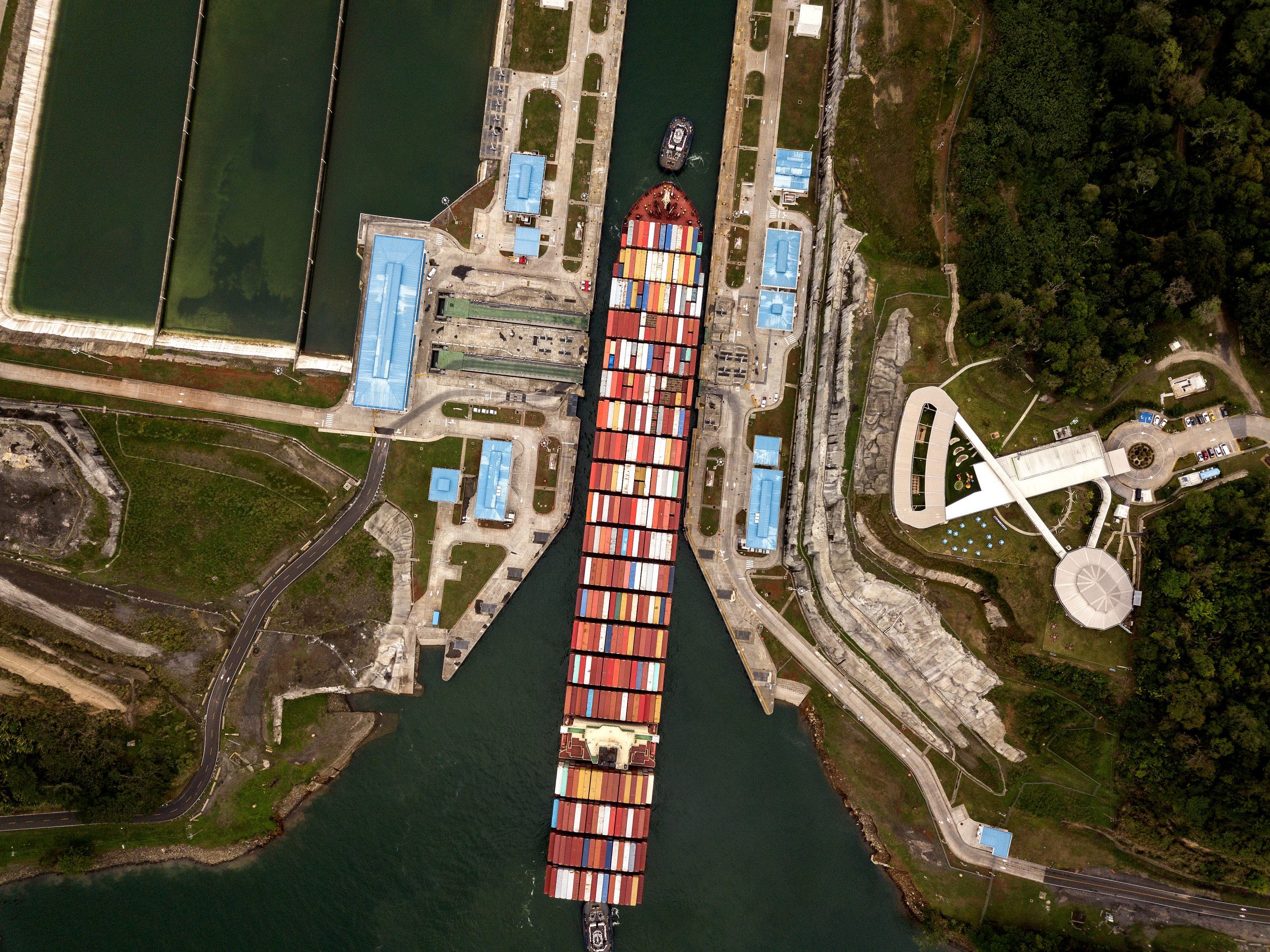
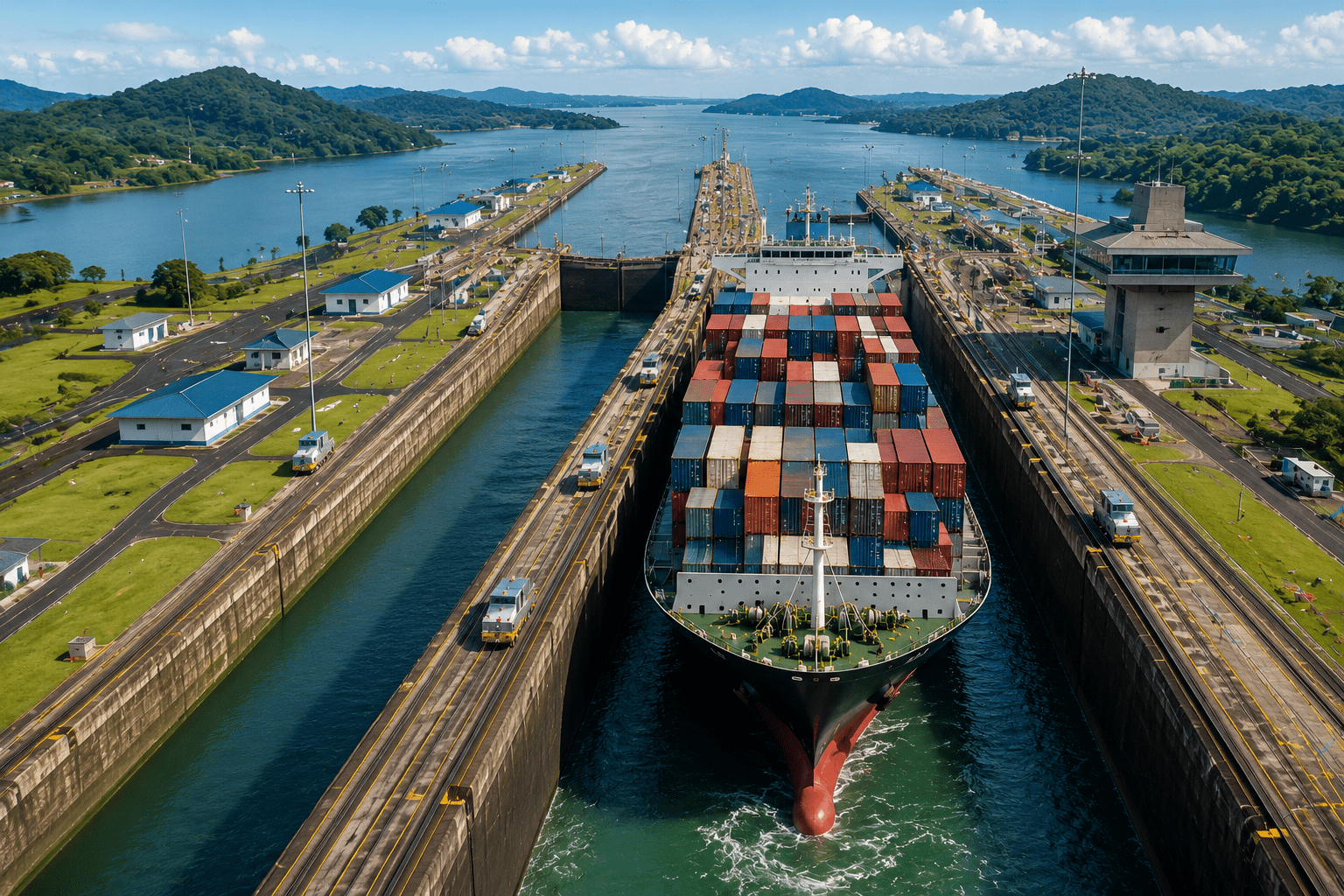
For the global shipping industry, the drought disruptions that hit the Panama Canal in 2023–2024 exposed the growing vulnerability of critical maritime corridors to climate volatility.
Now, as concerns emerge around a potential new El Niño cycle in the second half of 2026, the canal authority is signaling a different operational posture: anticipation instead of reaction.
Panama says current projections do not foresee transit restrictions through the end of 2026, with daily traffic maintained at 38 vessel transits while preventive water-management measures remain in place.
Beyond operational stability, the strategy reflects a broader shift underway across global maritime infrastructure, where climate resilience is increasingly becoming a core component of trade continuity and infrastructure planning.
From drought response to predictive operations
The Panama Canal’s latest strategy illustrates how major maritime gateways are evolving beyond short-term drought management toward long-range climate resilience planning.
Rather than waiting for hydrological stress to materialise, the canal authority says it has already strengthened water reserves at Gatún and Alhajuela lakes after taking advantage of one of the wettest seasonal periods recorded since 1950.
At the same time, weekly lake-level projections and water-deficit scenario modelling for May and June 2026 are now part of ongoing operational monitoring.
The approach signals a broader shift in infrastructure governance. Climate-sensitive maritime corridors can no longer operate on seasonal assumptions alone. They increasingly require predictive planning frameworks capable of integrating hydrology, logistics and operational engineering into a single resilience strategy.
Panama’s reference to historical El Niño cycles — including 1982–1983, 1997–1998, 2015–2016 and 2023–2024 — further reinforces this long-term perspective. Canal authorities note that the most severe impacts of moderate or strong El Niño events often emerge during the following year, which is why operational projections for 2027 are already under development.
Water is becoming a strategic shipping asset
The canal’s latest communication also highlights a reality becoming increasingly central to maritime infrastructure worldwide: water security is now directly tied to supply chain reliability.
Few locations illustrate this dependency more clearly than Panama. The same water system supporting canal operations also supplies more than half of the country’s population.
This creates a complex balancing act between:
- commercial transit,
- national water security,
- energy production,
- and long-term environmental resilience.
In practical terms, maintaining vessel throughput is no longer simply a matter of lock capacity or maritime demand. It is increasingly dependent on the ability to manage freshwater resources under volatile climatic conditions.
That reality is likely to shape the future operational models of climate-exposed maritime infrastructure globally — particularly in regions facing recurring drought cycles, water scarcity or intensifying weather variability.
Operational engineering at the centre of resilience
One of the most significant aspects of the canal’s current strategy is the increasing use of operational engineering measures designed to optimise water consumption without disrupting traffic flows.
Several preventive measures activated during the last week of December 2025 demonstrate how deeply water efficiency is now embedded into day-to-day canal operations.
Among the most notable initiatives is the expanded use of simultaneous lockages, allowing two smaller vessels to transit within a single lock chamber when dimensions permit, reducing overall water usage per transit cycle.
The canal is also using water-saving basins at the Neopanamax locks during directional vessel changes, generating daily water savings of approximately one cubic hectometer.
Additional optimisation measures include the use of interior lock gates to reduce chamber filling volumes depending on vessel length, as well as the temporary suspension of hydroelectric generation at Gatún in order to prioritise freshwater storage for canal operations and human consumption.
Taken together, these measures illustrate how climate adaptation in maritime infrastructure is increasingly being driven not only by large capital projects, but also by operational redesign and efficiency engineering.
Río Indio and the long-term resilience equation
While operational measures can stabilise short-term conditions, Panama is also preparing structural solutions aimed at securing the canal’s long-term viability under intensifying climate pressure.
Central to that strategy is the Río Indio Project, described by the canal authority as a key component of Panama’s national water security framework.
The project is intended to expand the canal system’s water storage capacity while strengthening resilience against more frequent and severe drought events. At the same time, it is designed to secure both maritime operations and potable water supply for the country.
For the maritime sector, the significance extends beyond Panama itself.
The project reflects a broader reality emerging across global logistics infrastructure: future competitiveness may increasingly depend on whether ports, canals and trade corridors can secure the environmental resources required to sustain uninterrupted operations under climate stress.
A new operating model for strategic maritime corridors
The Panama Canal’s latest response to El Niño concerns ultimately points toward a larger industry transition.
Climate resilience is no longer being treated as a secondary sustainability issue within maritime infrastructure. It is becoming a core operational discipline directly linked to:
- transit reliability,
- commercial continuity,
- infrastructure planning,
- and global supply chain stability.
For strategic maritime corridors facing rising environmental volatility, the challenge is no longer whether climate disruptions will occur, but how effectively infrastructure operators can anticipate, absorb and adapt to them without compromising trade flows.
The Panama Canal’s evolving operational model suggests that the future of maritime resilience may depend as much on water governance and predictive planning as on physical infrastructure itself.