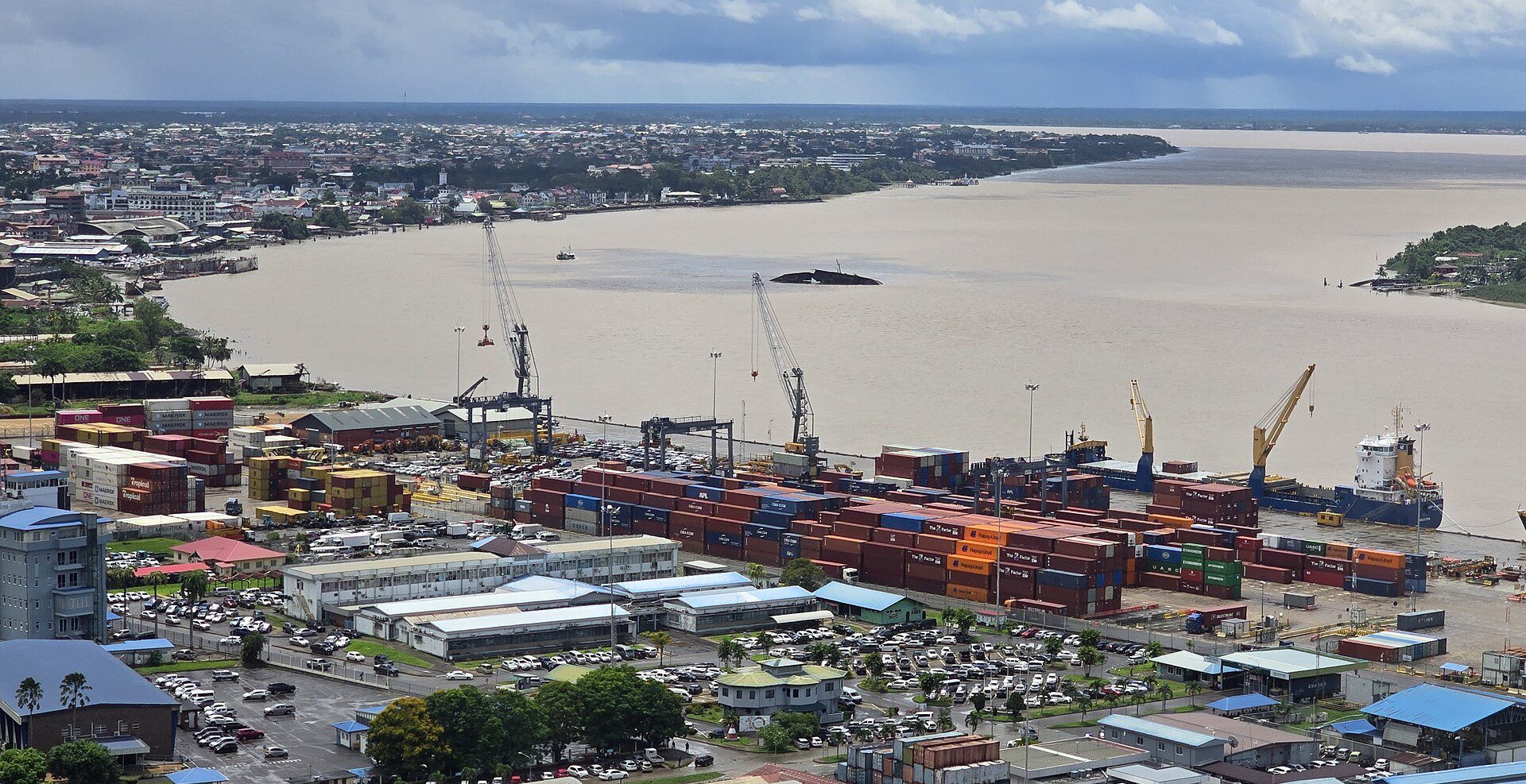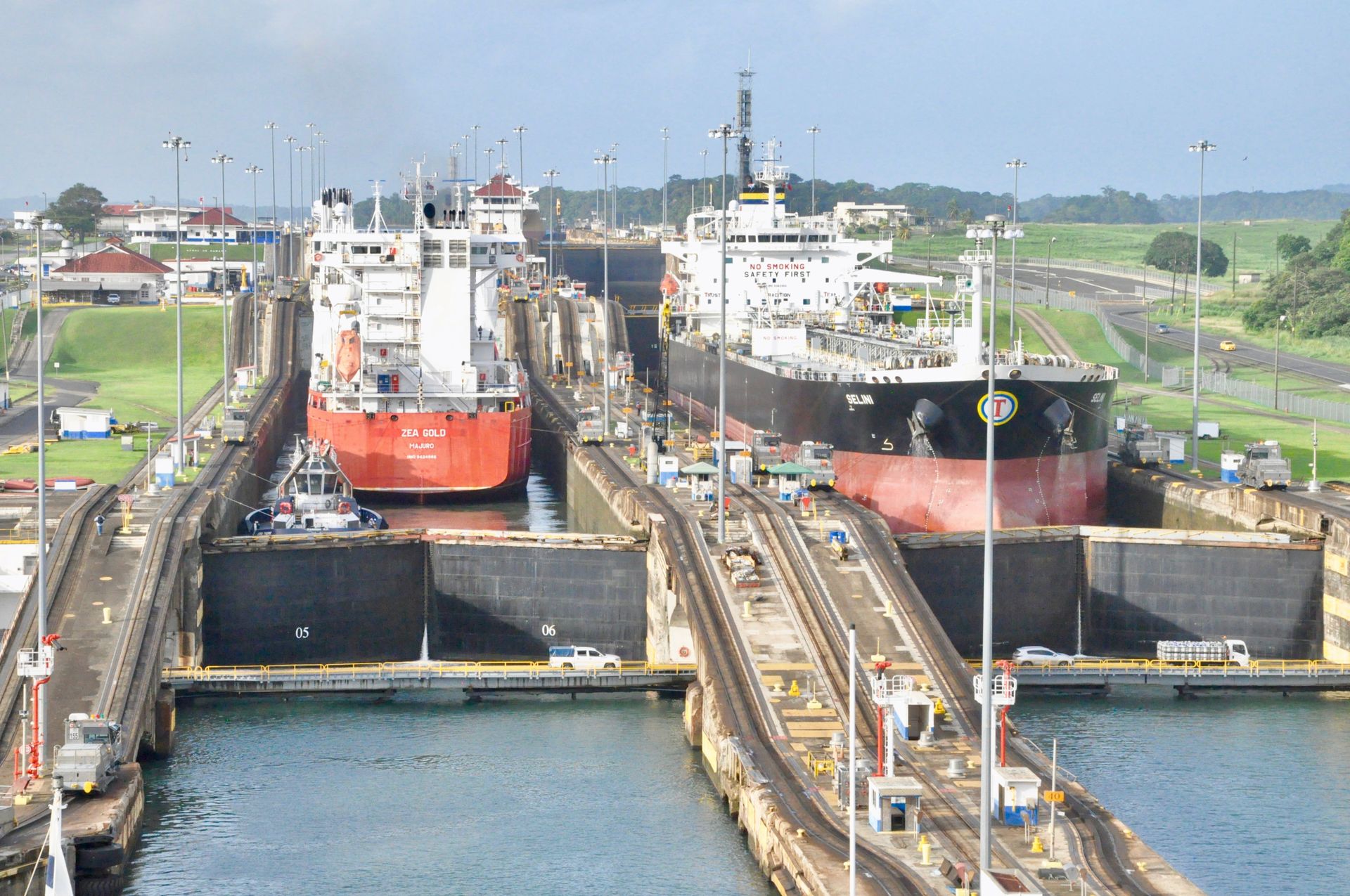
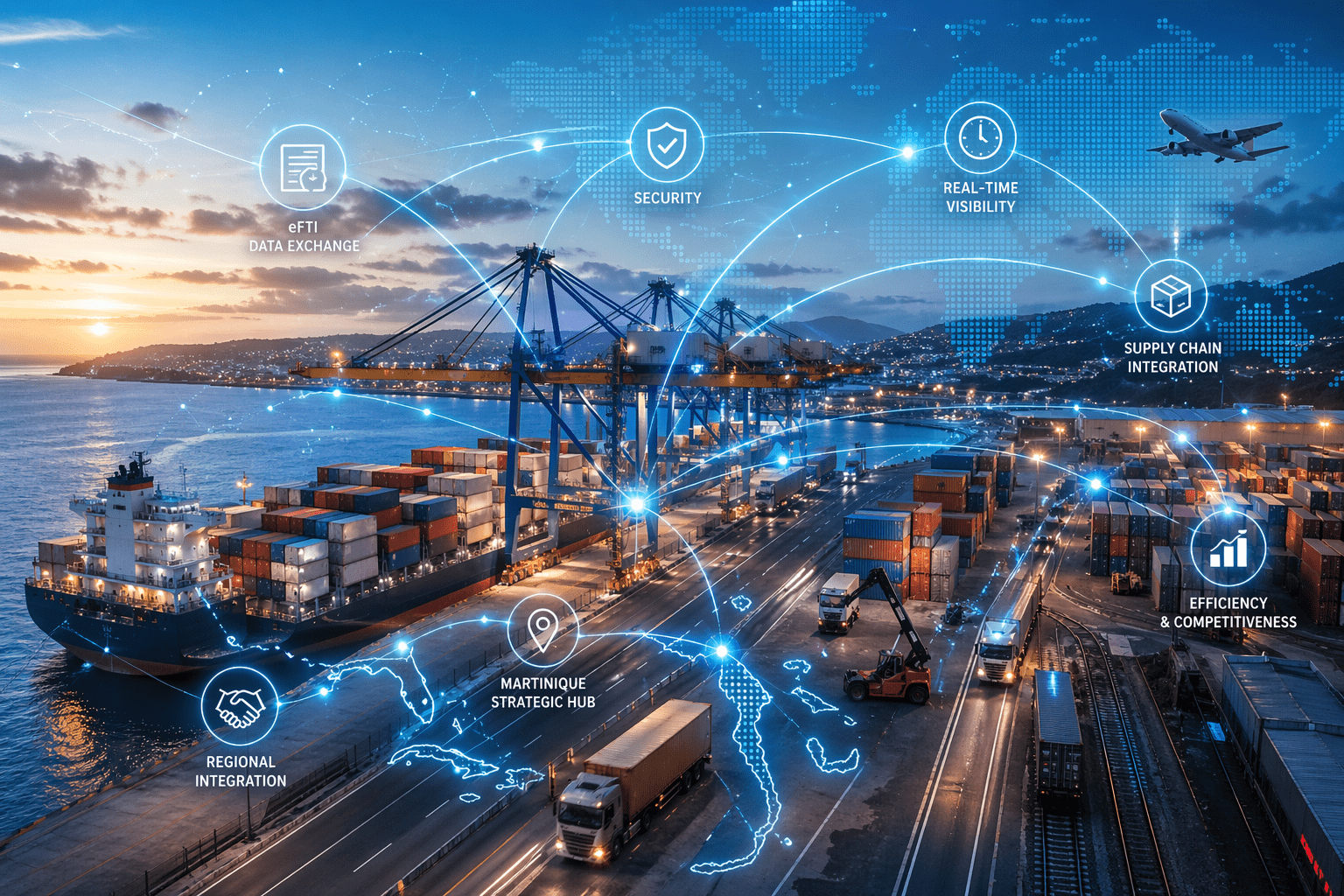
As digital transformation continues to reshape global supply chains, the LAC eFTI4ALL webinar, organized by the Collectivité Territoriale de Martinique (CTM) on April 21, 2026, brought together regional and international stakeholders to explore how standardized freight data exchange could support more connected and efficient logistics systems.
Positioned at the intersection of European regulatory frameworks and regional ambitions, the initiative highlights the growing relevance of data-driven logistics for Latin America and the Caribbean (LAC). Beyond technical discussions, the exchanges pointed to broader questions around connectivity, competitiveness, and the region’s ability to better integrate into global and intra-regional trade flows.
The session featured contributions from:
- Serge Letchimy, President of the Collectivité Territoriale de Martinique
- Sandra Casanova, Territorial Councillor of Martinique and President of the Strategic and Logistics Commission
- Heiti Mering, eFTI expert involved in the European eFTI implementation framework
- Victor Dolcemascolo, Project Manager for Freight and Logistics at the French Ministry for the Ecological Transition (DGITM)
- Eve Lombard, representative involved in the implementation of Martinique’s logistics strategy
- Petya Popova, Policy Officer at the European Commission, Directorate-General for Trade (Access to Markets)
- Pauline Yearwood, Programme Manager for Air and Maritime Transport at the CARICOM Secretariat
- Charles Larcher, President of the Association Martiniquaise pour la Promotion de l’Industrie (AMPI)
Repositioning the region within its own geography
Several interventions framed logistics as more than an operational issue, suggesting it plays a central role in how the region positions itself economically and strategically. These dynamics are closely linked to broader regional logistics integration challenges, particularly in a context marked by fragmented systems and limited intra-regional coordination.
Opening the session, Serge Letchimy emphasized the importance of reconnecting with the region’s own geography, stating that Caribbean territories should not remain “foreign to [their] own geography.” He highlighted structural imbalances, noting that “we import a lot, and 9 containers out of 10 leave empty or half-empty,” a situation that “does not make much economic sense.” His remarks pointed to longstanding challenges, including limited intra-regional trade and a heavy reliance on external supply chains.
This perspective also extended to the broader positioning of the region. Letchimy stressed that the Caribbean should not be viewed solely as a peripheral space, but rather as “a major geostrategic area,” capable of capturing value from global flows rather than remaining a passive transit zone.

Sandra Casanova further developed this analysis by linking these challenges to structural inefficiencies in data exchange. She noted that “information does not circulate easily,” and that the region lacks “statistics and an observatory with data collection and exploitation.” She also pointed to “redundant controls due to a lack of interoperability between information systems,” suggesting that these limitations continue to hinder deeper regional integration.
In that context, the deployment of a shared digital framework was presented as a potential lever to improve coordination and support more fluid exchanges across territories.
Building a shared digital logistics language
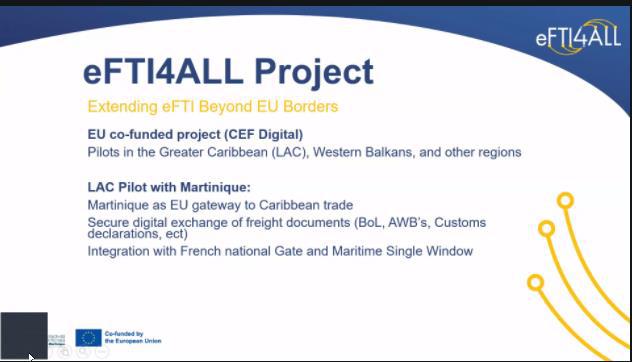
At the core of the discussions was the eFTI (electronic Freight Transport Information) framework, introduced as a tool to standardize and digitize freight data exchanges between public authorities and private operators.
Speakers highlighted that current logistics processes remain largely paper-based, resulting in inefficiencies across the supply chain. Casanova explained that eFTI represents “a common language of harmonized data, with secure exchanges between operators and public authorities,” enabling “real-time data, traceability of flows, and facilitated controls from A to Z of the supply chain.”
From a technical perspective, Heiti Mering described the system as “a distributed network of services” connecting both public and private actors through standardized gateways. He noted that the objective is to move away from paper-based processes, emphasizing that “we don’t need to follow the process which is at the moment based on papers,” while ensuring that “the security part is highly important” and that interoperability remains central.
Victor Dolcemascolo provided further detail on implementation, explaining that the system relies on interconnected national access points, or “gates,” allowing authorities to retrieve transport data in real time. He described how “when a vehicle is controlled, a request is sent to the national access point, which retrieves the relevant data from the appropriate platform,” enabling inspectors to access transport documents instantly. He also stressed the importance of certification, noting that “platforms must be certified to ensure trust and data security.”
Taken together, these elements suggest a gradual shift from fragmented, document-based systems toward a more integrated digital ecosystem, where data becomes a central component of logistics coordination.
From pilot project to regional logistics interface
Within this broader framework, Martinique is positioning itself as a pilot territory.
Eve Lombard explained that the deployment of eFTI is part of a wider logistics strategy adopted in May 2025, aimed at “reducing dependency on external logistics, improving the fluidity of goods flows, and strengthening economic attractiveness.” The project is currently being tested through pilot use cases designed to validate interoperability and digital data exchange.
She highlighted that the initiative could deliver “time savings, cost reductions, improved traceability, and increased competitiveness,” while also contributing to “the securitization of data exchanges.”
Beyond operational gains, Lombard emphasized the strategic ambition behind the project, describing Martinique as a potential “interface between Europe and the Greater Caribbean.” Given its proximity to major maritime routes and logistics hubs, she suggested that the territory could leverage its position to play a more active role in regional supply chains.
This positioning remains forward-looking, depending on the successful deployment of digital tools and their extension beyond European frameworks into the regional environment.
What it means for industrial operations and competitiveness
Beyond strategic considerations, the discussions also highlighted the potential operational implications for local industries.
Representing the industrial sector, Charles Larcher pointed to the complexity of current supply chains, noting that “between the departure warehouse in Europe and the arrival warehouse in Martinique, there are fourteen intermediaries.” This structure contributes to delays, additional costs, and reduced competitiveness for local production.
He also emphasized the lack of visibility in logistics operations, explaining that “we need full visibility on the flow of goods in real time,” particularly in a context where maritime transport dominates. The absence of such visibility forces companies to maintain higher levels of inventory, leading to increased storage costs.
Larcher further highlighted that “without an optimized supply chain, we cannot be competitive,” especially when facing imported products. In this context, digitalization was presented as a potential way to “reduce administrative costs, improve planning, and limit supply disruptions,” although these outcomes remain dependent on effective implementation.
Overall, his intervention suggested that logistics digitalization could play a role in improving industrial performance, while also supporting export development and regional integration.
Aligning with international frameworks and market access tools
The webinar also placed the initiative within a broader international context, linking digital logistics to trade facilitation and regional policy frameworks.
Petya Popova introduced the European Commission’s “Access to Markets” platform, explaining that it was designed “to have all information about trade in one place” and to help companies “reach out and access global markets.” She emphasized that “information is the most precious thing that we need when we do our business,” highlighting the importance of transparency in trade processes.
At the regional level, Pauline Yearwood stressed the central role of transport in Caribbean integration, noting that “air and maritime transport is critical in the context of trade, the movement of people, and economic development.” She also pointed out that the objective of CARICOM’s transport policy is to ensure “adequate, safe, and internationally competitive transportation services” to support the single market and regional economy.
These perspectives suggest that digital freight initiatives such as eFTI are part of a broader ecosystem involving trade agreements, policy coordination, and infrastructure development.

Reading the road ahead
While still in its early stages, the LAC eFTI4ALL initiative reflects a broader shift toward data-driven logistics and regional integration.
The discussions suggest that the adoption of standardized digital frameworks could help address some of the structural inefficiencies observed in current supply chains, while also supporting closer economic ties within the region. At the same time, several speakers implicitly pointed to the need for coordination, adaptation of standards, and alignment between stakeholders.
As highlighted during the session, the process remains ongoing, with European implementation timelines extending toward 2027. In this context, the initiative “goes beyond a technical solution,” as Casanova noted, raising broader questions about governance, interoperability, and regional cooperation.
Overall, these exchanges indicate that digital freight is increasingly being considered not only as a technological evolution, but as a potential lever for rethinking how the region connects, trades, and positions itself within global logistics networks.