CSA 2025 : The future competitiveness of Caribbean ports will not be determined primarily by cranes, terminals or digital platforms. It will be determined by governance.
At the 55th Annual Conference of the Caribbean Shipping Association (CSA), discussions on digitalization, Port Community Systems, customs modernization and supply chain efficiency repeatedly converged toward a deeper structural issue. Technology is advancing across the region. Institutional alignment is not.
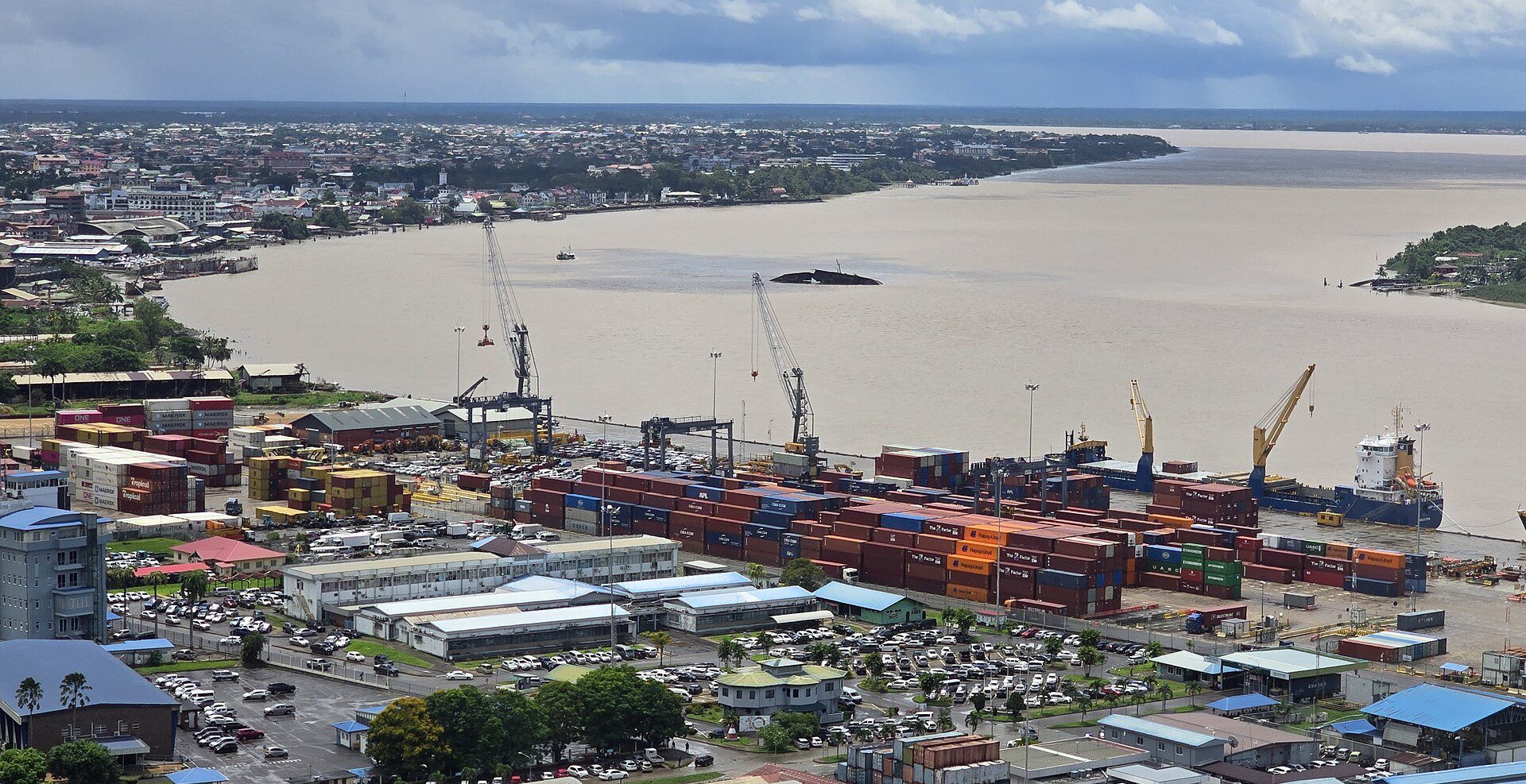
As cargo volumes accelerate — particularly along the Guyana–Suriname energy corridor — and regulatory pressure intensifies through decarbonization mandates and climate adaptation requirements, Caribbean ports are entering a new phase of structural complexity. In this environment, fragmented governance frameworks, incomplete legal mandates and uneven customs integration represent more significant constraints than the absence of digital tools.
The next generation of Caribbean ports will be defined less by the speed of technological adoption and more by the depth of institutional reform.
The Digital Promise Is Real
The efficiency case for Port Community Systems (PCS) is well established. A PCS is designed as a neutral electronic platform that allows a single submission of data and enables secure information exchange between public and private stakeholders across the port ecosystem.
International benchmarks presented during the conference illustrate the scale of potential impact. The Netherlands’ Portbase system generates approximately US$59 million in annual savings. Jamaica’s PCS produces savings estimated at US$13 million per year. Singapore’s Portnet has generated savings of roughly US$80 million over a three-year period.
These are not marginal efficiency gains. They reflect systemic reductions in transaction costs, time savings and improved supply chain predictability.
Yet the Caribbean region has not replicated this scale of impact.
According to the regional assessment presented by the Inter-American Development Bank, many ports in Latin America and the Caribbean still operate primarily as cargo-handling centers rather than integrated supply chain nodes. Smart port solutions are emerging, but interoperability gaps persist. Financing constraints limit modernization, particularly in smaller island economies. Governance reforms remain uneven, and transparency gaps continue to affect performance. Digital systems exist. Institutional alignment often does not.
Governance Models Shape Outcomes
One of the core insights emerging from CSA 2025 was that implementing a Port Community System is not an IT project. It is a governance project.
Successful PCS models globally rely on clear ownership structures, mandatory participation frameworks and legal clarity around data protection, liability and cybersecurity. Governance models vary, from centralized government-led systems to public-private partnerships and hybrid entities. However, stakeholder trust, legislative alignment and long-term financial sustainability are common denominators in high-performing systems.
In the Caribbean context, several structural obstacles recur. Data privacy legislation is frequently incomplete or outdated. Mandatory participation mechanisms are often absent, leading to partial system adoption. Customs integration remains complex. Legal frameworks around cybersecurity and digital liability are not consistently harmonized.
Without legal certainty and institutional coordination, digital platforms cannot deliver systemic efficiency. They risk becoming parallel layers of administration rather than transformational infrastructure. Technology accelerates processes. Governance determines whether those processes align.
Customs Modernization as the Missing Link
Customs authorities occupy a central position in the maritime ecosystem. They collect revenue, enforce trade rules and manage security risks. Modern customs administration now relies on risk management systems, electronic single windows, coordinated border management approaches and data-driven decision-making.
The global standards framework — including WTO Trade Facilitation Agreement provisions and World Customs Organization instruments such as the SAFE Framework and Authorized Economic Operator programs — provides a roadmap for modernization. However, regional implementation remains uneven.
Where customs processes are not fully integrated into PCS architecture, digital gains are diluted. Where risk management systems are not harmonized across agencies, clearance times remain unpredictable. Where legal mandates for electronic documentation are incomplete, paper-based redundancies persist.
Digitalization without customs reform produces friction. Customs reform without digital integration produces limited scale. Both must move simultaneously.
Financing, Scale and Institutional Capacity
Another constraint discussed at the conference concerns financing and institutional capacity. Large investment gaps remain, especially for smaller Caribbean economies. Climate adaptation requirements, dredging needs and multimodal logistics upgrades compete for limited public resources.
In this environment, digital investments may be deprioritized or fragmented. Public-private partnerships can provide solutions, but only where regulatory frameworks are predictable and stakeholder alignment is secured.
Human capital constraints further complicate implementation. Industry 4.0 systems require digital skills, cybersecurity expertise and data governance capacity that are not uniformly available across the region. Technology procurement can be rapid. Institutional capacity building is not.
The Strategic Risk of Partial Modernization
The danger for Caribbean ports is not technological stagnation. It is partial modernization. A port that adopts digital tools without legal harmonization, customs integration and stakeholder mandate risks creating islands of efficiency within a broader environment of fragmentation. Carriers and logistics operators will continue to route through hubs that offer predictability and institutional coherence.
In a context of accelerating cargo growth — particularly along the Guyana–Suriname energy corridor — institutional gaps become more visible. Volume amplifies inefficiency. Regulatory pressure from decarbonization and global trade shifts further increases complexity.
The competitiveness gap between integrated port ecosystems and fragmented ones will widen.
Reform Before Technology, Not After
CSA 2025 made clear that the Caribbean maritime sector is entering a structural acceleration phase. Energy expansion, climate exposure and regulatory decarbonization are converging forces. Digital tools are essential in this environment. But they are not foundational. Governance is foundational.
Ports that prioritize legal alignment, mandatory participation frameworks, customs modernization and transparent governance structures will be able to leverage digital systems effectively. Ports that treat digitalization as a standalone upgrade may find that technology outpaces institutional capacity.
The Caribbean does not lack digital ambition. It must now align that ambition with institutional reform.
Technology will not save Caribbean ports without governance transformation. Governance will determine whether technology becomes a multiplier of competitiveness — or a missed opportunity.
—
Read more about the CSA 2025 here