

The 55th Annual Conference of the Caribbean Shipping Association (CSA) was held in Paramaribo, Suriname, from October 13 to 15, 2025. The event gathered regional port authorities, shipping executives, development institutions and maritime experts to examine cargo trends, infrastructure modernization, digital transformation, energy transition and climate resilience across the Caribbean basin and Northern South America.
Beyond the individual presentations, the conference revealed a broader structural pattern. The Caribbean maritime system is not simply modernizing incrementally; it is entering a phase of accelerated transformation shaped by energy expansion, regulatory pressure, climate exposure and institutional reform challenges.
Energy-Driven Cargo Growth Is Reshaping the Northern Basin
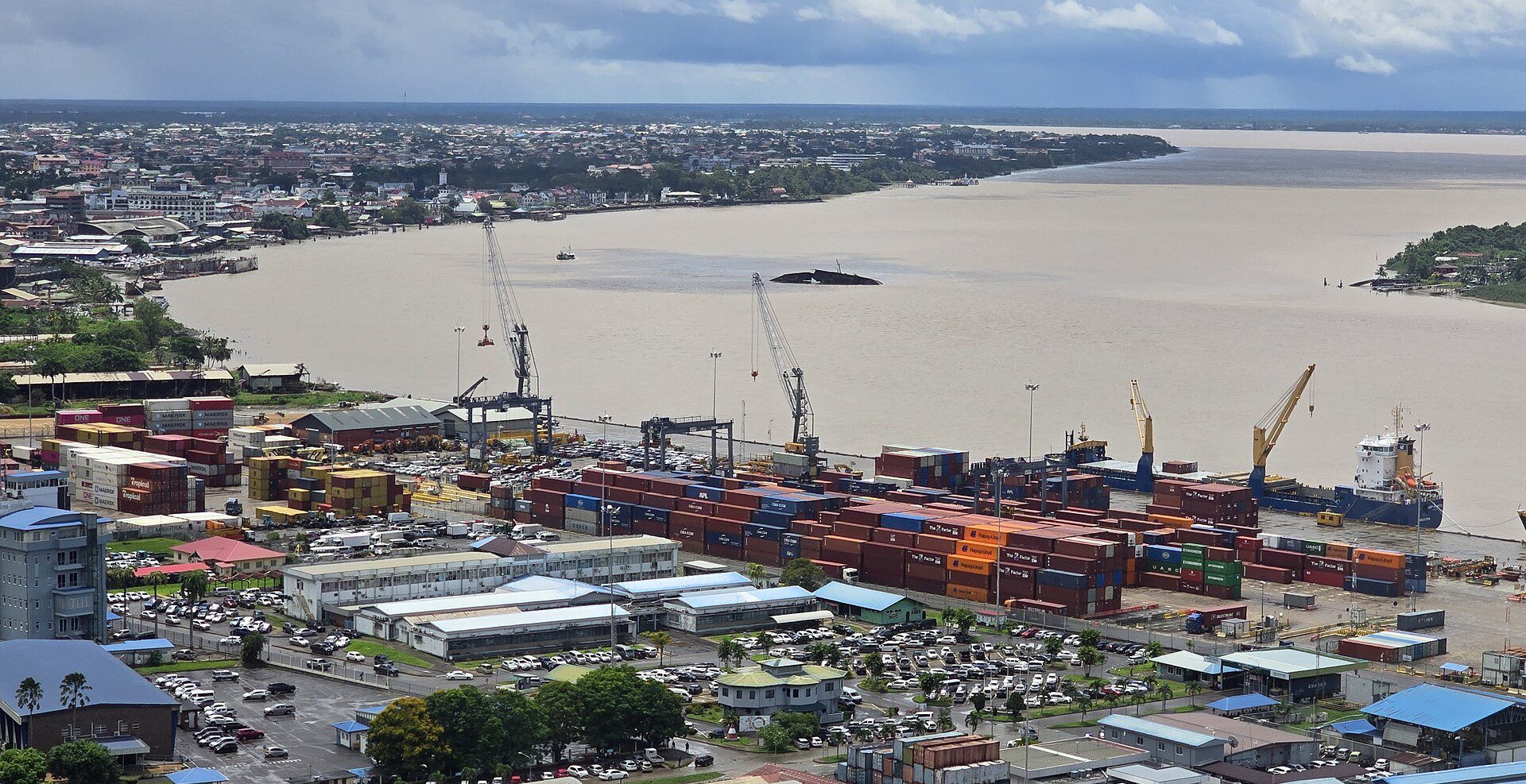
One of the most concrete signals presented in Suriname concerned cargo projections linked to the Guyana–Suriname energy corridor. Guyana recorded a 77% increase in FCL volumes between 2020 and 2024, with projections pointing to cumulative growth of +159% between 2020 and 2028. Suriname, over the same 2020–2028 horizon, is projected to reach +69% growth.
Forward projections indicate sustained annual increases of approximately 10% between 2025 and 2028. Break bulk volumes at the Jules Sedney Port are also projected to rise steadily through 2028.
These figures are directly associated with offshore oil development and the expansion of related logistics chains. This is not short-term volatility. It reflects structural energy-driven expansion. The Guyana–Suriname axis is rapidly consolidating into a logistics corridor with growing influence over maritime flows in Northern South America and the wider Caribbean basin.
The strategic question is no longer whether volumes will grow, but whether port infrastructure, feeder networks and governance frameworks are aligned with this acceleration.
Connectivity Bottlenecks Persist Despite Volume Growth
While cargo projections signal expansion, intra-Caribbean connectivity remains structurally constrained.
Discussions on maritime and multimodal integration highlighted persistent capacity limits at transshipment hubs, feeder network fragility and infrastructure deficits. The situation was summarized during the conference in a stark formulation: one ship, one day, one bottleneck.
The Caribbean maritime system continues to depend heavily on a limited number of hub-and-spoke configurations. As volumes grow, this concentration risk increases. Without investment in multimodal integration and feeder diversification, energy-driven growth may amplify bottlenecks rather than alleviate them.
Connectivity is therefore not simply a logistics matter. It is a structural competitiveness variable.
Climate Resilience Has Become an Economic Imperative
Climate risk discussions were framed in operational and economic terms. Rising sea levels, stronger hurricanes and coastal erosion were presented as structural realities that must be embedded into port master planning.
Resilience planning is now being integrated into long-term infrastructure strategies extending toward 2050 and beyond, combining market drivers, infrastructure flexibility and climate adaptation. The economic stakes were clearly articulated: infrastructure downtime in Caribbean ports translates directly into lost revenue, disrupted trade and stranded communities.
For small island economies where ports function as lifelines, climate resilience is no longer a sustainability add-on. It is an operational and financial imperative. Insurance costs, capital allocation and carrier route decisions increasingly reflect resilience metrics.
Ports that integrate climate risk into capital planning are positioning themselves for long-term competitiveness.
Digitalization Is Advancing, But Institutional Reform Lags
Digital transformation featured prominently at the conference, particularly in relation to Port Community Systems (PCS). Yet the regional assessment remains uneven. Many ports in Latin America and the Caribbean continue to operate primarily as cargo-handling centers without an integrated supply chain vision. Smart port adoption remains limited, interoperability gaps persist and financing constraints slow modernization.
The economic case for PCS implementation is clear. International examples cited include annual savings of US$59 million in the Netherlands, US$13 million in Jamaica, and US$80 million over three years in Singapore. However, implementation in the Caribbean faces governance and legislative hurdles, including the absence of mandatory participation frameworks, data protection concerns and customs integration complexity.
The conclusion is structural rather than technological. Digital tools alone cannot compensate for fragmented governance. Without harmonized legal frameworks and institutional coordination, digitalization risks remaining partial modernization rather than systemic transformation.
Decarbonization Targets Are Redefining Infrastructure Planning
Decarbonization discussions were anchored in international regulatory targets. The objectives presented include a 40% reduction in CO₂ emissions per transport work by 2030, a 20% reduction in total greenhouse gas emissions by 2030, 70% by 2040, and net-zero by 2050. Additionally, at least 5%, striving for 10%, of energy used by international shipping should come from zero or near-zero GHG technologies by 2030.
Fuel transition projections indicate that LNG could represent 41% of global marine energy by 2050, with strong uptake across containership and cruise segments.
For the Caribbean, the strategic tension lies between compliance and opportunity. The region has access to natural gas resources in Trinidad and Tobago, Guyana and Suriname, while bio-derived fuel potential — including seaweed, manure and organic waste — was identified as part of a possible regional green fuel ecosystem.
Energy transition is already shaping vessel orders, shore power investments and long-term port competitiveness.
A Structural Integration Test
Viewed collectively, the signals emerging from CSA 2025 converge toward a systemic reality. Cargo growth is accelerating. Climate exposure is intensifying. Regulatory decarbonization is tightening. Digital systems are advancing. Yet governance fragmentation and multimodal gaps persist.
The Caribbean maritime sector is expanding faster than its institutional architecture is evolving.
CSA 2025 did not announce disruption. It exposed a strategic test. Ports that align energy-driven growth with governance reform, climate resilience and digital integration will consolidate leadership within the basin. Those that approach these transitions in isolation risk converting growth into structural vulnerability.
The next five years will likely determine whether the Caribbean maritime system moves toward integrated competitiveness — or remains fragmented under increasing pressure.
— Download all the CSA OCTOBER 2025 Conference Presentations here


One Response