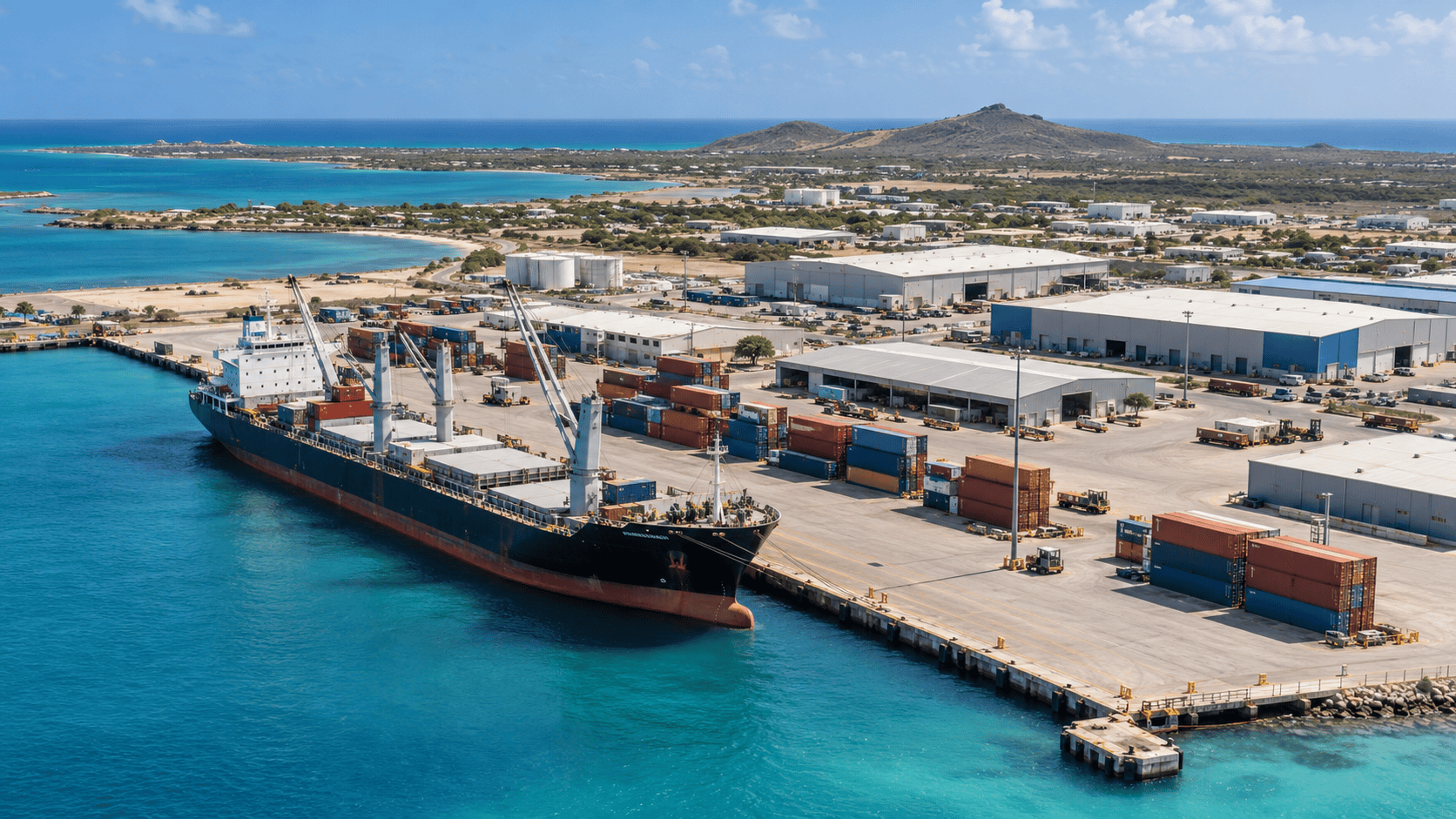
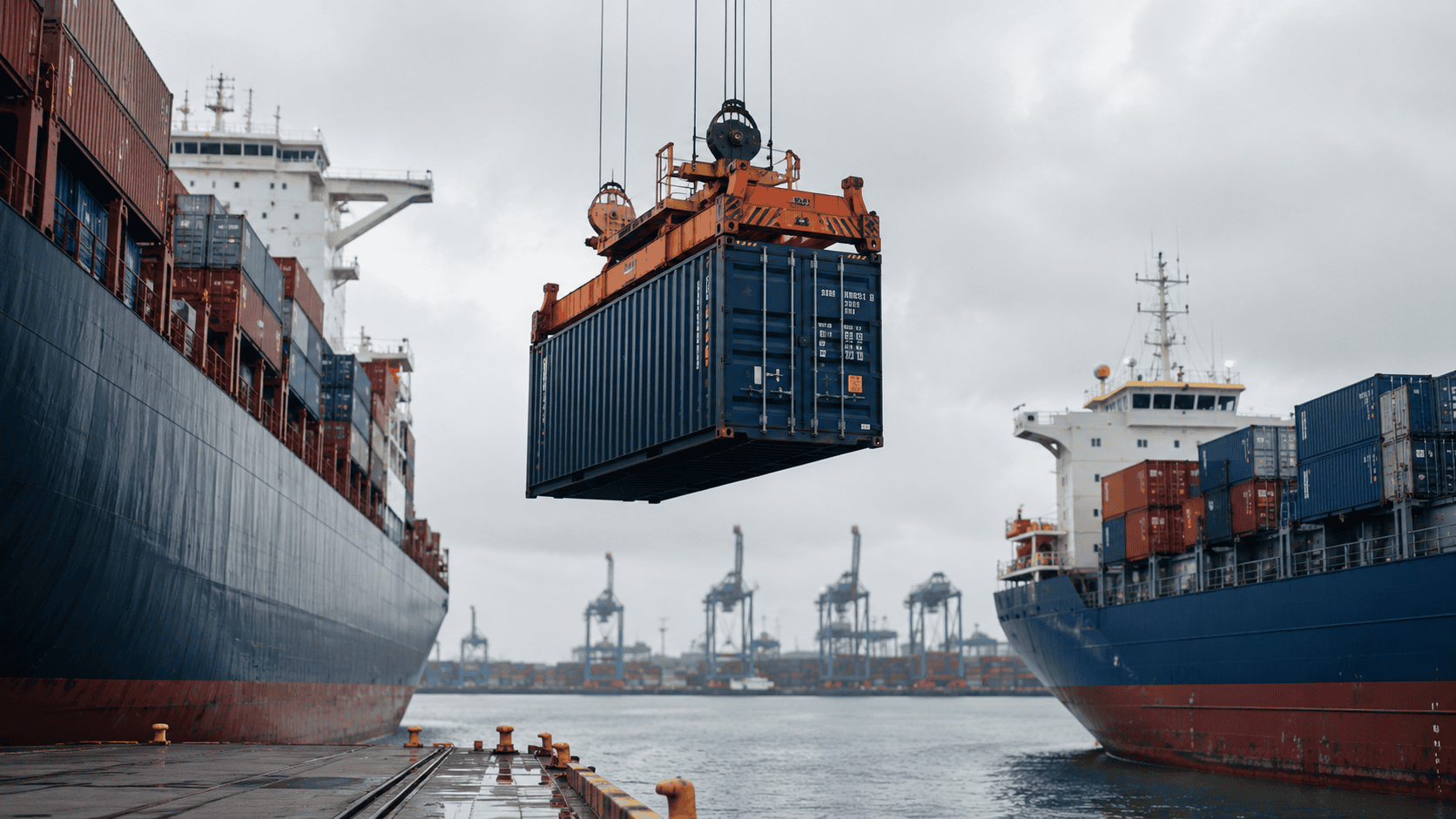
The Caribbean remains one of the most strategically important container spaces in Latin America and the Caribbean. Several of the region’s largest ports sit within or around the Caribbean basin, supported by major east-west shipping routes, proximity to the Panama Canal and extensive transshipment networks.
The 2024 port hierarchy illustrates that scale. Cartagena Bay handled 3.70 million TEU, ranking third across Latin America and the Caribbean. Kingston reached 2.52 million TEU, while Caucedo handled 1.47 million TEU, San Juan 1.29 million TEU and Freeport 1.25 million TEU.
These are not marginal systems. They are central nodes in regional container connectivity.
Yet scale alone does not explain how their traffic is generated — or how stable that traffic may be. For ports with significant exposure to transshipment, performance depends partly on decisions taken beyond the terminal itself: where carriers deploy capacity, how they structure mainline services, which hubs they select and how feeder networks are organised.
That distinction is becoming more important as global container shipping enters another phase of network reconfiguration.
Caribbean scale is not the issue
The latest port report from ECLAC shows a regional hierarchy in which Caribbean and nearby hub systems remain firmly represented among the leading container gateways.
Cartagena Bay ranked behind only Santos and Manzanillo in 2024. Kingston remained seventh regionally. Caucedo, San Juan and Freeport all exceeded one million TEU.
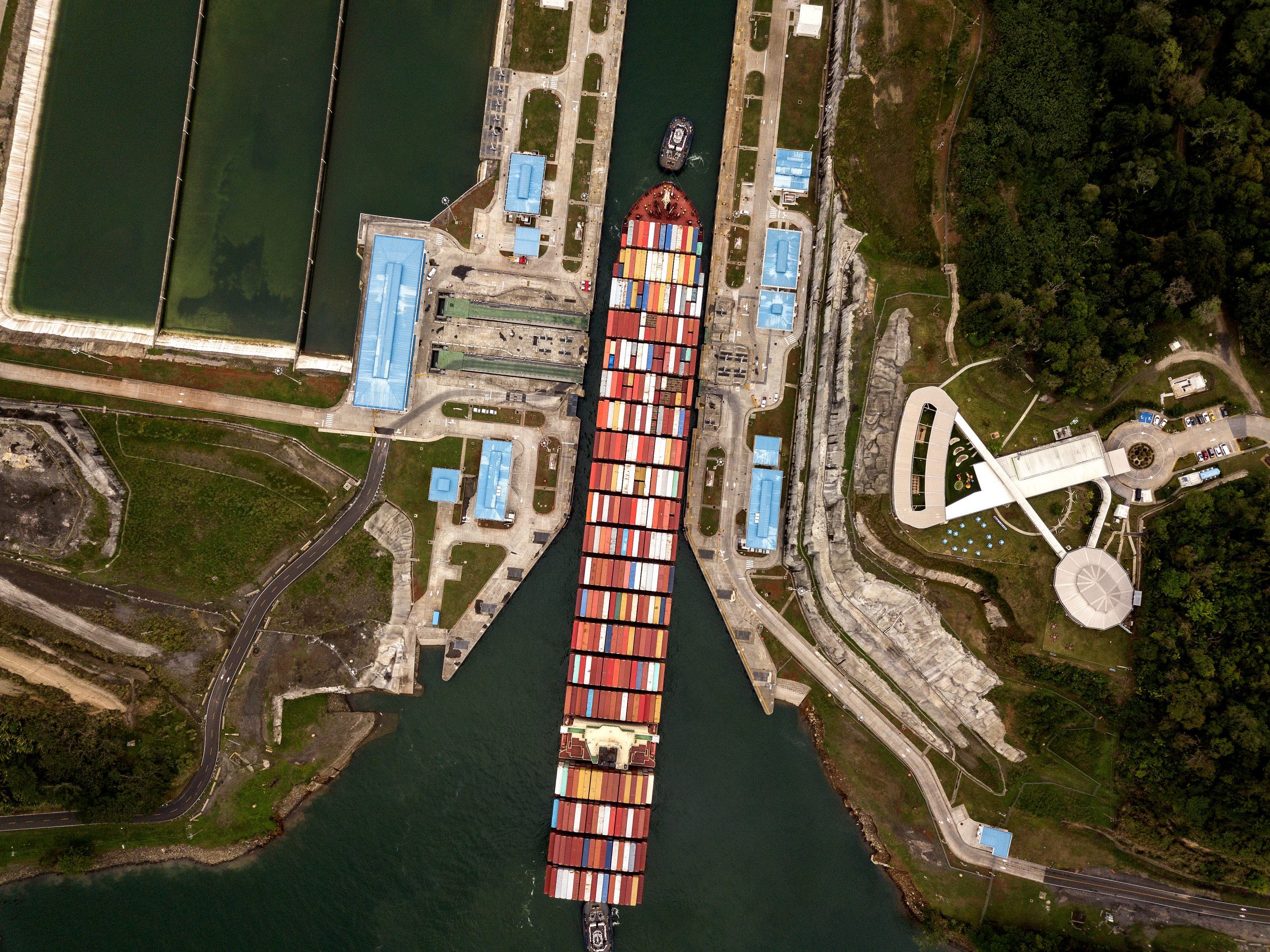
Panama adds another layer to this geography. MIT handled 2.71 million TEU in 2024 and Balboa 2.63 million TEU. Colón CCT reached 1.58 million TEU, while Rodman PSA handled 1.38 million TEU. Together, these facilities reinforce the wider Caribbean basin’s role as a major interface between global mainline services and regional distribution networks.
But similar throughput levels can rest on very different commercial foundations.
A gateway port may derive a large share of its traffic from imports and exports linked directly to domestic demand, industrial production or a defined hinterland. A transshipment hub operates differently. Containers may arrive on one vessel, move across the terminal and depart on another without entering the local economy.
For terminal operators, both flows generate activity. Strategically, however, they do not carry the same exposure.
Cargo anchored in a large hinterland is influenced by trade demand, industrial structure and inland connectivity. Transshipment cargo is more directly exposed to network economics. A carrier can reconsider where it connects services, consolidates volumes or transfers containers between mainline and feeder vessels.
This does not make transshipment inherently unstable. It does mean that part of a hub’s competitive position depends on remaining valuable within networks that can change.
Where the volume comes from matters
ECLAC’s analysis identifies transshipment as an important factor in explaining differences in recent port performance across the region, including between Panama’s Pacific and Caribbean systems and a broader group of Caribbean ports.
That distinction matters because throughput is often treated as a straightforward measure of port strength. It is useful, but incomplete.
A rise in TEU can reflect stronger domestic trade. It can also reflect additional relay cargo, a new service pattern, the concentration of regional connections at one hub or a temporary redistribution of flows from another port.
The reverse is equally important. A port may lose throughput even when its domestic economy has not weakened if carriers reorganise services or shift transshipment activity elsewhere.
For the Caribbean, this creates a particular competitive environment. The region’s geography is a major asset. It sits between the Atlantic and Pacific systems, close to the Panama Canal, adjacent to major North American markets and along routes linking the Americas with Europe and other global trade corridors.
That position has supported the development of powerful hubs. But geography does not guarantee permanence.
Ports compete for a role inside networks shaped by vessel deployment, service frequency, terminal productivity, nautical access, cost structures and the ability to connect mainline calls with feeder markets. A hub therefore competes not only with neighbouring ports, but also for a specific function within a carrier’s wider network.
This is why the source of growth matters as much as the volume itself.
For investors, terminal operators and port authorities, the distinction affects how performance should be interpreted. A strong throughput year may signal deeper trade growth. It may also reflect a network gain that needs to be defended through productivity, reliability and connectivity.
Alliance restructuring raises the stakes
The timing is particularly relevant because the structure of global container shipping is changing.
ECLAC estimates that the combined share of the three leading carriers or alliance groupings fell from above 80% in 2022-2023 to 61.2% in 2025. The report links this shift to the dissolution of the 2M structure, the emergence of new configurations such as Gemini and Premier Alliance, and a greater relative presence of carriers operating outside the traditional major alliance structures.
The market remains concentrated by historical standards. But the operational map is being redrawn.
For transshipment hubs, alliance restructuring matters because network design determines more than market share. It can influence port calls, service combinations, hub selection and the way cargo is distributed between mainline and feeder connections.
A change in alliance structure can therefore have consequences far beyond the carriers directly involved. Terminals may face different call patterns. Ports may gain or lose connecting flows. Feeder networks may need to adapt to new service structures.
The Caribbean is especially exposed to these shifts because its strength is closely tied to connectivity.
That exposure should not be confused with weakness. In fact, the presence of Cartagena Bay, Kingston, Caucedo, Freeport and multiple Panamanian facilities among the region’s leading ports demonstrates the opposite. The Caribbean basin has built substantial container scale and occupies a strategic position in hemispheric shipping.
But the next phase of competition may be less about achieving scale than about retaining network relevance.
For Caribbean hubs, that means ensuring that capacity is matched by productivity, reliable vessel handling and strong feeder connectivity. It also means recognising that a terminal’s competitive set can change when carriers redesign services.
The region’s transshipment model remains a major strategic advantage. Yet in a period of alliance restructuring and recurring route disruption, that advantage comes with exposure to decisions made far beyond the port itself.
Caribbean port strength is real. Increasingly, the question is how securely that strength is embedded in the networks that generate it.