For decades, Caribbean cruise competition was largely shaped by geography, climate and itinerary logistics. Ports competed for ship calls, destinations promoted beaches and weather, and cruise itineraries often relied on the broader appeal of the region itself. But the latest Travel & Cruise Magazine published by the Florida-Caribbean Cruise Association (FCCA) suggests the competitive landscape may be evolving into something considerably more sophisticated.
Across interviews, executive panels and destination features, cruise leaders increasingly describe destinations not simply as stops along an itinerary, but as differentiated tourism products competing through experience, identity, infrastructure and long-term positioning.
The publication repeatedly points toward a broader regional shift: in an increasingly experience-driven cruise market, Caribbean destinations may now be expected to function less as interchangeable ports and more as clearly defined tourism brands.
Cruise Executives Are Reframing How Destinations Are Evaluated
One of the clearest signals appears in comments from Josh Weinstein, CEO of Carnival Corporation & plc, during the FCCA Cruise Conference & Trade Show in Puerto Rico.
“In many ways, an island you could say is a brand,” he explained while discussing how destinations should think more strategically about the experiences they create and the type of consumers they seek to attract.
That observation may appear simple, but it reflects a notable evolution in how destinations are increasingly positioned within the cruise industry.
Traditionally, deployment decisions were often associated primarily with operational considerations: berth availability, itinerary distance, fuel efficiency, or regional routing.
Those factors remain essential. However, the publication suggests that cruise operators are increasingly evaluating destinations through a broader framework that also includes:
- experiential differentiation,
- tourism coherence,
- visitor perception,
- and long-term attractiveness.
Several executives also emphasized the importance of curated local experiences, indicating that destinations are increasingly expected to contribute directly to the overall value proposition of a cruise itinerary rather than functioning solely as logistical stops.
This reflects a wider shift across tourism markets where destinations compete not only on accessibility, but also on narrative, emotional appeal and experience quality.
The “Generic Caribbean” Model Appears Increasingly Insufficient
Another important pattern emerging from the publication is the growing emphasis on destination uniqueness.
Throughout the magazine, destinations repeatedly highlight: cultural identity, local experiences, differentiated attractions, gastronomy, heritage, and immersive tourism products.
Alexander Gumbs, CEO of Port St. Maarten Group, directly pushed back against the idea that Caribbean destinations should be viewed as interchangeable.
“The Caribbean is not a pool of destinations that are all the same,” he stated while discussing the region’s future competitiveness.
That message appears increasingly important as cruise itineraries become more diversified and passengers seek experiences extending beyond traditional sun-and-sea tourism.
Princess Cruises President Gus Antorcha reinforced this evolution by describing the company’s focus on “destination-rich” itineraries designed around more immersive and premium experiences. His comments suggest that itinerary value may increasingly depend on the depth and diversity of experiences available onshore.
As a result, destinations may face growing pressure to articulate:
- what distinguishes them,
- what type of passenger experience they offer,
- and why cruise lines should prioritize them within deployment strategies.
Infrastructure Is Becoming Part of Destination Identity
One of the most notable aspects of the magazine is how frequently infrastructure appears alongside discussions about destination positioning.
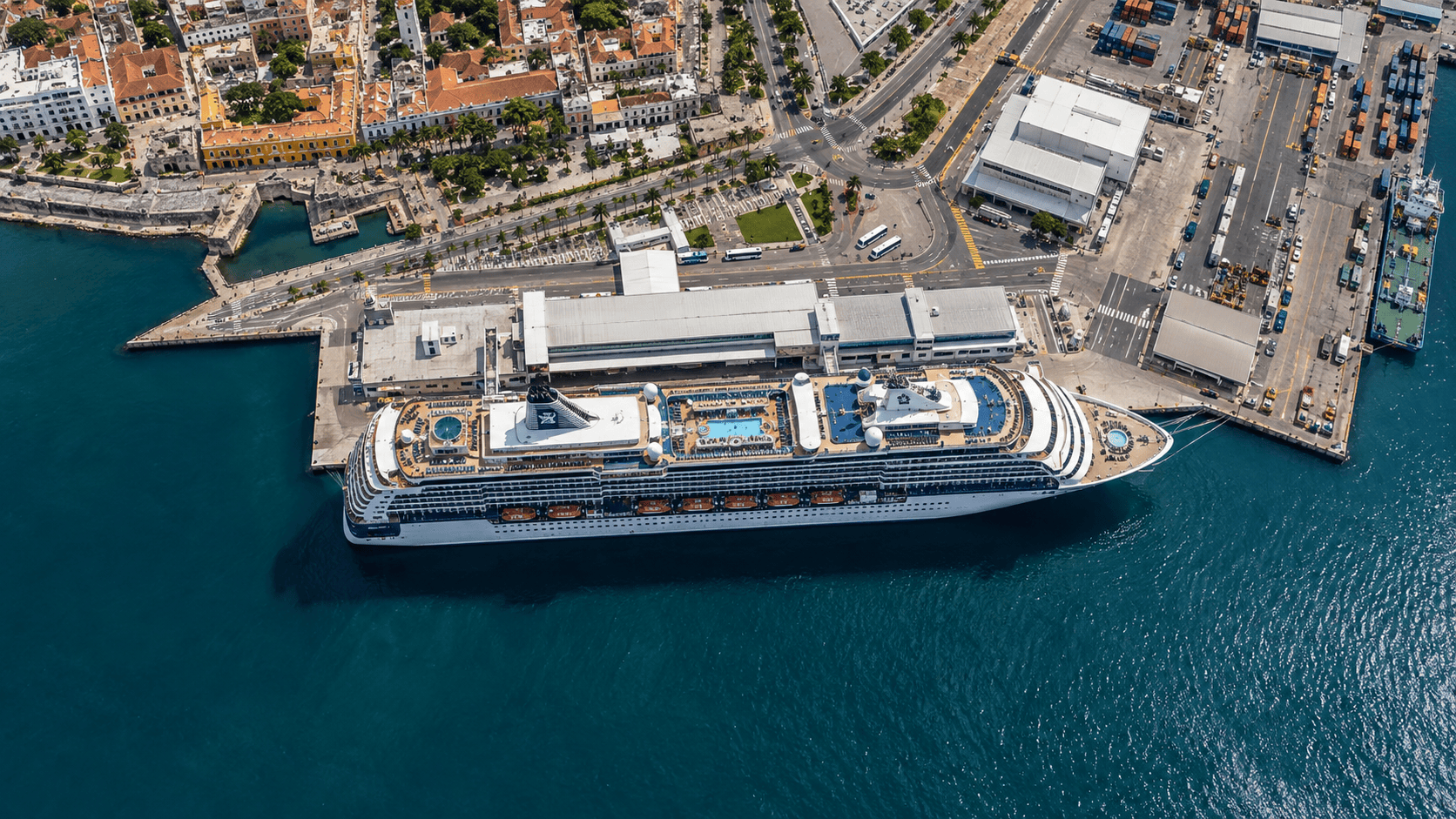
This is significant because ports and terminals are no longer presented solely as operational necessities. Increasingly, they appear integrated into broader narratives around: passenger experience, destination quality, efficiency, and competitiveness.
The issue highlights multiple examples across the region:
- Port St. Maarten’s digitalized operations and regional hub positioning,
- Jamaica’s infrastructure upgrades,
- Puerto Plata’s strategic development ambitions,
- and new cruise terminal investments in locations including Miami and Los Angeles.
In this context, infrastructure increasingly functions as part of destination branding itself.
Modern terminals, smoother passenger flows, transportation integration and upgraded facilities all contribute to how destinations are perceived by both cruise operators and travelers.
The publication’s feature on modern cruise terminals reinforces this point by describing terminals as spaces designed not only for operational performance, but also for passenger comfort, visual impact and experience optimization.
This suggests that the competitive environment may increasingly reward destinations capable of combining operational readiness, tourism quality, and experience-driven infrastructure planning.
Exclusive Destinations Are Raising Competitive Pressure
The publication also highlights the growing importance of exclusive cruise destinations and private developments such as:
- Celebration Key,
- Great Stirrup Cay,
- Ocean Cay,
- Amber Cove,
- and Mahogany Bay.
These projects are repeatedly presented as highly controlled environments capable of delivering consistent guest experiences, operational efficiency and differentiated offerings.
At the same time, several executives stressed the importance of maintaining integration with local economies and surrounding destinations.
Christine Duffy, President of Carnival Cruise Line, notably distinguished Celebration Key from fully isolated private island models by emphasizing the continued ability for passengers to explore the wider destination and participate in local excursions.
Still, the rapid expansion of exclusive destinations may create new competitive dynamics across the Caribbean.
Traditional destinations increasingly compete not only with neighboring islands, but also with cruise line-controlled environments specifically designed around:
- passenger flow,
- experience consistency,
- operational control,
- and curated entertainment.
This could place additional pressure on destinations to strengthen their own differentiation strategies through: authenticity, cultural integration, local entrepreneurship, and unique visitor experiences that cannot easily be replicated in controlled environments.
Cruise Tourism Is Becoming More Integrated Into Long-Term Destination Strategy
Another recurring theme throughout the magazine is the growing effort to connect cruise tourism with broader tourism development objectives.
Several executives described cruising as a gateway capable of generating future stayover tourism. Josh Weinstein referred to cruise itineraries as opportunities for destinations to showcase their “best” experiences and encourage longer future visits.
Marie McKenzie, Senior Vice President of Government & Destination Affairs at Carnival Corporation & plc, similarly emphasized stronger collaboration between cruise tourism and the hotel sector, particularly around cruise-to-stayover conversion strategies.
These discussions suggest that destinations increasingly view cruise tourism not simply as a standalone sector, but as part of a larger tourism ecosystem involving:
- destination visibility,
- long-term visitor acquisition,
- tourism diversification,
- and economic circulation.
As destinations continue investing in infrastructure, experiences and positioning strategies, cruise tourism may increasingly function as one component within broader territorial competitiveness strategies rather than an isolated tourism segment.
A More Strategic Competitive Landscape Is Emerging
Taken together, the publication suggests that Caribbean cruise competition is entering a more strategic phase.
Natural assets and geography remain important advantages. However, the magazine repeatedly indicates that future competitiveness may increasingly depend on how destinations combine: identity, infrastructure, operational performance, tourism experiences, and long-term strategic coordination.
Cruise executives throughout the issue consistently emphasize: differentiation, collaboration, planning, and experience quality.
At the same time, the rise of premium itineraries, exclusive destinations and experience-driven travel appears to be reshaping how destinations position themselves within regional cruise networks.
Rather than competing solely for ship calls, Caribbean destinations may increasingly be competing for strategic relevance within the future structure of cruise tourism itself.