As passenger volumes continue to rise across the Caribbean tourism market, Aruba Airport Authority (AAA) is increasingly turning to automation, biometric processing and digital infrastructure to manage operational pressure without relying solely on physical expansion.
At Queen Beatrix International Airport (AUA), digital transformation is becoming closely tied to scalability. While Gateway 2030 remains the airport’s flagship infrastructure program, 2025 also marked a broader operational shift toward self-service processing, integrated passenger flow management and cyber-resilient airport systems.
The airport handled more than 3.41 million passengers in 2025, while construction activity linked to Gateway 2030 continued to reshape terminal operations. Against that backdrop, automation is increasingly serving not simply as a passenger convenience initiative, but as a strategic operational tool.
Passenger growth is increasing pressure on airport processing capacity
Aruba Airport’s digital acceleration comes as passenger growth continues to outpace earlier forecasts, creating mounting pressure on terminal throughput and operational efficiency. According to AAA’s interim CEO James Fazio, sustained traffic growth is generating “capacity challenges that demand bold action.”
For island airports operating within constrained physical footprints, the challenge is not limited to expanding infrastructure. The ability to process passengers more efficiently is becoming equally critical.
That reality is particularly visible in Aruba, where ongoing Gateway 2030 construction activity has required the airport to rethink how passengers move through the terminal environment while maintaining service continuity and minimizing congestion. During 2025, AAA introduced a Passenger Flow Control system specifically designed to streamline U.S.-bound passenger processing during construction phases.
The airport also experienced temporary pressure on customer satisfaction indicators during the first half of the year as operational strain and construction activity intensified. ASQ overall satisfaction scores declined to 4.02 in Q1 and 4.00 in Q2 before recovering later in the year as operational adjustments and new technologies stabilized passenger processing.
The progression highlights an increasingly important industry trend: airport digitalization is becoming closely linked to operational resilience during infrastructure transition periods.
Biometrics and self-service are becoming operational tools, not just passenger amenities
Several of Aruba Airport’s 2025 technology deployments were aimed directly at reducing passenger friction and improving processing scalability.
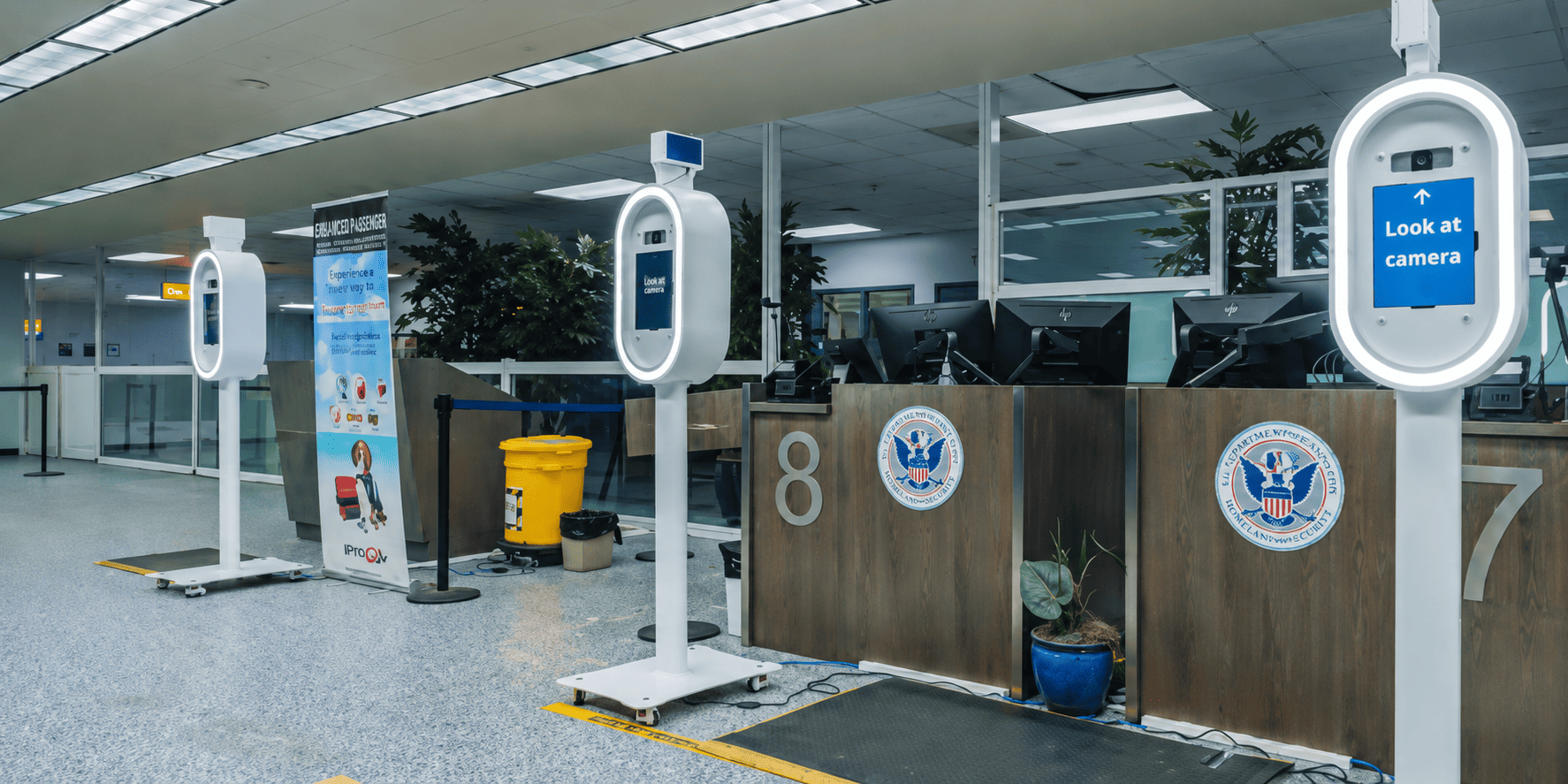
One of the most significant developments was the introduction of Enhanced Passenger Processing (EPP) at Aruba’s U.S. Pre-Clearance facility in partnership with U.S. Customs and Border Protection (CBP) and identity verification company iProov. The system uses facial biometric verification technology to match travelers with passport credentials and CBP verification systems, reducing reliance on physical document presentation during processing.
For Aruba, biometric processing carries particular operational importance because of the airport’s longstanding U.S. preclearance model, where processing efficiency directly affects passenger throughput and terminal flow management.
AAA also expanded self-service infrastructure inside the new U.S. check-in hall through the deployment of four dedicated Self Bag Drop units integrated with existing self-service kiosks. According to the airport, passengers can now complete the full check-in and baggage process independently without interacting with airline agents.
Additional passenger processing investments implemented during the year included:
- replacement of immigration e-gates,
- biometric technology integration for U.S. CBP operations,
- and the addition of a sixth security lane at checkpoint Alpha.
Taken together, the initiatives suggest that Aruba Airport is increasingly using automation not only to modernize the passenger experience, but also to absorb rising traffic volumes while limiting additional operational friction.
Aruba Airport is building a more digitally integrated operational model
Beyond passenger-facing technologies, AAA’s 2025 strategy reveals a broader effort to modernize the airport’s operational and digital backbone.
The airport continued implementing its IT and Cybersecurity Roadmap (2024–2028), which focuses on infrastructure modernization, operational integration and cyber resilience. The roadmap includes:
- deployment of SOC/EDR multilayer cybersecurity systems,
- integration of operational and financial systems,
- modernization of airport IT infrastructure,
- and compliance alignment with ICAO cybersecurity guidelines.
AAA also continued phishing simulations and cybersecurity awareness programs internally while participating in regional cybersecurity knowledge-sharing initiatives across the Dutch Caribbean.
The emphasis on cybersecurity is notable because it reflects another growing challenge facing digitally connected airports. As passenger processing becomes increasingly automated and integrated, cyber resilience is evolving into a core operational requirement rather than simply an IT function.
The report also points toward further digital passenger engagement initiatives in 2026, including the development of an airport mobile application designed to provide operational information and support retail and food pre-ordering services during future Gateway 2030 construction phases.
Caribbean airports may increasingly rely on automation to scale efficiently
Aruba Airport’s digital transformation strategy reflects a broader structural shift emerging across several Caribbean aviation markets.
Tourism-driven passenger growth continues to rise across the region, yet many island airports face physical, financial and operational limitations that complicate large-scale infrastructure expansion. In that context, automation and digital processing are increasingly becoming alternative scalability tools.
Self-service infrastructure, biometric border processing and integrated operational systems can help airports:
- increase passenger throughput,
- reduce queue pressure,
- optimize staffing,
- and maintain operational continuity during expansion projects.
For smaller and medium-sized Caribbean hubs, these technologies may become particularly important as airports attempt to balance rising passenger expectations with constrained infrastructure environments.
At Aruba Airport, the shift is already becoming visible. Digital transformation is no longer positioned simply as an innovation initiative or passenger experience enhancement. It is increasingly being integrated into the airport’s long-term operational strategy as the airport attempts to scale more efficiently under sustained growth pressure.