
How ports are adapting to a new era of geopolitical uncertainty, climate disruption and shifting shipping networks
For decades, port competitiveness in Latin America and the Caribbean was largely measured through throughput volumes, infrastructure capacity and connectivity. While those indicators remain important, recent disruptions have revealed a broader reality: the ports emerging as regional leaders are increasingly those capable of adapting to geopolitical shocks, climate risks and evolving shipping networks.
The latest port report from the Economic Commission for Latin America and the Caribbean (ECLAC) suggests that the region is entering a new phase in which resilience has become a strategic asset rather than a secondary consideration. In a global environment shaped by supply chain disruptions, changing trade policies and growing geopolitical tensions, the geography of maritime power is beginning to evolve.
Maritime logistics is entering a new era of strategic uncertainty
According to ECLAC, the current global environment reflects a broader transformation of globalization itself. Rather than a retreat from globalization, the world is witnessing a new stage of economic interdependence increasingly influenced by geopolitical considerations and strategic competition. The report references the concept of “weaponized interdependence,” in which trade, logistics, technology and financial flows become instruments of geopolitical influence.
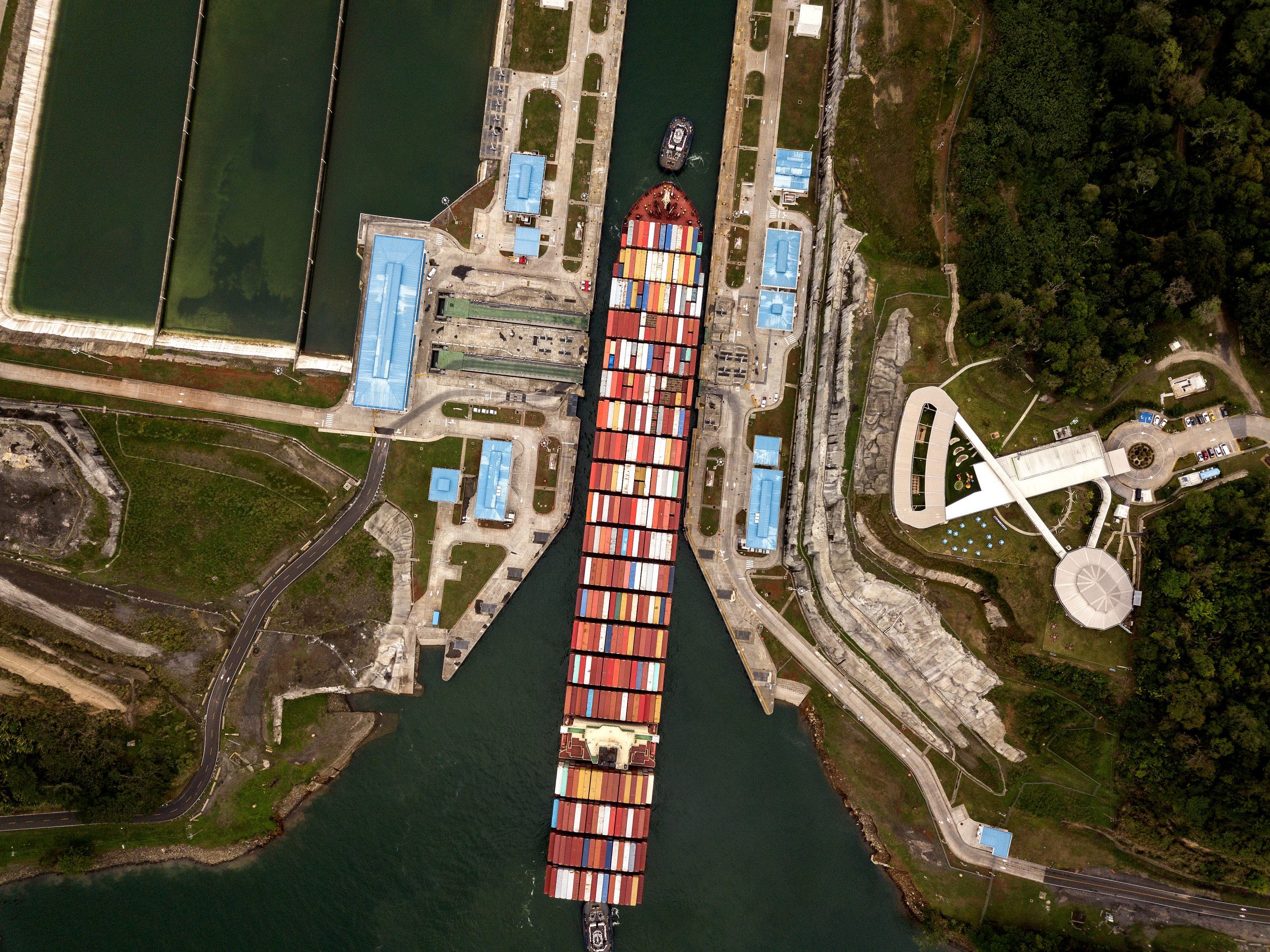
For maritime transport, this shift has significant implications. Shipping networks are now exposed simultaneously to climate-related disruptions, armed conflicts, industrial policies and trade restrictions. The Red Sea crisis, the drought affecting the Panama Canal and recurring tensions in global trade corridors have demonstrated how quickly logistics systems can be disrupted.
The report notes that around 80% of global merchandise trade by volume continues to move by sea, reinforcing the strategic role of ports as critical infrastructure for economic security and supply chain resilience.
Why traditional measures of port performance are no longer enough
Recent years have shown that throughput alone does not fully capture a port’s strategic position.
While global supply chain pressures moderated through much of 2025, ECLAC highlights that new tensions in the Middle East triggered a renewed increase in logistics pressure at the end of the year. The report also points to continuing volatility in freight rates and shipping schedules despite improvements in operational performance.
Schedule reliability illustrates this challenge. After reaching historically low levels during the pandemic, global schedule reliability gradually improved and reached 67.4% in June 2025. However, that improvement proved fragile, with reliability declining again during the second half of the year as geopolitical tensions and uncertainty surrounding international trade policies intensified.
In this environment, resilience is becoming a key performance indicator. Ports must not only handle cargo efficiently during normal conditions; they must also maintain operations when shipping routes are disrupted, alliances are reconfigured or climate events affect critical infrastructure.
Panama and Caribbean transshipment hubs remain central to regional networks
One of the report’s most important conclusions is that strategic transshipment locations continue to play a pivotal role within regional and global shipping networks.
Panama provides the clearest example. Despite operational constraints caused by drought conditions affecting the Panama Canal, throughput levels on both the Caribbean and Pacific coasts remained consistently above pre-pandemic levels. ECLAC attributes this performance to Panama’s structural role as a regional and global transshipment platform.
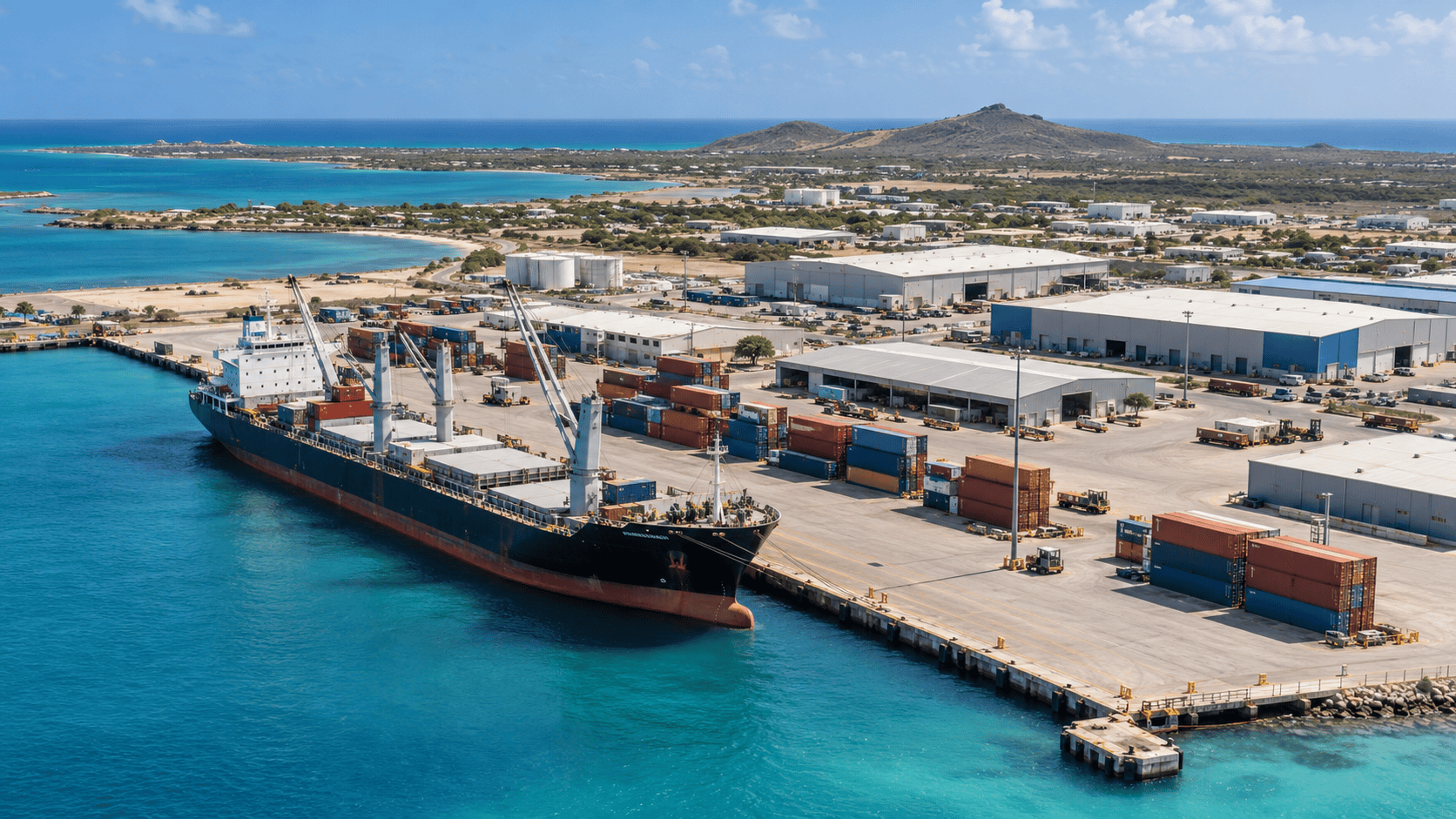
The report also highlights the strong performance of Caribbean transshipment hubs. Ports such as Cartagena, Caucedo, Kingston and Freeport continue to benefit from their position within major east-west shipping corridors and their role in cargo redistribution across the wider Caribbean Basin.
While gateway ports linked to domestic markets remain essential, the ability of transshipment hubs to adapt to changing carrier networks has reinforced their strategic importance. In a context where shipping companies frequently adjust routes and service patterns, network flexibility has become a competitive advantage.
Shipping alliances are quietly redrawing the regional map
Another major development identified by ECLAC is the ongoing transformation of the container shipping market.
Following years of increasing concentration, the structure of global liner shipping is becoming more fragmented. The combined market share of the three largest shipping alliances and carrier groupings declined from more than 80% in 2022 and 2023 to 61.2% in 2025.
This change reflects several important developments, including the dissolution of the 2M alliance and the emergence of new operating structures such as Gemini Cooperation and Premier Alliance. At the same time, carriers operating outside traditional alliance frameworks have gained relative importance.
For ports, these changes matter because alliance strategies directly influence service deployment, port calls and cargo flows. A single network redesign can alter the competitive position of multiple ports across a region.
As shipping lines reassess their operational models, ports that offer flexibility, efficiency and strong connectivity may be better positioned to attract future services.
The next competitive advantage will be resilience
The report shows that the recovery of containerized trade across Latin America and the Caribbean has been uneven. Some ports have recorded significant throughput gains, while others continue to face challenges linked to changing trade patterns, operational constraints and evolving shipping networks.
This divergence suggests that future competitiveness will depend less on geography alone and more on a port’s capacity to respond to disruption.
Investment priorities are therefore expanding beyond traditional infrastructure. Climate adaptation, digitalization, operational visibility, logistics integration and network diversification are becoming increasingly important components of long-term competitiveness.
Ports that successfully combine these capabilities are likely to strengthen their position within regional and global supply chains.
Beyond throughput, a new definition of maritime power
ECLAC’s assessment suggests that the next decade of port development in Latin America and the Caribbean will be shaped by far more than cargo volumes. The combination of geopolitical uncertainty, climate risks and evolving carrier strategies is creating a more complex operating environment in which resilience, adaptability and connectivity matter as much as scale.
In this new landscape, maritime power may no longer belong exclusively to the largest ports. Increasingly, it will belong to those capable of navigating disruption while remaining indispensable nodes within global trade networks.