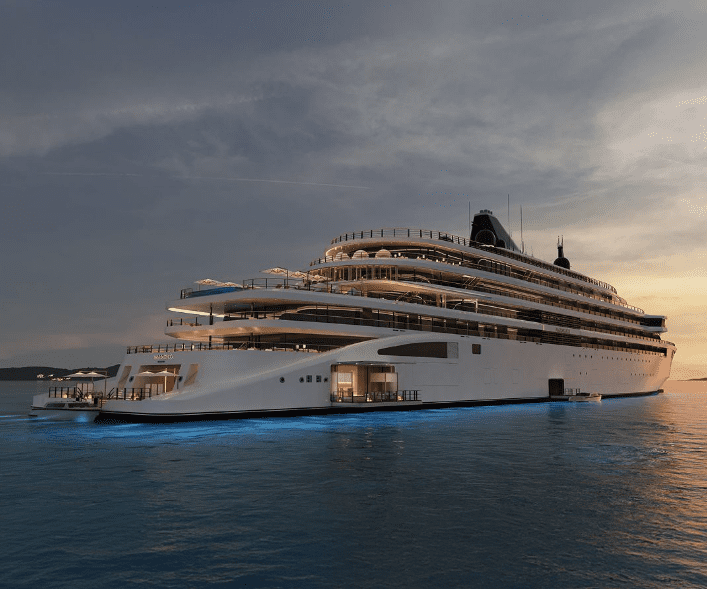
At Seatrade Cruise Global, much of the discussion around cruise development continues to focus on scale, demand and destination strategy. Yet during the 1:1 session “Spotlight – Aman at Sea,” held on April 13 at the Sunset Vista Salon, the conversation turned to a different question: how is luxury itself being redefined at sea?

Through the perspective of Jonathan Wilson, President and Chief Executive Officer at Aman at Sea, the discussion highlighted the emergence of a new segment positioned between private yachting and traditional luxury cruising. His insights suggest that ultra-luxury maritime travel is not simply an extension of cruise, but a reconfiguration of what the experience is meant to deliver.
From cruise to yacht: redefining the luxury spectrum
One of the starting points of the discussion was the evolving definition of a “yacht” within the cruise ecosystem.
As larger cruise vessels have expanded in size and capacity over the past decades, they have simultaneously created space for smaller, more intimate formats. This evolution has allowed new products to emerge, positioned not by scale but by experience.
For Wilson, the distinction is less about classification and more about what the guest gains access to. As he explained, “it’s more about access… what a guest has access to that’s different — privacy, serenity, peaceful experiences.”
This perspective suggests that the segmentation of the market is increasingly defined by experience design rather than vessel size or traditional industry categories.
Access as the core of ultra-luxury
Throughout the discussion, the notion of “access” emerged as a central concept in defining ultra-luxury at sea.
Beyond physical access — such as the ability to reach smaller ports or interact directly with the marine environment — this concept extends to experiences that are otherwise difficult to replicate. These may include curated shore activities, exclusive transportation options or simply the ability to engage with a destination in a more private and controlled setting.
Wilson emphasized that features such as direct access to the ocean, helicopter transfers or high-end tenders are not just amenities, but part of a broader experiential framework.
In this context, luxury is less about adding features and more about removing constraints, enabling guests to experience destinations in ways that feel both seamless and unique.
A brand-driven model at sea
A defining characteristic of Aman’s approach lies in its strong brand identity and highly loyal customer base.
According to Wilson, Aman guests have well-established expectations shaped by their experience within the brand’s hotel portfolio. This familiarity creates a foundation for extending the brand into new formats, including maritime travel.
“They know exactly what they want. They know exactly what to expect,” he noted, highlighting the role of brand consistency in delivering a seamless experience.
The early composition of Aman at Sea’s customer base reflects this dynamic, with approximately 60% of guests coming from the existing Aman clientele, while the remaining share represents new entrants to the brand.
This hybrid profile suggests that ultra-luxury yachting may serve both as an extension of established brand ecosystems and as a gateway for new high-end travelers.
Designing experience through space, pace and detail
Beyond brand positioning, the discussion also highlighted how design and operational choices contribute to shaping the ultra-luxury experience.
Key elements include a slower pace of travel, longer port stays and a focus on wellness as a holistic concept. Rather than concentrating solely on onboard amenities, the experience is structured around a broader sense of calm, continuity and immersion.
Wilson described this approach as creating environments that feel “seamless, calm, peaceful,” where the overall journey contributes as much to the guest experience as individual features such as spa facilities or dining.
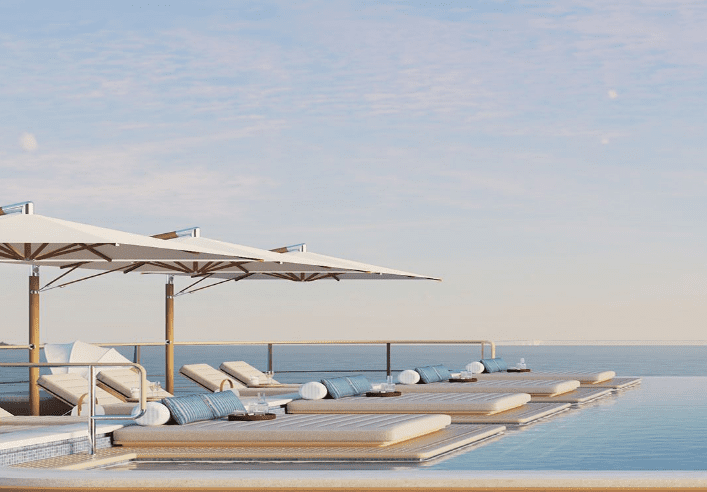
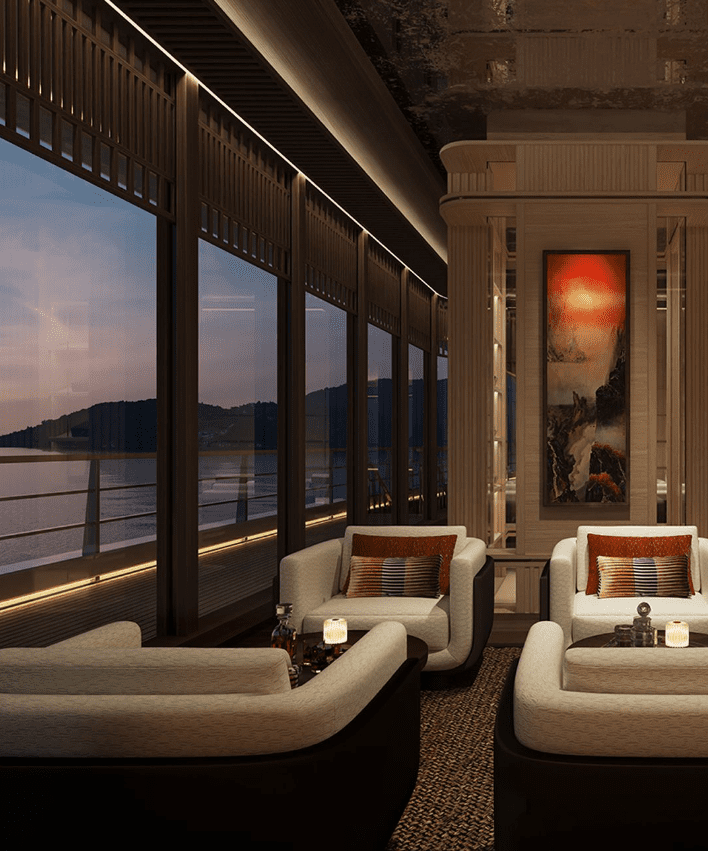
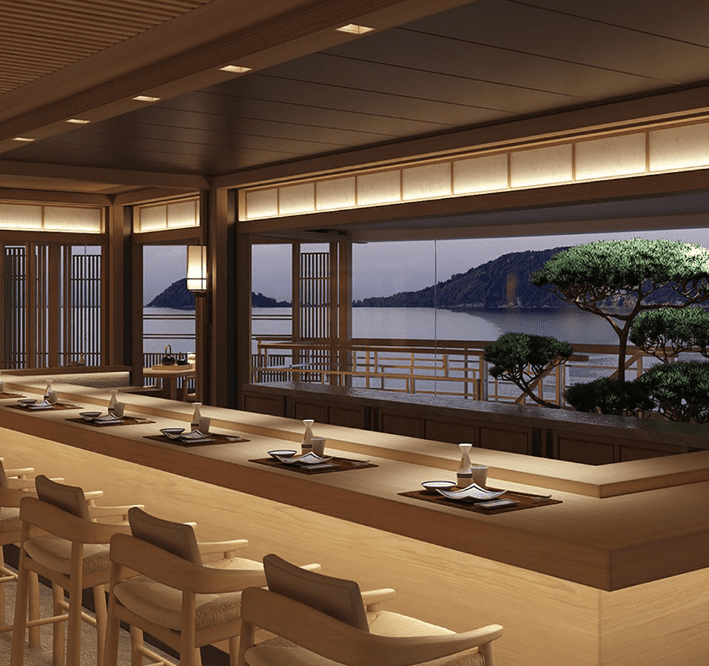
Design also plays a central role, with emphasis placed on space, materials and architectural coherence. The objective is not to impress through scale, but to create environments that feel refined, balanced and consistent with the brand’s identity.
A controlled growth trajectory
While the ultra-luxury segment is attracting increasing attention, the discussion suggests that its expansion is likely to remain measured.
Wilson indicated that growth within the segment, including Aman’s own development, will be driven by demand and pursued gradually. “It will grow organically… based on demand,” he explained, pointing to both the complexity of delivering such experiences and the high expectations associated with the segment.
At the same time, the entry of other hospitality brands into the maritime space reflects a broader convergence between hotel and cruise models. This trend suggests that ultra-luxury yachting may evolve as a distinct segment within the wider travel industry, rather than simply a niche within cruising.
Reading the road ahead
The discussion around Aman at Sea points to a broader transformation in how luxury is conceptualized within maritime travel.
As the industry continues to diversify, ultra-luxury yachting appears to be defined less by traditional markers such as size or exclusivity, and more by the ability to deliver controlled, seamless and highly personalized experiences.
This evolution suggests that the future of luxury at sea may depend not only on innovation, but on the capacity of brands to translate their identity across formats while maintaining consistency, quality and a clear sense of purpose.