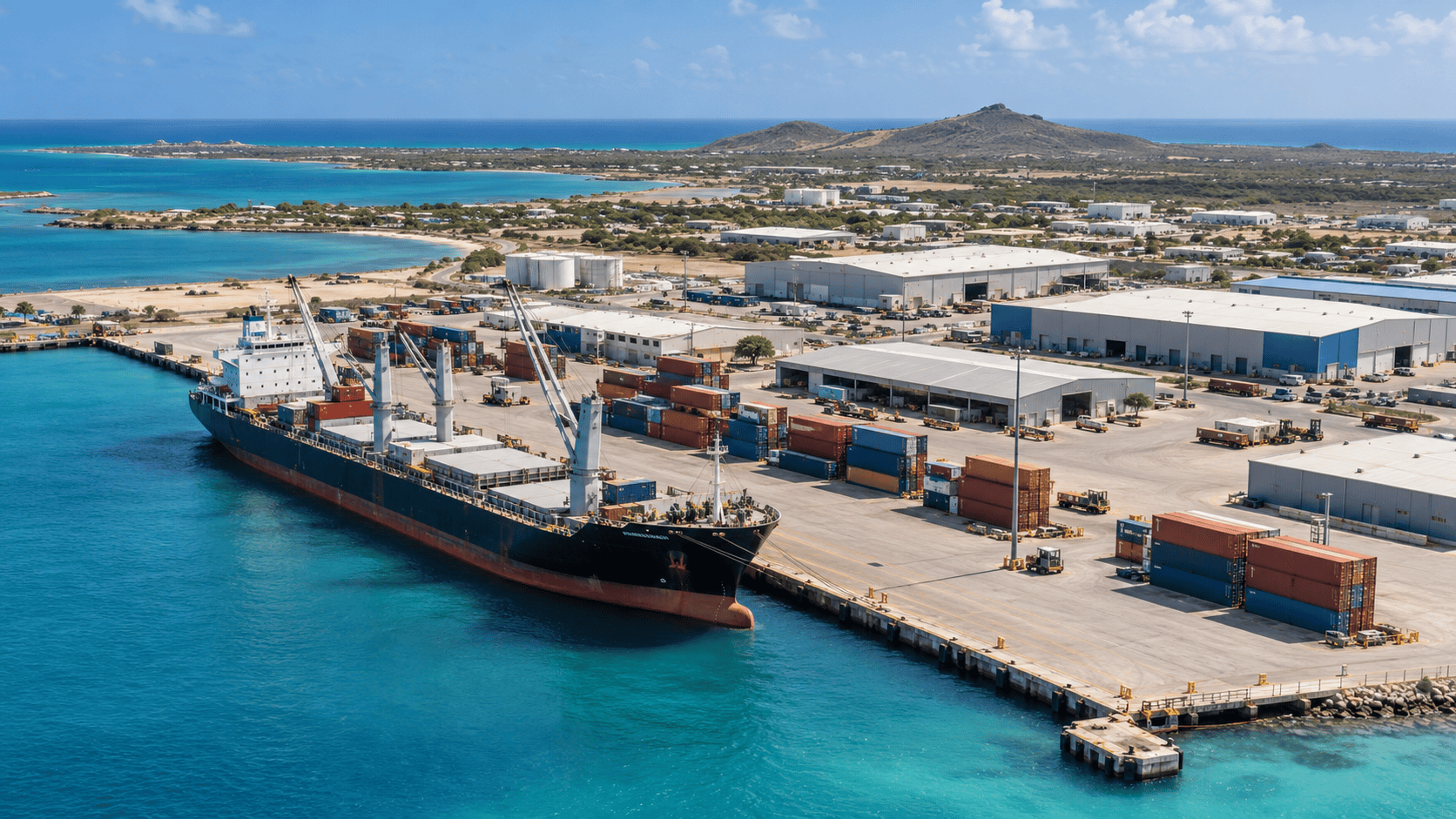
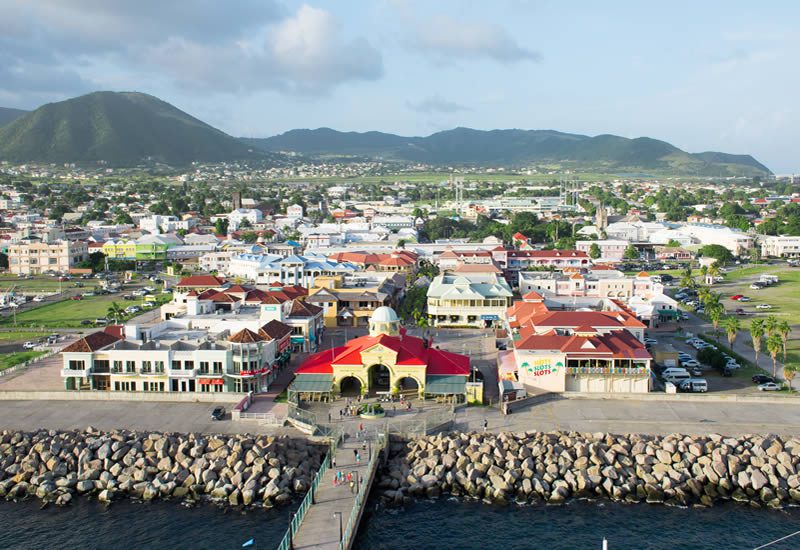
Ports across the Caribbean are increasingly being drawn into the region’s energy transition agenda. In St. Kitts and Nevis, that shift is now moving beyond policy discussions and into infrastructure planning. At Basseterre Deep Water Port, a pilot project combining renewable energy, smart monitoring systems and microgrid technologies is positioning the island federation as an early testing ground for port decarbonisation in Small Island Developing States (SIDS).
The initiative was presented during the “Progressing Maritime Decarbonisation in St. Kitts and Nevis” national workshop organised in February 2026 by MTCC Caribbean under the IMO–EU Global MTCC Network (GMN) Phase II programme. Rather than focusing solely on long-term ambitions, the workshop highlighted a growing regional emphasis on implementation, project execution and technology deployment.
At the centre of the discussions stood a concrete objective: reducing the energy and emissions footprint of Basseterre Port through a renewable energy-powered microgrid system designed to support port operations while improving resilience and energy security.
Caribbean ports are becoming part of the energy transition equation
For many Caribbean islands, maritime infrastructure remains deeply dependent on imported fossil fuels. Ports, which serve as critical gateways for trade, tourism and inter-island connectivity, are also energy-intensive environments exposed to volatile electricity costs and climate-related disruptions.
That combination is pushing several SIDS to rethink the role of ports beyond logistics alone. Increasingly, ports are being viewed as strategic energy nodes capable of integrating renewable generation, electrified equipment and smart energy management systems.
The workshop in St. Kitts and Nevis repeatedly highlighted this shift. Participants from maritime authorities, government ministries, energy stakeholders and port operators identified renewable energy integration, electrification and emissions monitoring among the country’s priority decarbonisation pathways.
The discussions also reflected a broader regional concern: while awareness around maritime decarbonisation has significantly increased across the Caribbean, implementation capacity remains limited. Financing constraints, technical expertise gaps and infrastructure readiness continue to slow deployment of low-carbon maritime projects in many island states.
Against that backdrop, Basseterre Port is being positioned as a practical demonstration project rather than a theoretical exercise.
A renewable-powered microgrid for Basseterre Port
The pilot project presented during the workshop focuses on the planned deployment of a distributed renewable energy microgrid at Basseterre Deep Water Port. The system is intended to integrate wind energy generation directly into port-side electricity demand while supporting real-time monitoring and future optimisation of energy use.
According to the report, the project is expected to incorporate:
- wind generation systems;
- smart meters;
- a smart connection box;
- real-time monitoring technologies;
- and potential future integration with energy storage and grid systems.
The objective is not only to lower emissions, but also to reduce dependence on imported fuel, strengthen operational resilience and improve long-term energy stability within the port environment.
MTCC Caribbean indicated that the project forms part of a wider regional effort to accelerate the uptake of low-carbon maritime technologies under the GMN Phase II programme. The Basseterre initiative is therefore being treated as both a national infrastructure project and a regional proof-of-concept for Caribbean SIDS.
The project also reflects a growing convergence between maritime infrastructure policy and national climate strategies. During panel discussions, government representatives and port stakeholders linked the port initiative to wider national ambitions around renewable energy deployment, energy independence and emissions reduction.
Wind technology designed for hurricane-prone islands
One of the project’s most distinctive aspects lies in the technology selected for the pilot phase.
The workshop introduced the AeroFOLD wind turbine system developed by SYGTECH, specifically highlighted for its suitability in hurricane-exposed island environments.
Unlike conventional wind systems often designed for larger continental grids, the AeroFOLD concept emphasises:
- lightweight modular construction;
- simplified foundation requirements;
- omnidirectional operation;
- and a foldable, tilt-down mechanism intended to withstand extreme weather conditions.
That engineering approach is particularly relevant for Caribbean SIDS, where infrastructure resilience remains a major concern. Ports in the region face repeated exposure to hurricanes, storm surges and climate-related disruptions, making conventional renewable energy deployment more complex than in many larger markets.
The ability to deploy smaller-scale modular wind systems inside constrained port environments could therefore offer a more adaptable model for island infrastructure.
The report also notes that the pilot system remains data-driven at this stage. Final sizing and expected energy output will depend on site-specific wind conditions and feasibility assessments currently underway.
Five months of wind data collection underway
As part of the pilot programme, MTCC Caribbean installed two wind monitoring systems in St. Kitts and Nevis.
One system was installed at Basseterre Port itself, while another was positioned at an elevated hilltop location to collect comparative wind data.
The monitoring campaign is expected to run over a five-month period and will support:
- wind resource analysis;
- site feasibility assessment;
- system sizing;
- and optimisation of future deployment scenarios.
According to the workshop report, several operational factors are also being evaluated alongside wind conditions, including grid connectivity, accessibility, installation complexity, regulatory approvals, and construction costs.
That emphasis on site-specific planning reflects one of the workshop’s recurring messages: maritime decarbonisation projects in SIDS cannot rely on imported models alone and instead require solutions adapted to local infrastructure realities.
Beyond St. Kitts: a possible regional model for Caribbean ports
Although the Basseterre project remains relatively small in scale, the workshop repeatedly framed it as a potentially replicable model for other Caribbean islands.
Several breakout sessions explored additional decarbonisation pathways including:
- electrification of port fleets and equipment;
- hybrid renewable energy systems;
- wave energy generation;
- and expanded renewable integration into maritime operations.
Participants also stressed that future progress will depend heavily on the region’s ability to structure “bankable” projects capable of attracting climate finance and private investment.
That challenge remains particularly acute for SIDS, where project scale, limited technical capacity and constrained fiscal space often complicate access to international financing mechanisms.
Still, the workshop suggested that demonstration projects such as Basseterre could help bridge the gap between policy ambition and operational deployment.
For Caribbean ports facing rising energy costs, climate vulnerability and mounting international pressure to reduce emissions, the transition may increasingly begin not with massive infrastructure overhauls, but with modular, scalable pilot systems capable of proving technical and financial viability in real operating conditions.
At Basseterre Port, maritime decarbonisation is gradually shifting from strategic planning toward real-world deployment.