As Caribbean shipping enters a more demanding operational and regulatory environment, Saint Lucia is attempting to strengthen something many smaller maritime jurisdictions across the region have historically struggled to build: a coordinated industry voice.
The creation of the Saint Lucia Chamber of Shipping marks a significant step in that direction. Presented in recent coverage by Caribbean Maritime Magazine as a new national platform for maritime stakeholders, the organization arrives at a moment when Caribbean ports and shipping operators are facing mounting pressure linked to decarbonisation, supply chain volatility and intensifying global compliance requirements.
For Saint Lucia, the initiative reflects more than institutional restructuring. It signals a broader recognition that maritime competitiveness increasingly depends not only on infrastructure and cargo flows, but also on governance, coordination and long-term strategic alignment.
A maritime economy that extends beyond the port itself
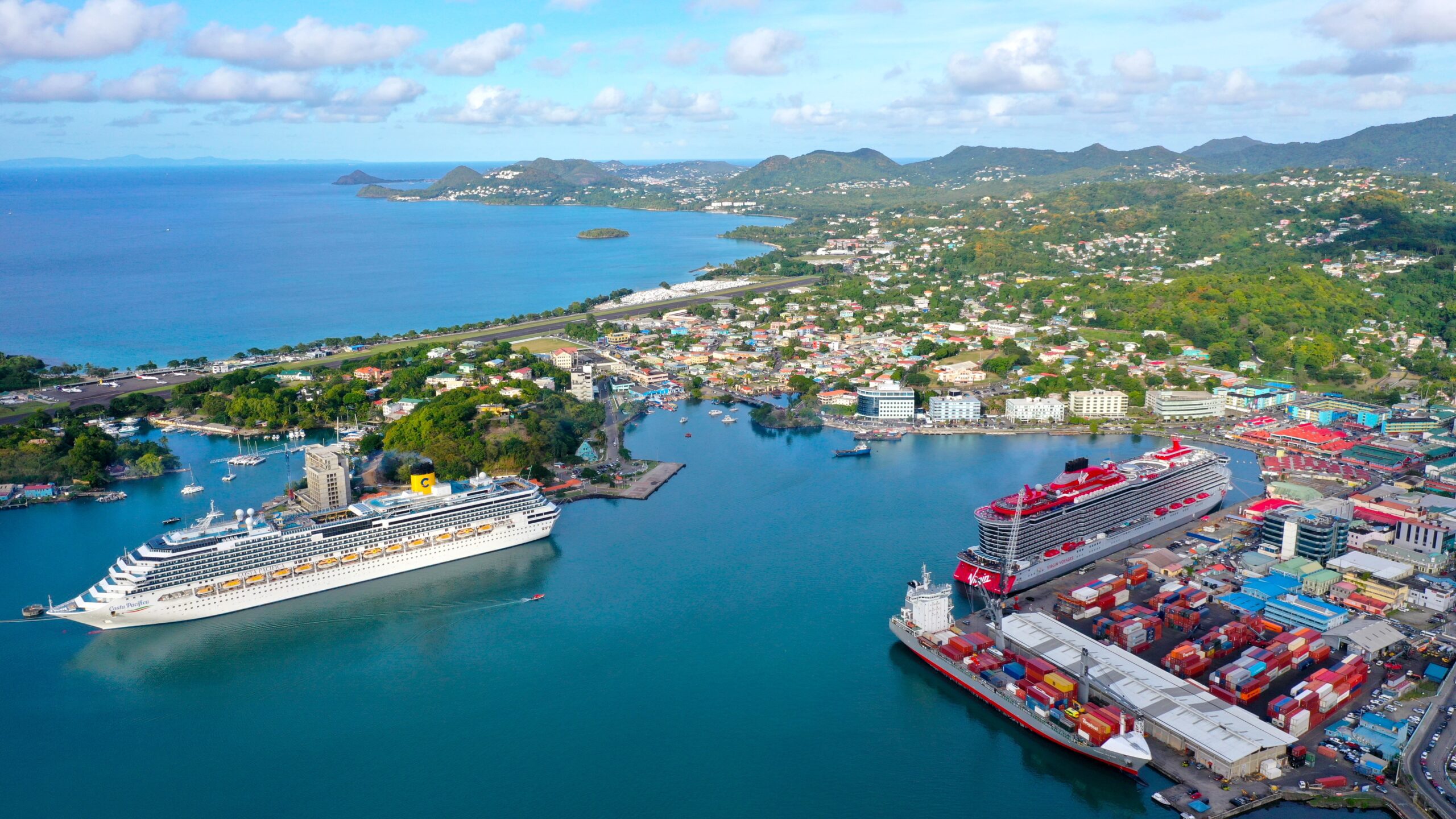
Shipping already occupies a central role within Saint Lucia’s economy.
Beyond cargo activity, the island’s maritime ecosystem supports cruise operations, yachting, bunkering, logistics, offshore support services, and wider tourism-linked economic flows.
Yet like many Caribbean maritime jurisdictions, these activities have often evolved through fragmented institutional structures with limited centralized coordination between regulators, operators and private-sector stakeholders.
The Chamber appears designed to address that fragmentation.
According to the organization’s stated mandate, it aims to bring together shipowners, port operators, shipping agents, logistics firms and maritime service providers within a more unified framework capable of supporting industry advocacy, policy engagement and operational collaboration.
That type of coordination is becoming increasingly important as global maritime regulation grows more complex.
Global shipping pressures are reaching smaller island jurisdictions
The shipping industry is now entering a period where even smaller island economies are being pulled more directly into global regulatory and operational transitions.
The IMO’s decarbonisation agenda, evolving environmental compliance standards, digital reporting expectations and supply chain resilience requirements are no longer issues affecting only major global ports. Their effects are increasingly reaching regional shipping systems throughout the Caribbean.
For smaller maritime jurisdictions, adapting to those pressures can be particularly difficult.
Many island economies operate with:
- relatively small port volumes,
- limited technical capacity,
- fragmented regulatory structures,
- and constrained investment resources.
That creates a growing need for stronger institutional coordination and collective industry representation.
The Saint Lucia Chamber of Shipping appears to position itself precisely within that gap.
Governance is becoming part of maritime competitiveness
One of the most important shifts taking place across global shipping is that competitiveness is no longer determined exclusively by physical infrastructure.
Operational coordination, regulatory efficiency, workforce development and policy consistency are becoming increasingly valuable to shipping operators navigating volatile international supply chains.
This is especially true in the Caribbean, where shipping reliability directly affects trade continuity, tourism performance, food security, and import stability.
The Chamber’s focus on decarbonisation, digitalisation, maritime security, and workforce development reflects many of the same strategic priorities now reshaping larger maritime markets internationally.
That alignment matters because regional maritime systems are becoming more interconnected with global compliance expectations. Ports and shipping jurisdictions that adapt more slowly risk becoming operationally less attractive over time.
A broader regional trend toward maritime coordination
Saint Lucia is not the only Caribbean jurisdiction attempting to modernize maritime governance structures.
Across the region, governments, port authorities and maritime associations are increasingly recognizing that fragmented decision-making creates operational inefficiencies at a time when the shipping industry is demanding greater speed, predictability and resilience.
In many ways, the emergence of organizations such as the Saint Lucia Chamber of Shipping reflects a broader maturation of the Caribbean maritime sector itself.
The conversation is gradually moving beyond basic port activity toward more strategic questions involving:
- industry coordination,
- long-term planning,
- sustainability,
- workforce capacity,
- and regional competitiveness.
That evolution may become increasingly important as the Caribbean faces stronger competition for shipping services, investment and logistics relevance over the coming decade.
Building influence in a changing maritime environment
For Saint Lucia, the long-term importance of the Chamber will likely depend less on its creation alone and more on its ability to influence execution, coordination and policy continuity over time.
But the timing of the initiative is significant.
Global shipping is entering a phase where smaller maritime jurisdictions can no longer rely solely on geography or historical trade patterns to maintain relevance. Regulatory adaptation, institutional coordination and operational credibility are becoming strategic assets in their own right.
The establishment of a unified maritime industry platform suggests Saint Lucia is attempting to position itself more proactively within that changing environment rather than simply reacting to it afterward.