
The close of the 2025–2026 cruise season in Martinique highlights a continued rise in traffic levels, with 568,348 passengers recorded and an increase in port calls compared to the previous season, according to the official announcement. Beyond these figures, the trajectory points to a broader shift: the destination is moving from growth momentum to structural consolidation of its cruise model.
Growth trends point to increasing operational pressure
The season reflects a sustained increase in activity, with 234 port calls between October 2025 and March 2026, up from 208 the previous year. Passenger volumes also show a significant rise, while head-of-line operations remain a key component, with over 151,000 embarkations and disembarkations recorded.
This evolution suggests a growing operational intensity for the port ecosystem. Higher call frequency, combined with diversified passenger flows, implies more complex coordination across port infrastructure, ground services, and destination logistics. Rather than a one-off performance, the data points to a structural increase in demand that requires adaptation at multiple levels.

Infrastructure and destination upgrades as a response
In this context, the press release outlines a series of developments aimed at reinforcing the destination’s capacity to handle this growth. These include improvements and modernization of reception infrastructure, enhanced wayfinding systems between port areas and commercial zones, and ongoing efforts to maintain key sites.
The initiative also highlights softer but equally critical components: continuous training and professionalization of local stakeholders, digitalization of information, and the development of new tourism products. Together, these elements reflect an attempt to strengthen the overall value chain, from port arrival to onshore experience.
While the announcement does not provide detailed technical specifications, the direction is clear. The destination is positioning itself to align more closely with the operational and service standards expected by cruise operators.
Expanding capacity and repositioning the offer
Looking ahead, the upcoming 2026–2027 season is presented as a new phase of expansion. Nearly 300 port calls are expected, indicating a further increase in activity levels. The deployment of vessels from MSC’s fleet, including the MSC Opera and MSC World Europa, signals both continuity and scaling.
The MSC Opera is scheduled to operate across an extended period, opening the possibility of a near year-round cruise season in Martinique for the first time. This shift suggests a move toward greater temporal stability in operations, reducing the traditional seasonality of cruise activity.
At the same time, the planned arrival of the Orient Express Corinthian, an ultra-luxury vessel with a limited number of suites, introduces a different segment. This combination of high-capacity ships and premium positioning points to a diversification strategy, where volume growth coexists with efforts to capture higher-value segments.
Industry feedback and market alignment
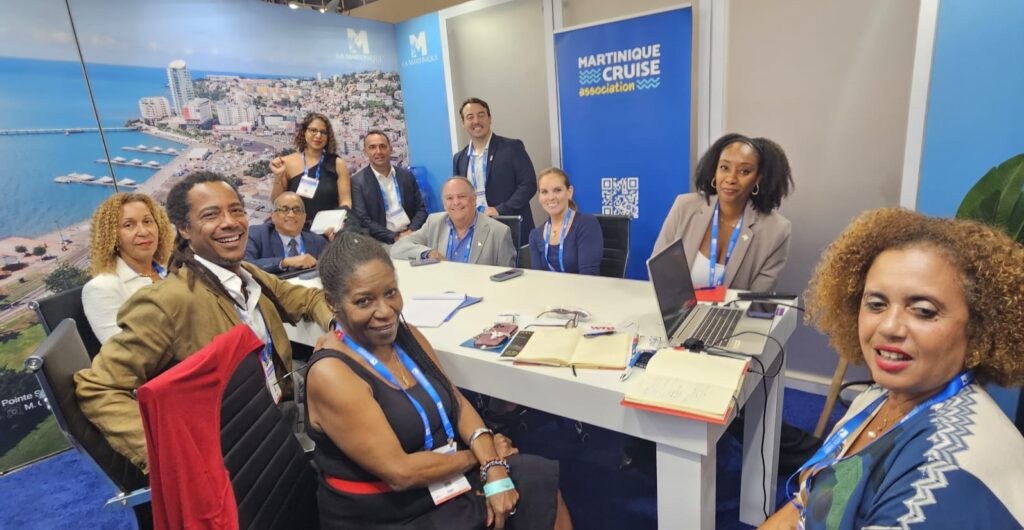
The destination’s positioning was also discussed during Seatrade Cruise Global in Miami, where local stakeholders engaged with cruise lines and industry organizations. According to the Comité Martiniquais du Tourisme, feedback collected during these meetings rated Martinique between 7 and 8 out of 10 in terms of attractiveness before calls and passenger satisfaction after calls.
These interactions provide an indication of how the destination is perceived by operators and suggest a level of alignment with current market expectations. While such feedback remains indicative, it reinforces the idea that recent developments are being acknowledged within the industry.
A strengthening position within the Caribbean cruise landscape
The diversity of passenger origins further supports Martinique’s positioning within the regional cruise landscape. European markets remain the primary source, with more than 200,000 passengers, complemented by flows from the United States, Canada, and other regions.
This mix of source markets, combined with increasing call volumes and evolving infrastructure, contributes to reinforcing the destination’s role within the Caribbean network. In a region characterized by strong competition between ports, the ability to accommodate different segments and maintain service standards is a key differentiating factor.
A shift from growth to structuring
Taken together, the elements outlined in the announcement suggest a transition phase. Growth in passenger numbers and port calls is no longer the sole indicator. The focus is progressively shifting toward how this growth is managed, supported, and sustained over time.
The developments presented — from infrastructure upgrades to operational adjustments and market positioning — indicate an effort to structure a more resilient and adaptable cruise model. For industry stakeholders, the key question is not only the scale of activity, but the capacity of the destination to maintain performance as volumes continue to rise.