Latin American maritime administrations have adopted their first common regional agenda for technical cooperation, opening the way to closer coordination on regulatory capacity, institutional development and the implementation of international maritime standards.
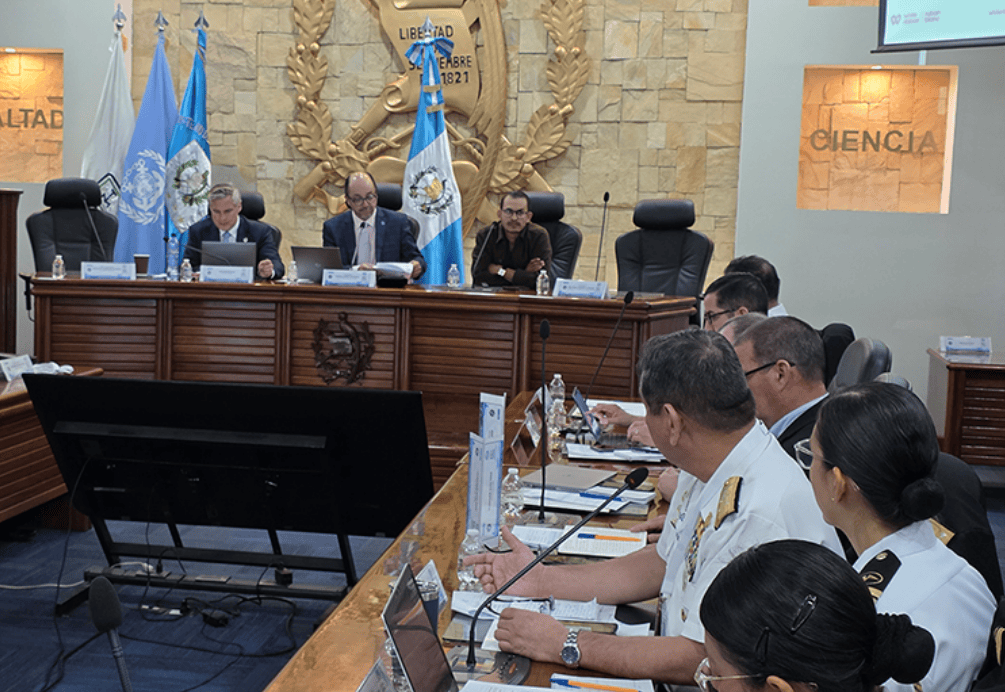
The agreement was reached during the First Joint Meeting of Directors and Heads of Maritime Administrations of Latin America, known as DAMLA 1, held in Guatemala City from 27 to 29 July 2026.
Convened by the International Maritime Organization in partnership with the Government of Guatemala and the Central American Commission on Maritime Transport, the meeting brought senior maritime officials from across the region together under a single forum for the first time.
The gathering concluded with the adoption of an outcome resolution and a regional work plan intended to guide future IMO technical cooperation activities in Latin America. Participating Member States also agreed to establish an IMO Regional Presence Office for the region.
Together, these decisions lay the foundations for a more structured approach to maritime cooperation. Their long-term value, however, will depend on how quickly the institutional commitments are translated into funded programmes, measurable actions and sustained engagement from national administrations.
A regional agenda shaped by Member States
DAMLA 1 reflects a shift in the way technical cooperation is being organized.
Rather than developing isolated capacity-building programmes around priorities defined mainly at the international level, the IMO’s thematic approach places the needs identified by Member States at the centre of future assistance.
The regional work plan adopted in Guatemala is therefore designed to serve as a common framework for action. According to the IMO, it establishes shared priorities, actions and follow-up mechanisms developed by and for the participating States.
For maritime administrations, this could provide greater continuity between training, regulatory support and institutional development initiatives.
The region’s administrations are responsible for implementing a wide range of international obligations, including those related to maritime safety, pollution prevention, seafarer training, accident investigation and the responsibilities of flag, port and coastal States.
Their capacities, resources and levels of implementation are not uniform.
A regional framework could help countries identify common gaps, pool expertise and coordinate technical support more effectively, while preserving national responsibility for maritime regulation and enforcement.
The report of DAMLA 1 is expected to be submitted to the 77th session of the IMO Technical Cooperation Committee, scheduled for June 2027.
A permanent IMO presence moves closer
One of the most significant outcomes was the agreement to establish an IMO Regional Presence Office for Latin America.
A permanent regional presence could strengthen the connection between national administrations, regional organizations and the IMO’s headquarters. It could also improve the identification of technical needs, the coordination of programmes and the monitoring of projects over time.
This matters in a region where many maritime challenges extend beyond national borders.
Shipping routes, marine pollution risks, port-state controls, emergency response systems and seafarer mobility often require cooperation between neighbouring countries. A regional office could provide a more consistent platform for organizing that cooperation.
It may also help reduce the fragmentation that can occur when technical assistance is delivered through separate programmes with limited continuity between them.
The office should not, however, be considered operational at this stage.
The IMO announcement confirms that Member States agreed to establish it, but does not yet specify its host country, location, funding model, staffing arrangements or implementation timetable.
These details will determine whether the new structure becomes an effective operational platform or remains primarily an institutional commitment.
Why stronger administrations matter to the maritime sector
Although DAMLA 1 is an intergovernmental initiative, its implications extend beyond public authorities.
The quality of maritime administration affects the wider performance of ports, shipping companies, seafarers and coastal economies.
Clearer regulatory procedures can improve predictability for operators. Stronger inspection and certification systems can support safety and compliance. Better coordination can facilitate responses to maritime incidents and environmental emergencies.
Administrative capacity can also influence the implementation of the IMO Convention on Facilitation of International Maritime Traffic, which seeks to simplify and harmonize procedures connected with ships arriving in and departing from ports.
For ports and shipping operators, inconsistent administrative requirements can increase delays, costs and operational uncertainty. More coordinated technical cooperation may help administrations modernize procedures and apply international instruments more consistently.
These effects will not be automatic.
A common agenda can identify priorities and organize support, but improvements in operational performance will depend on national implementation, adequate staffing and access to technical and financial resources.
DAMLA 1 provides the framework. Each administration will still need to convert that framework into institutional capacity.
Inclusive leadership joins the cooperation agenda
The meeting also included a workshop on gender-responsive leadership, inclusive governance and institutional culture.
Its presence alongside technical and regulatory discussions signals a broader understanding of what makes a maritime administration effective.
Institutional strength depends not only on legal frameworks and professional expertise, but also on leadership, accountability and the ability to create workplaces in which qualified professionals can develop and remain.
Participants supported the continued inclusion of the workshop in future regional meetings.
This suggests that inclusive governance will remain part of the regional cooperation agenda rather than being treated as a separate social initiative.
For a sector seeking to attract new skills and respond to technological, environmental and regulatory change, institutional culture is increasingly linked to operational resilience.
From common priorities to measurable action
DAMLA 1 represents a milestone because it gives Latin American maritime administrations a shared platform and a common direction for technical cooperation.
It does not create a supranational maritime authority, harmonize national regulations or remove the differences between individual administrations.
What it creates is a mechanism through which those administrations can identify regional needs, coordinate support and pursue common priorities more systematically.
The proposed IMO Regional Presence Office could provide continuity to that process, while the regional work plan could help translate broad objectives into concrete programmes.
The next test will be implementation.
The publication of the work plan, the allocation of responsibilities, the mobilization of resources and the establishment of the regional office will show whether DAMLA 1 can move from institutional agreement to operational impact.
For Latin America’s maritime sector, the importance of the meeting will ultimately be measured not by the number of commitments adopted in Guatemala, but by whether they lead to stronger administrations, more consistent implementation and safer, more efficient maritime systems.