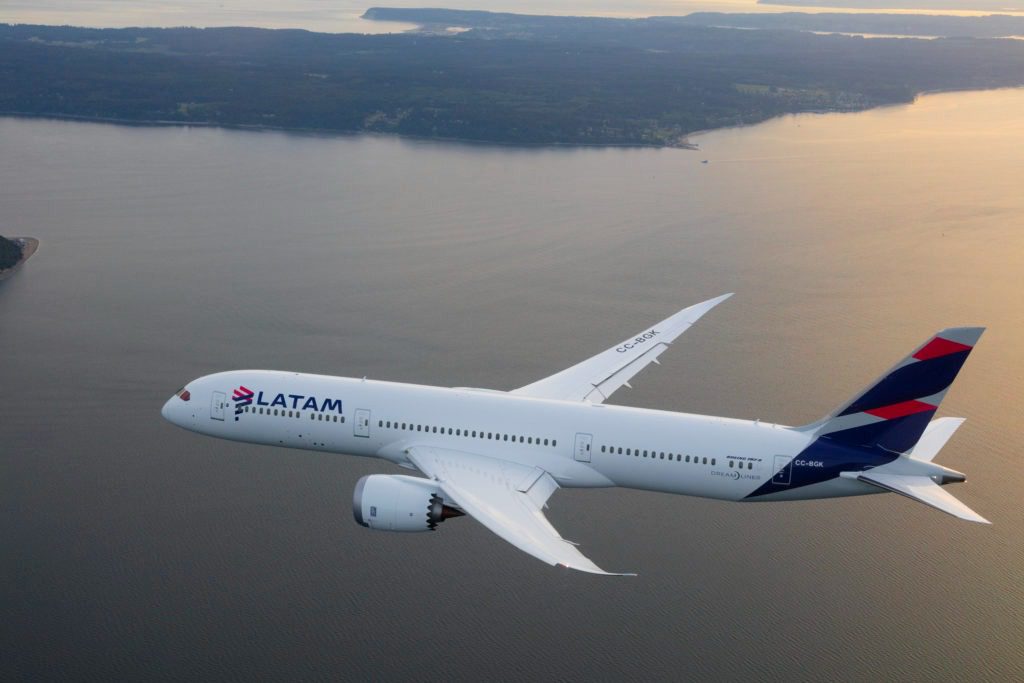
LATAM Airlines Group anticipates the addition of 41 new aircraft to its fleet in 2026, as part of a renewal and expansion program aimed at supporting the growth of its operations in Latin America. According to its operational and financial projections, the group expects an increase in passenger capacity of between 8% and 10%, measured in available seat kilometers (ASK), with more significant growth on international routes than on domestic markets.
The aircraft expected in 2026 are projected to be distributed among Boeing 787 long-haul aircraft, A320neo family single-aisle aircraft, and Embraer E195-E2 regional jets, with the latter expected to play a key role in densifying the South American regional network. The group confirmed, in its operational and financial projections for 2026, that these deliveries are part of a schedule spread throughout the year, implying a gradual increase in capacity rather than an immediate effect on available supply.
This growth trajectory, however, occurs within an industrial context that remains constrained. The aerospace industry continues to face new aircraft shortages, prolonged production lead times, and persistent pressures on engines and maintenance capabilities. According to the International Air Transport Association (IATA), these constraints limit the actual availability of fleets and maintain high utilization rates globally, despite sustained demand in Latin America.
Industry leaders are also raising concerns about extended maintenance cycles and the growing disparity between airline profitability and that of certain critical suppliers, particularly engine manufacturers. These factors could impact the effective deployment of new aircraft and slow down the operational realization of announced deliveries.
For LATAM, the challenge in 2026 therefore lies not only in the volume of aircraft delivered but also in its ability to integrate this fleet into an environment marked by persistent industrial, airport, and operational constraints, particularly at its main regional hubs. The anticipated growth thus remains closely conditioned on the actual availability of aircraft and the fluidity of the entire aviation supply chain.
In this context, LATAM’s growth trajectory in 2026 illustrates less an aggressive expansion than a delicate balancing act between commercial ambition, industrial constraints, and operational robustness.