
Latin America and the Caribbean are more connected than ever before, but the region’s ability to sustain this growth safely is emerging as a strategic challenge.
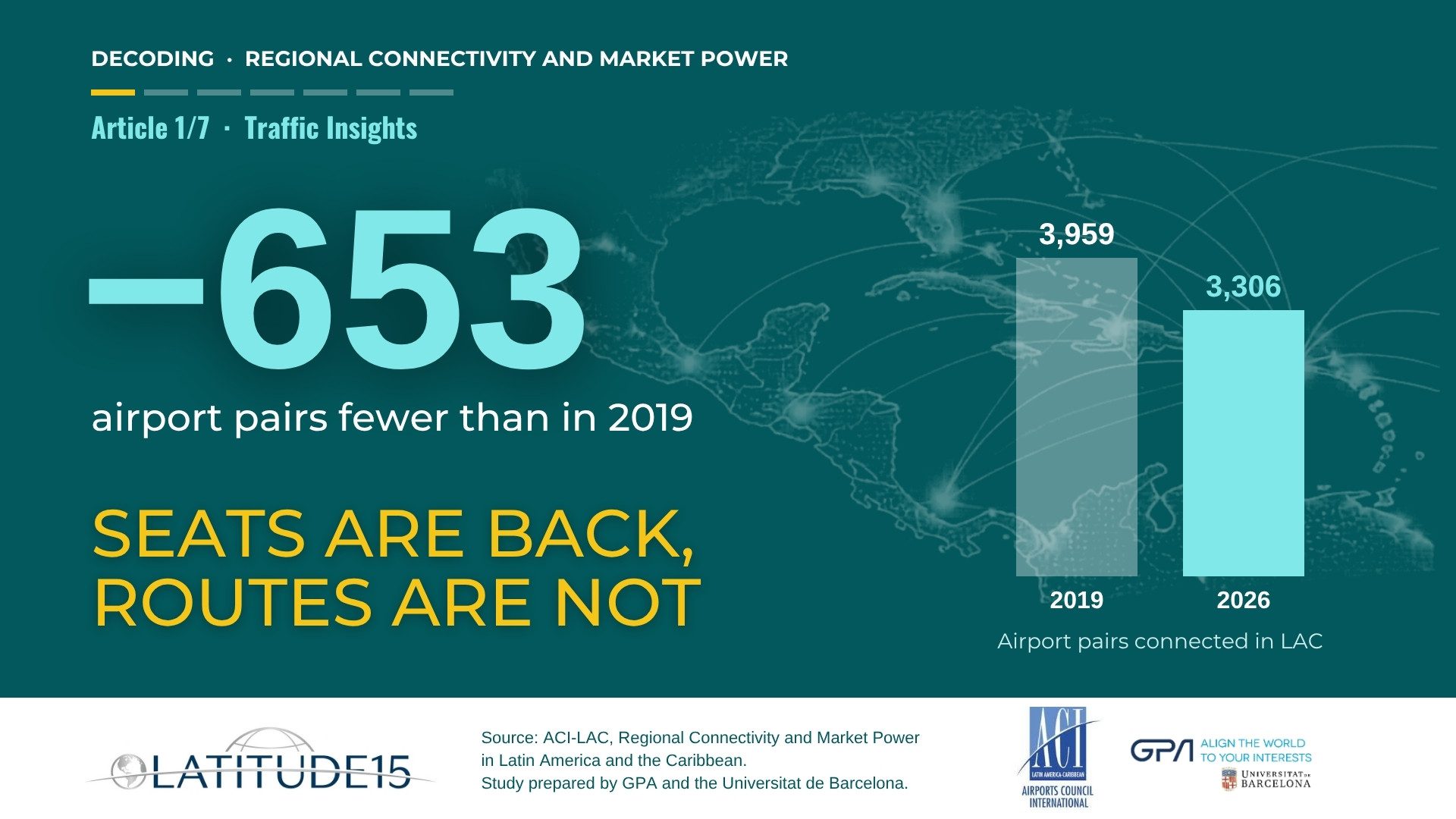
The aviation industry in Latin America and the Caribbean (LAC) has entered a new phase of expansion. According to figures presented at the ALTA Aviation Safety, Flight Ops & Training Summit 2026, the region operated 3.3 million flights in 2025, representing a 38% increase compared with 2005. Over the same period, the number of airport pairs served reached 3,360, up 36%.
The numbers tell a compelling story: air transport is continuing to extend its reach across the region, opening new markets, supporting tourism and business activity, and strengthening territorial connectivity.
But behind this growth lies another reality. As ALTA put it, “More flights. More connections. More opportunities. More responsibility.”
Connectivity growth is increasing operational complexity
Every new route adds more than additional capacity. It introduces new operational interfaces between airlines, airports, regulators and air navigation service providers.
As networks become denser, the entire aviation ecosystem faces increasing demands in areas such as:
- airport infrastructure;
- airspace management;
- workforce training;
- safety oversight;
- operational coordination.
For many countries across Latin America and the Caribbean, particularly smaller and island markets, keeping pace with this growing complexity represents a major challenge.
Safety performance is improving, but gaps remain
The region has made measurable progress in aviation safety. ALTA reported that the LAC accident rate improved from 1.84 accidents per million flights in 2024 to 1.77 in 2025.
This improvement demonstrates that safety initiatives are delivering results. However, the region still performs below several global benchmarks.
In 2025:
- Europe recorded 1.30 accidents per million flights;
- the global average stood at 1.32;
- North America reached 1.68;
- Latin America and the Caribbean remained at 1.77.
The message delivered during the summit was unambiguous:
“Safer than before. Not yet where we want to be.”
Growth is creating new responsibilities
The challenge facing LAC aviation is therefore not one of connectivity itself. The region’s expanding network is widely regarded as an economic success story.
The issue is whether safety capabilities are evolving at the same pace.
As traffic volumes rise, aviation systems require:
- stronger infrastructure;
- more qualified personnel;
- better data-sharing mechanisms;
- more harmonized standards;
- increased regional cooperation.
The relationship between growth and safety is becoming increasingly inseparable. Every additional connection brings economic opportunities, but it also increases the operational burden placed on the system.
A strategic inflection point for the region
The figures presented by ALTA suggest that Latin America and the Caribbean are reaching an important inflection point.
The next stage of aviation development in the region will not be determined solely by the ability to create new routes or attract additional traffic. It will increasingly depend on the industry’s capacity to build resilient safety systems capable of supporting a larger, more interconnected and operationally complex network.
For the region’s aviation leaders, the question is no longer whether connectivity will continue to expand. It is whether safety capacity can expand just as quickly.